
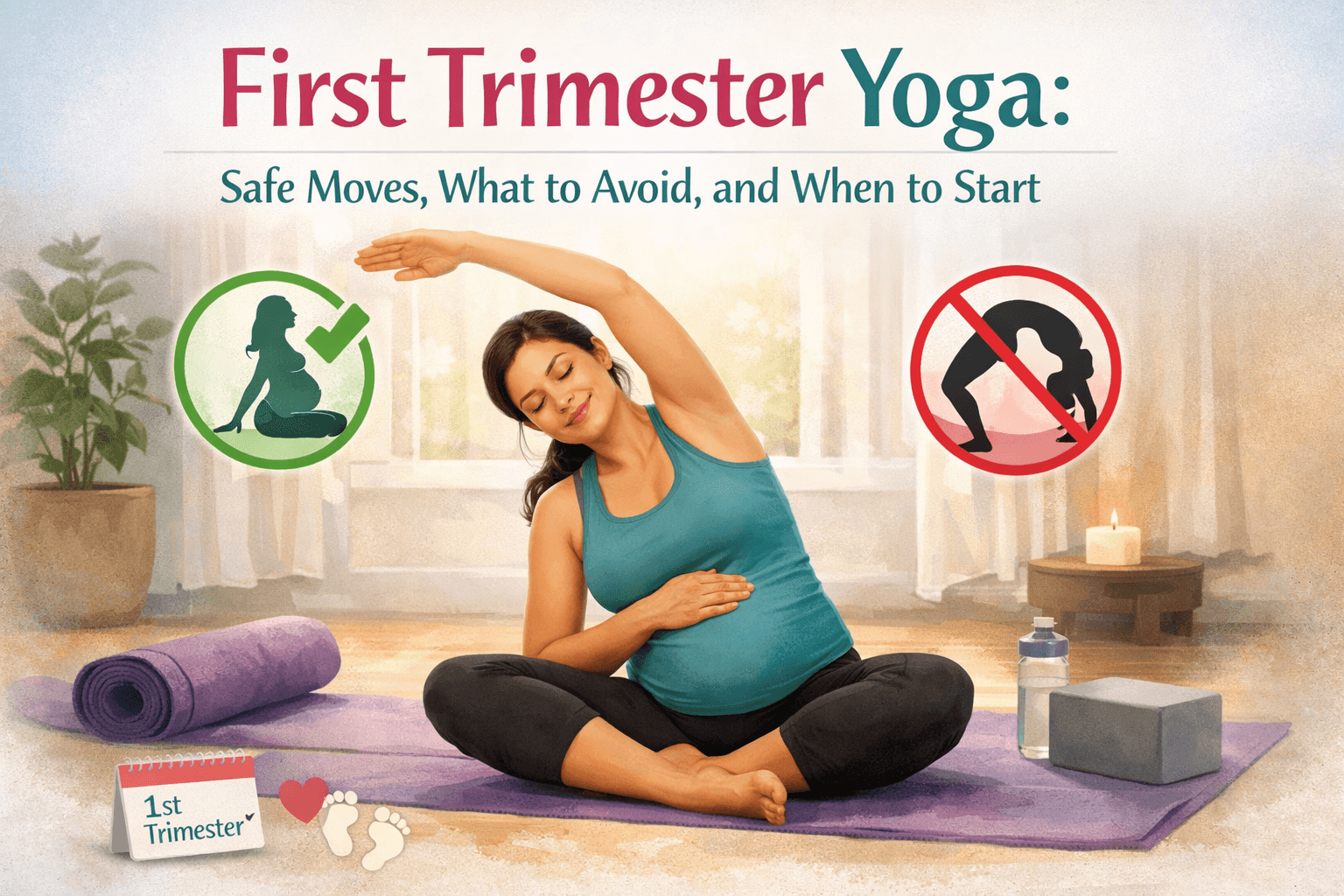
Trimester 1
TL;DR
First-trimester yoga is generally safe when done gently, with proper modifications and medical clearance.
Prenatal yoga helps ease nausea, reduce fatigue, manage stress, improve sleep, and prepare the body for pregnancy changes.
Focus on slow movements, breathing, and short sessions rather than intense or advanced poses.
Safe poses include cat-cow, child’s pose, gentle standing poses, and side-lying relaxation.
Avoid deep backbends, closed twists, hot yoga, jumping, and any pose that compresses the belly.
The goal is not perfection but listening to your body and supporting yourself and your baby through calm, mindful movement.
You just found out you're pregnant; congratulations!
Between the excitement, the constant nausea, and advice from everyone around you, you're probably wondering: Can I still do pregnancy yoga?
The answer is yes. But first-trimester yoga is different from your regular practice. Your body is going through massive changes, even if you can't see them yet, and what felt great a few weeks ago might not work for you now.
This blog walks you through everything you need to know about practicing prenatal yoga safely during your first trimester in terms of what's safe, what to skip, and how to modify your practice so it actually helps with those early pregnancy symptoms.
Is yoga safe in the first trimester of pregnancy?
Yoga can be incredibly beneficial during the first trimester, but you need to approach it mindfully. If you've been practicing yoga regularly before pregnancy, you can generally continue with modifications. If you're new to yoga, the first trimester is actually a great time to start, but you'll want to begin with gentle, prenatal-specific classes rather than jumping into advanced flows.
The key is understanding what's happening in your body right now. During the first trimester, your baby is developing rapidly, and your hormones are surging. You might feel exhausted, nauseous, or both. Some days you’ll have energy; even finding a comfortable sleeping position while pregnant can feel challenging.
Yoga in the first trimester can help with morning sickness, reduce fatigue, ease early pregnancy aches, and prepare your body for the months ahead. But it needs to be the right kind of yoga, practiced the right way.
When to start prenatal yoga in pregnancy?
If you're new to yoga, most experts recommend waiting until after your first doctor's appointment (usually around 8-10 weeks) before starting any new exercise routine. This gives you a chance to discuss your fitness plans with your doctor and make sure there are no specific concerns for your pregnancy.
That said, the second trimester is the perfect point to start pregnancy. Gentle stretching and breathing exercises are generally safe from the moment you discover you're pregnant. Simple pranayama (breathing techniques) can be especially helpful for managing early pregnancy anxiety and nausea.
Important: Always get clearance from your doctor before starting any exercise program during pregnancy, especially if you have any complications or are considered high-risk.
What are the benefits of first-trimester yoga during pregnancy?
Eases morning sickness: Gentle yoga, like slow, mindful movements and breathing exercises helps calm your digestive system. Poses that gently compress the abdomen or focus on deep breathing often provide relief.
Reduces fatigue: Gentle movement actually increases energy levels. A short 15-20 minute practice can leave you feeling more energized than an extra hour of sleep.
Manages stress and anxiety: The first trimester yoga gives excitement, worry, and hormonal mood swings. Yoga's focus on breath and mindfulness helps regulate your nervous system and reduces anxiety.
Prepares your body: Starting a prenatal yoga practice early helps build the strength and flexibility you'll need as your pregnancy progresses.
Improves sleep: A gentle evening practice can help you wind down and sleep better.
Builds community: Prenatal yoga classes connect you with other expecting mothers, which can be incredibly valuable for emotional support and practical advice.
At Rita’s Pregnancy 101, these benefits are brought together in structured prenatal programs designed especially for Indian moms. The sessions include prenatal yoga and meditation to help you stay active and relaxed, Garbh Sanskar practices to nurture your baby’s growth, trimester-specific information sessions, breastfeeding guidance, and fun group activities that help you connect with other moms.
What are the safe yoga poses for the first trimester?
Many yoga poses are perfectly safe during early pregnancy. Here are some gentle, beneficial poses you can practice:
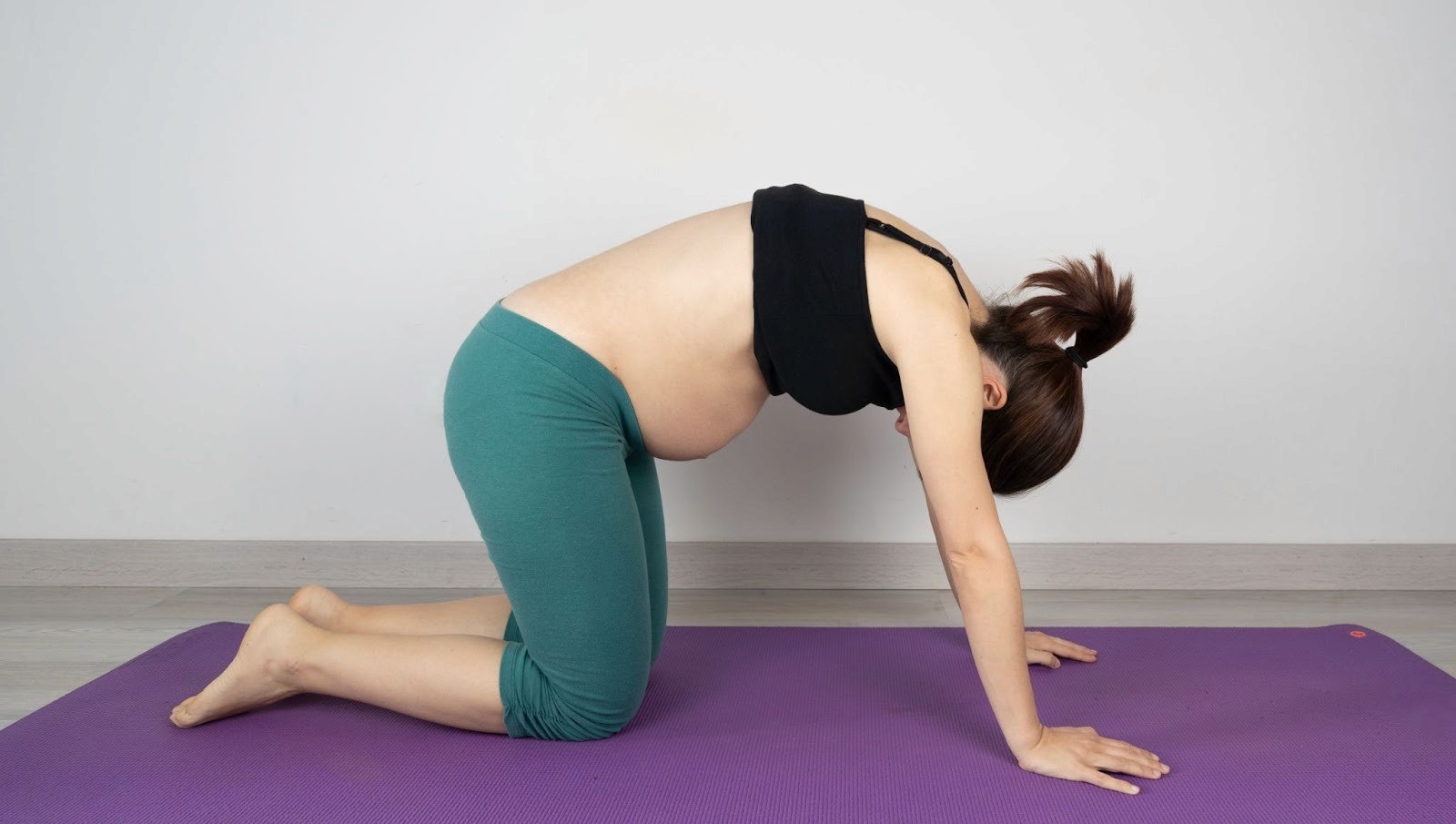
#1 Cat-Cow pose
This gentle, flowing movement helps ease back tension and is excellent for morning sickness. The rhythmic motion combined with deep breathing can be very soothing.
#2 Child's pose
A restful pose that helps you tune into your breath and provides gentle stretching. Keep your knees wide to accommodate your belly, even though it's not showing yet. This builds good habits for later.
#3 Virabhadrasana
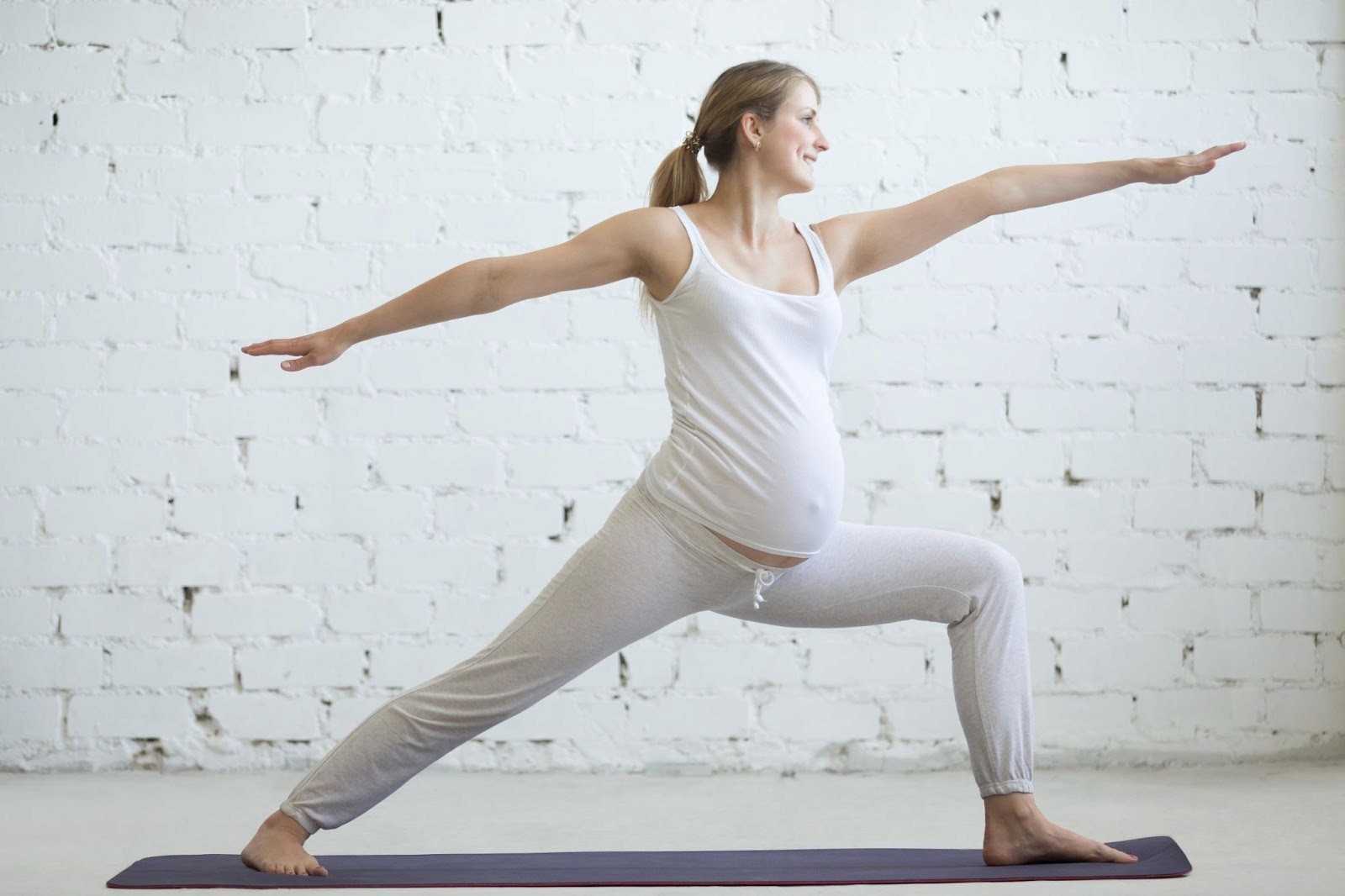
Builds leg strength and improves stamina. Just avoid holding it for too long if you start feeling lightheaded.
#4 Triangle pose
Great for stretching the sides of your body and maintaining flexibility. Use a block if you need extra support.
#5 Seated forward fold modified
Sit on a folded blanket with knees slightly bent. Don't compress your abdomen; instead, create space as you fold forward gently.
#6 Side-lying savasana
For relaxation, lie on your left side with a pillow between your knees rather than flat on your back.
#7 Pelvic tilts
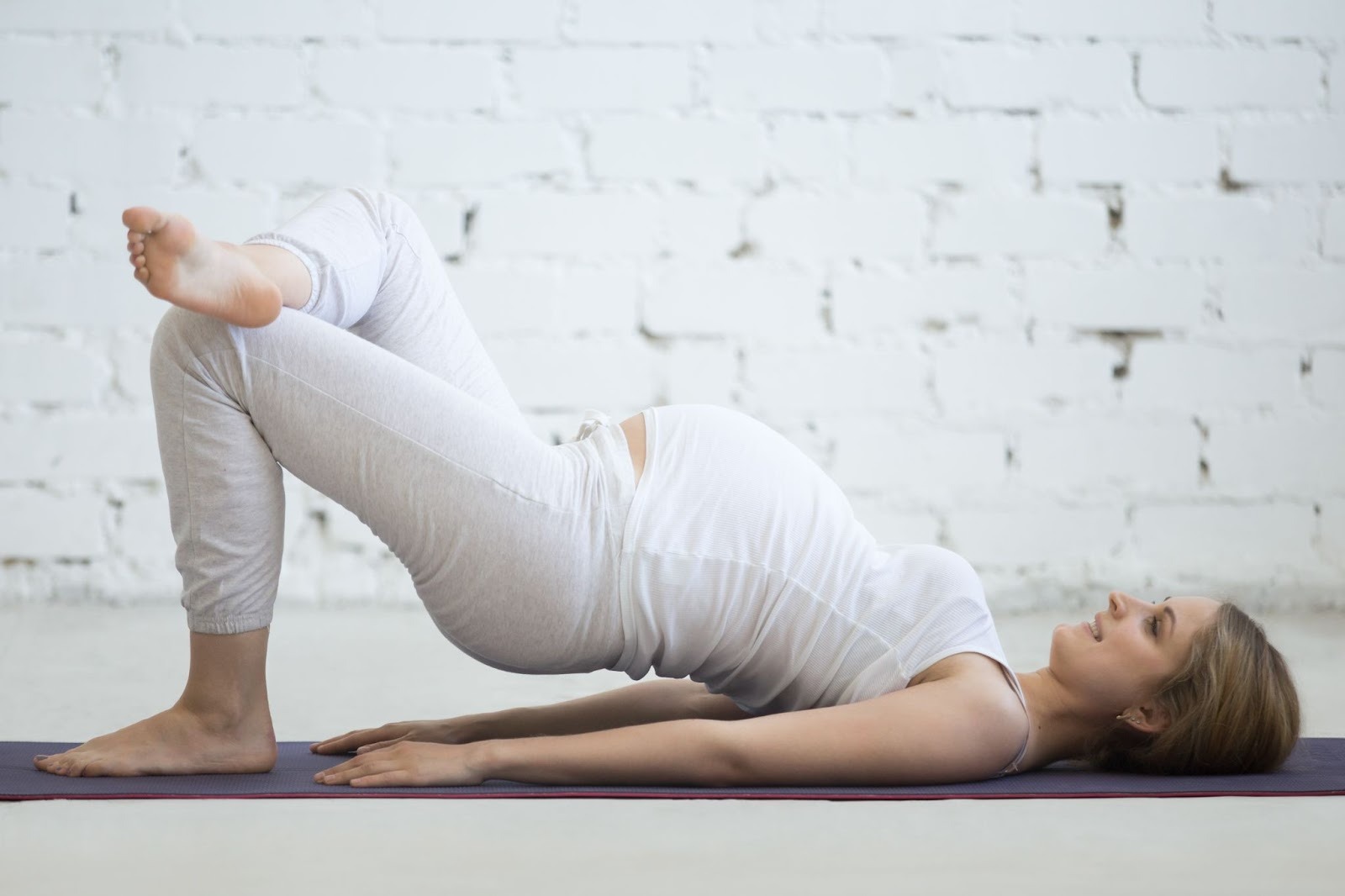
These strengthen your core gently and help prevent lower back pain as your pregnancy progresses.
What to avoid in yoga in the first trimester?
Deep backbends: Poses like full wheel, camel, or deep upward-facing dog put too much pressure on your abdomen. Stick to gentler backbends like a supported bridge pose.
Closed twists: Any twist that compresses your belly is off-limits. If you're twisting to the right, your belly should twist away from your right thigh, not into it.
Deep forward folds: Intense forward bends that compress your abdomen aren't ideal. Always create space and avoid putting pressure on your belly.
Hot yoga: Skip it entirely. Overheating during pregnancy, especially in the first trimester, is risky for fetal development.
Jumping: Any jump-through or jump-back movements should be eliminated. Step through instead.
Lying on Your Belly: Obviously, any pose that has you lying face-down is out.
Practical tips for your first-trimester yoga practice
Listen to your body: If something doesn't feel right, stop. Your body is incredibly wise right now; trust it. Pregnancy isn't the time to push through discomfort.
Focus on breath: Your breath is your best guide. If you can't maintain steady, comfortable breathing in a pose, back off.
Stay hydrated: Keep water nearby and sip frequently. Dehydration can worsen nausea and dizziness.
Keep it short and gentle: You don't need 90-minute power yoga sessions. Even 15-20 minutes of gentle movement and breathing is beneficial.
Create a calm environment: If you're practicing at home, create a peaceful space.
Consider prenatal classes: If possible, join a prenatal yoga class taught by a certified prenatal yoga instructor. They understand the specific needs and modifications for each trimester.
How to manage morning sickness through yoga
Start with breathing exercises before even attempting poses. Simple deep breathing while seated can settle your stomach. Try pranayama techniques like alternate nostril breathing (Nadi Shodhana) or simple belly breathing.
Cat-cow movements are particularly helpful. The gentle rocking motion combined with deep breathing often provides relief. If you feel nauseous during practice, come into child's pose and breathe deeply. Sometimes just being still and focusing on your breath is the most beneficial thing you can do.
Avoid inversions and rapid movements if you're feeling queasy. Keep your practice slow and grounded. Some women find that gentle yoga first thing in the morning (before nausea kicks in) helps prevent or reduce symptoms throughout the day.
Wrap up
First-trimester yoga can be a wonderful addition to your pregnancy journey. It helps you stay active, manages uncomfortable symptoms, prepares your body for the months ahead, and gives you quiet time to connect with your changing body and growing baby.
The key is approaching it mindfully and modifying generously, listening to your body, avoiding risky poses, and not pushing yourself. This isn't about maintaining your pre-pregnancy practice or achieving perfect poses. It's about nurturing yourself and your baby through gentle, safe movement.
Stay in tune with your body with Rita’s Pregnancy P101 and feel supportive and nourishing, not challenging or exhausting.
FAQs
Can I do yoga twists in the first trimester?
Yes, gentle open twists are usually fine, but avoid deep or closed twists that compress the belly. Keep it soft and spacious.
Can I do downward dog in the first trimester?
Often yes, if it feels comfortable and you’re not dizzy. Keep your knees slightly bent, don’t hold too long, and use a wall or chair variation if nausea or wrist pressure bothers you.
Can I sit on the floor in my first trimester?
Yes, you can sit on the floor if it’s comfortable; just support your hips with a cushion and avoid sitting in one position for too long.
How to sit during pregnancy in the first 3 months?
Sit upright with back support, feet flat, and keep hips slightly higher than knees using a cushion; change posture often to avoid stiffness.
What's the best time of day to practice first-trimester yoga?
The best time is when your energy feels best. Many moms prefer late morning or evening, and if you have nausea, try a short practice after a light snack, not on an empty stomach.
Can yoga prevent first-trimester complications?
Yoga can’t guarantee prevention, but gentle prenatal yoga may support better sleep, lower stress and mobility. Always follow your doctor’s advice for complication risk.