
Pregnancy
TL;DR
Pregnancy can change sleep patterns due to hormones, a growing belly, and emotional stress, but small adjustments can improve rest.
Sleeping on your side is the safest and most comfortable position in the second and third trimesters, with left or right being fine.
Sleeping flat on your back or on your stomach should be avoided later in pregnancy, mainly for comfort and better blood flow.
Trimester-wise guidance helps; early pregnancy allows flexibility, and later pregnancy benefits from side sleeping.
Using pillows for support reduces body strain and helps you stay comfortable through the night.
Better sleep comes from comfort and awareness, not fear, and trusted guidance can help you feel calm and confident.
Ever noticed how sleep suddenly feels different once you’re pregnant?
One night you’re wide awake, the next you’re wondering if the way you’re sleeping is even safe. For many Indian moms-to-be, this confusion is completely normal. Between changing hormones, a growing belly, and advice coming from every direction, understanding sleeping positions during pregnancy can feel overwhelming.
The good news is that small, mindful changes can make a big difference. Knowing the safe sleeping positions for pregnant women helps you rest better and feel more confident about your baby’s well-being. When paired with gentle habits like pregnancy yoga, good sleep can ease body aches, calm the mind, and support overall health.
This guide breaks down what’s safe, what to avoid, and why without fear or pressure. Think of it as a calm conversation, helping you find comfort, confidence, and better rest through every stage of pregnancy.
How does pregnancy affect sleep patterns?
Pregnancy can quietly change the way you sleep, even if you were a good sleeper before. Hormonal shifts often lead to frequent urination, making nighttime wake-ups common. As the baby grows, back pain, leg cramps, acidity, and even mild breathlessness can make it harder to stay comfortable in bed.
On top of the physical changes, emotional stress and overthinking at night can keep your mind active when your body needs rest. This is why many women look for real pregnancy sleep problems and solutions that actually work.
Learning how to sleep comfortably during pregnancy is not just about rest; it supports your mood, energy levels, and your baby’s healthy growth. Better sleep helps you feel more balanced, calm, and prepared for the day ahead.
Does sleeping position affect a baby in the womb?
Yes, sleeping position can affect your baby, especially as pregnancy progresses. In early pregnancy, most positions are generally safe because the baby is well protected inside the uterus. However, in the second and third trimesters, how you sleep starts to matter more.
Sleeping flat on your back can put pressure on major blood vessels, which may reduce blood flow to the placenta. This can sometimes make you feel dizzy, breathless, or uncomfortable. Sleeping on your side, particularly the left side, helps improve blood circulation and supports better oxygen and nutrient supply to the baby.
The good news is that your body often gives signals. If a position is not right, you will naturally shift. Small changes in how you sleep can make a big difference to comfort and peace of mind.
Best sleeping position during pregnancy
In 2025, trusted health organizations like the NHS and ACOG advise pregnant women to sleep on their side, especially during the second and third trimesters, as it is considered the safest and most comfortable position for both mother and baby.
When doctors talk about the best sleeping position while pregnant, they usually recommend side sleeping, and for good reason. As your baby grows, sleeping on your side helps your body work more efficiently.
This position keeps pressure off major blood vessels and allows blood, oxygen, and nutrients to flow smoothly to the placenta. Better circulation means better support for your baby’s growth and your own comfort.
1. Side sleeping
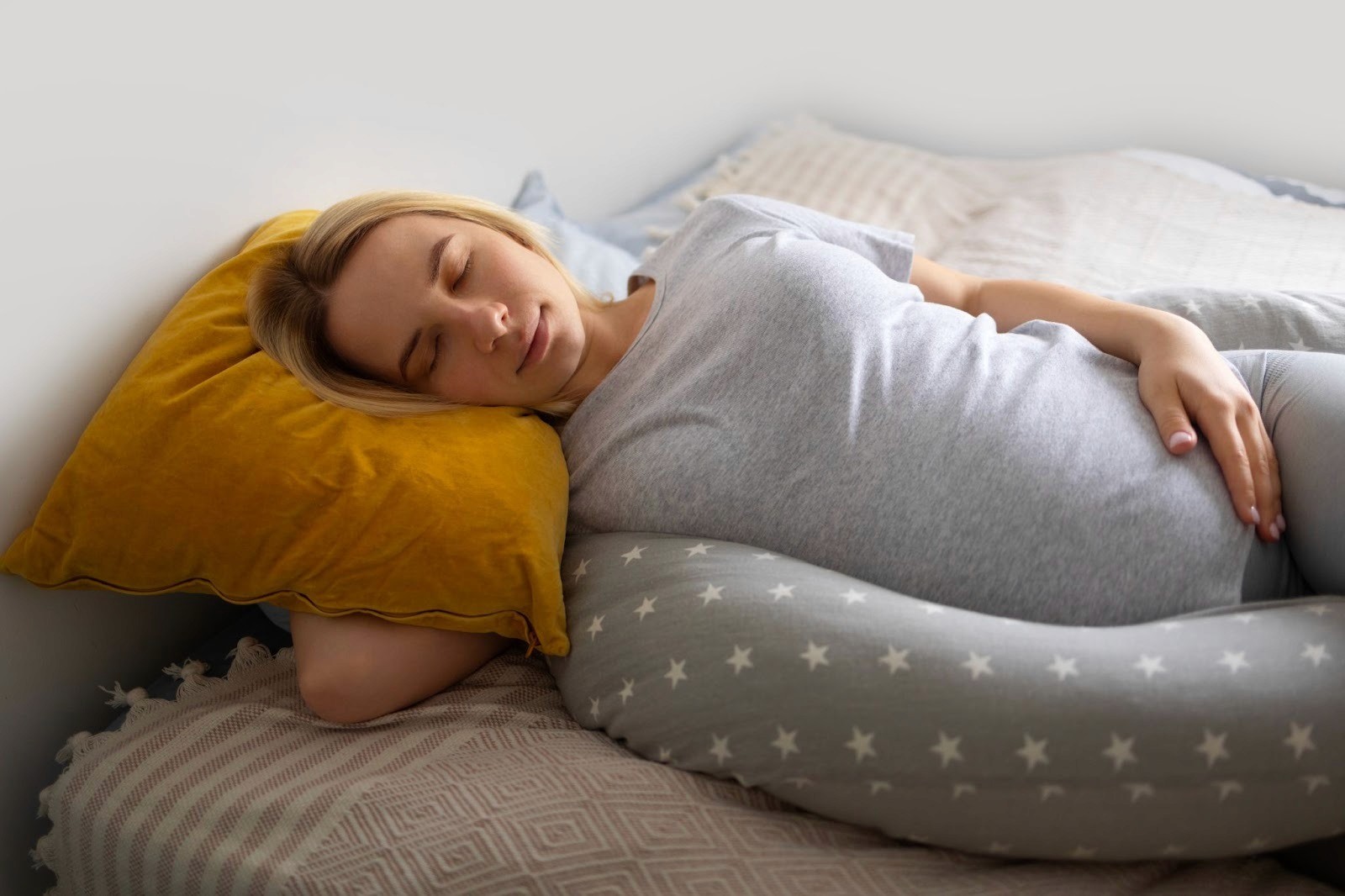
Side sleeping is also considered the safe sleeping position for baby growth because it reduces the chances of dizziness, breathlessness, and swelling that many women feel later in pregnancy. Among side positions, the left side is often preferred. Sleeping on the left side has benefits like the following:
Reduces pressure on major blood vessels, helping prevent dizziness and breathlessness
Helps reduce swelling in legs, feet, and ankles by supporting better kidney function
Aids digestion and can ease acidity and heartburn, which are common during pregnancy
Safe even if you change sides during sleep, your body naturally adjusts for comfort
The goal is comfort, not fear. Use pillows to support your belly and legs, listen to your body, and shift naturally when needed. A relaxed, well-supported sleep position helps both you and your baby rest better.
Can pregnant women sleep on the right side?
Yes, pregnant women can sleep on the right side, and for many moms, it feels more comfortable at times. If you are wondering whether right-side sleeping during pregnancy is safe or not, doctors generally say it is safe, especially when it helps you rest better. While the left side is often preferred for circulation, sleeping on the right side does not harm your baby.
Tips: The key is to stay relaxed and listen to your body. If one side starts to feel heavy or uncomfortable, gently switch sides. You do not need to stay in a single position all night. Using simple support can make a big difference.
Placing a pillow between your knees helps reduce hip pressure, while a small pillow or folded towel under your belly supports your spine and keeps you comfortable. Doctors usually reassure moms that moving during sleep is natural. Focus on comfort, avoid sleeping flat on your back for long hours, and trust your body to guide you into a safe and restful position.
Sleeping positions to avoid during pregnancy
1. Sleeping on the back
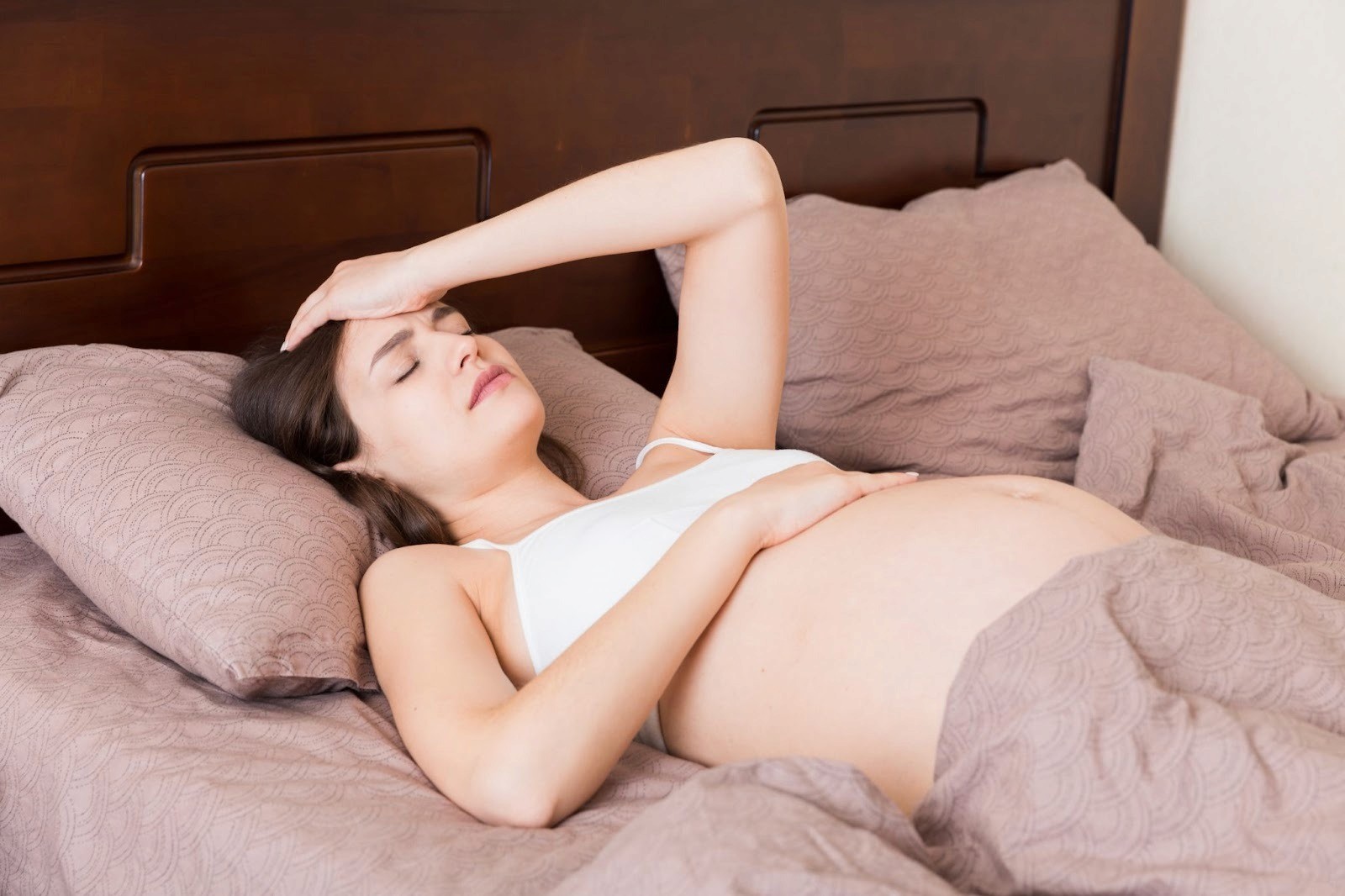
As pregnancy progresses, certain sleeping positions are best avoided for your comfort and well-being. Sleeping on your back, especially after the first trimester, is usually not advised. When you lie flat, the weight of the growing uterus can press on major blood vessels, which may reduce blood flow and make you feel uncomfortable.
Many women notice symptoms like dizziness, nausea, or breathlessness when sleeping on their back for too long. The important thing to remember is not to panic. If you wake up on your backs, it does not mean you have harmed your baby.
Simply roll onto your side and settle back into a comfortable position. Using pillows to support your back or placing one behind you can help prevent rolling over during sleep. Focus on comfort, gentle support, and listening to your body’s signals.
2. Sleeping on the stomach
Sleeping on the stomach is one position doctors usually advise avoiding as pregnancy progresses. In the very early weeks, it’s generally safe because the uterus is still small and protected by the pelvic bone. Many women don’t even realize they’re pregnant at this stage and continue sleeping this way without any harm.
As your belly grows, stomach sleeping naturally becomes uncomfortable. The pressure on your abdomen, breasts, and lower back can cause strain, making it hard to relax or breathe comfortably. Your body will usually guide you to shift positions on its own.
If you accidentally roll onto your stomach while sleeping, there’s no need to panic. Simply adjust to a side position when you wake up. Listening to your body and choosing comfort is the best approach during pregnancy.
Trimester-wise sleeping position guidance
#1 First trimester (0–12 weeks)
In the first trimester, your body is still adjusting, and sleep positions are flexible. You can safely sleep on your back, stomach, or side, whatever feels most comfortable. The uterus is still small and well-protected inside the pelvic area, so external pressure does not affect the baby at this stage.
Fatigue and nausea are common, so rest whenever you can. This is also a good time to gently start practicing side sleeping, not because it is mandatory yet, but to build a habit before it becomes important later.
#2 Second trimester (13–27 weeks)
This is the phase where sleep positions start to matter more. Around 20 weeks, most doctors suggest transitioning to side sleeping. As the uterus grows, lying flat on your back can press on a major blood vessel called the inferior vena cava.
This may cause dizziness, breathlessness, or reduced blood flow. Sleeping on the stomach is still technically safe, but most women naturally stop because the growing bump makes it uncomfortable. Using pillows between your knees and under your belly can make sleeping much easier.
#3 Third trimester (28 weeks to birth)
In the final months, the main rule is to avoid falling asleep on your back. Research shows that back sleeping in late pregnancy can restrict blood and oxygen flow to the placenta. Both left-and right-side sleeping are considered safe.
While the left side may slightly support circulation and kidney function, recent research shows no major difference between left and right outcomes. What matters most is the position you fall asleep in. If you wake up on your back, do not panic. Simply roll onto your side and continue sleeping.
Pregnancy stage | Recommended sleeping positions | Positions to slowly avoid |
First trimester | Any comfortable position, back, side, or stomach | No restrictions at this stage |
Second trimester | Side sleeping, left or right | Back sleeping, especially after around 20 weeks |
Third trimester | Side sleeping only, left or right | Falling asleep on your back |
Helpful tip: Using a pregnancy pillow or placing a rolled towel behind your back can gently stop you from rolling onto your back during sleep, without disturbing your rest.
Common myths and fears around sleeping positions
In India, pregnancy often comes with plenty of advice from family, friends, and even neighbors, especially about sleeping positions. A common fear is that a wrong sleeping position can harm the baby or even cause a miscarriage.
In reality, occasional changes in sleep position do not cause miscarriage, especially in early pregnancy. Your body and the uterus are designed to protect the baby. Another myth is that one night of back sleeping can be dangerous.
Medical advice is calmer and more practical. What matters is your regular sleep pattern, not a single night or accidental position. Social advice often sounds strict or scary, while medical guidance focuses on comfort, circulation, and overall well-being.
If you feel frequent dizziness, breathlessness, numbness, or anxiety about sleep, talk to your doctor. A quick conversation can clear doubts and help you sleep with confidence instead of fear.
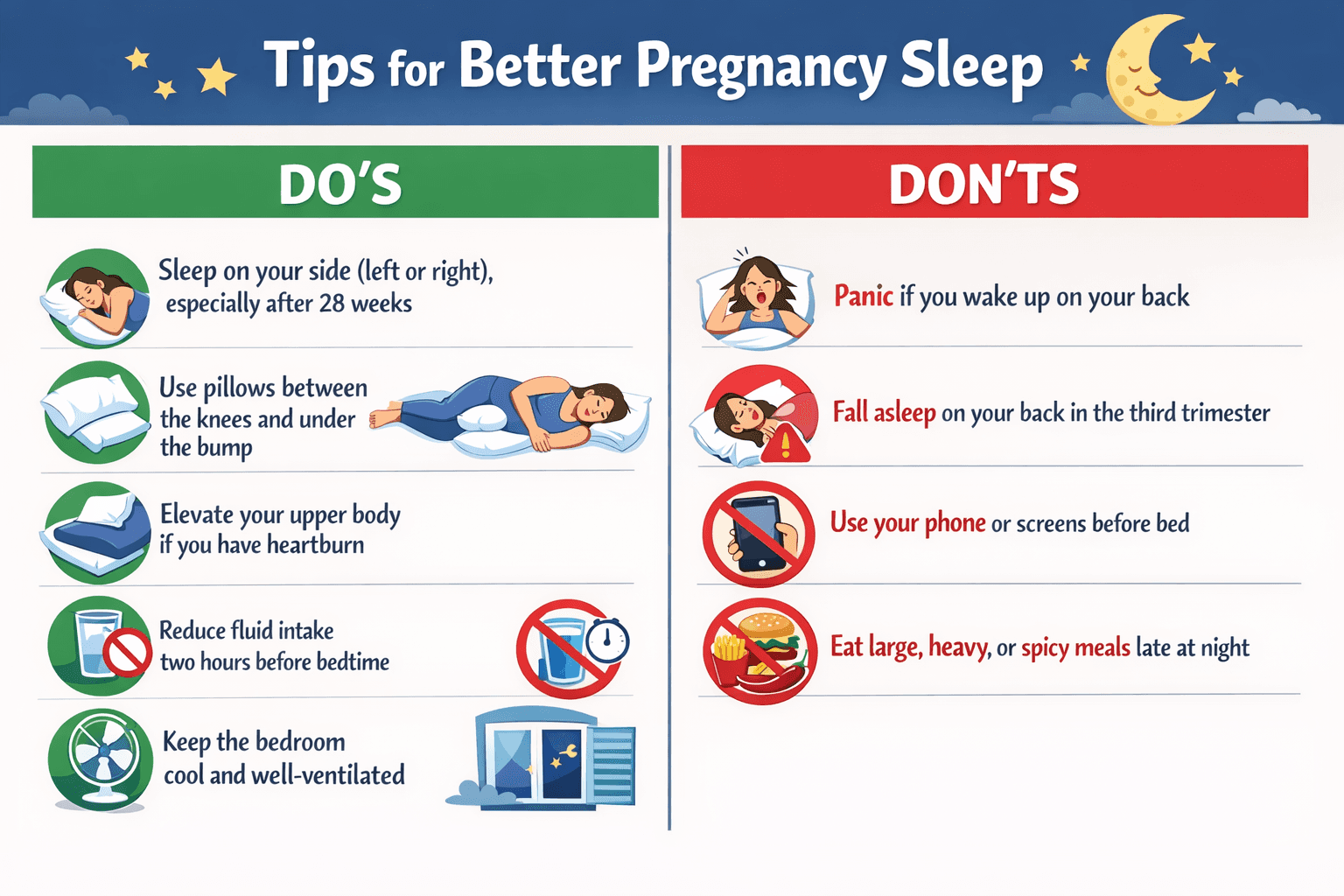
Simple do’s and don’ts for better pregnancy sleep
Final thoughts
As your pregnancy progresses, remember that better sleep comes from comfort, awareness, and trusting your body. Simple changes in sleeping positions, gentle movement, and calm routines can make a real difference to how you feel each day.
Many Indian moms find added confidence through structured support like Rita’s Pregnancy 101, which offers prenatal yoga, meditation, clear information sessions, and trimester-specific guidance to help you stay active, relaxed, and informed at every stage.
If you are looking for a calmer, more confident pregnancy journey, explore the Pregnancy 101 website and take the next step toward feeling supported, rested, and prepared.