
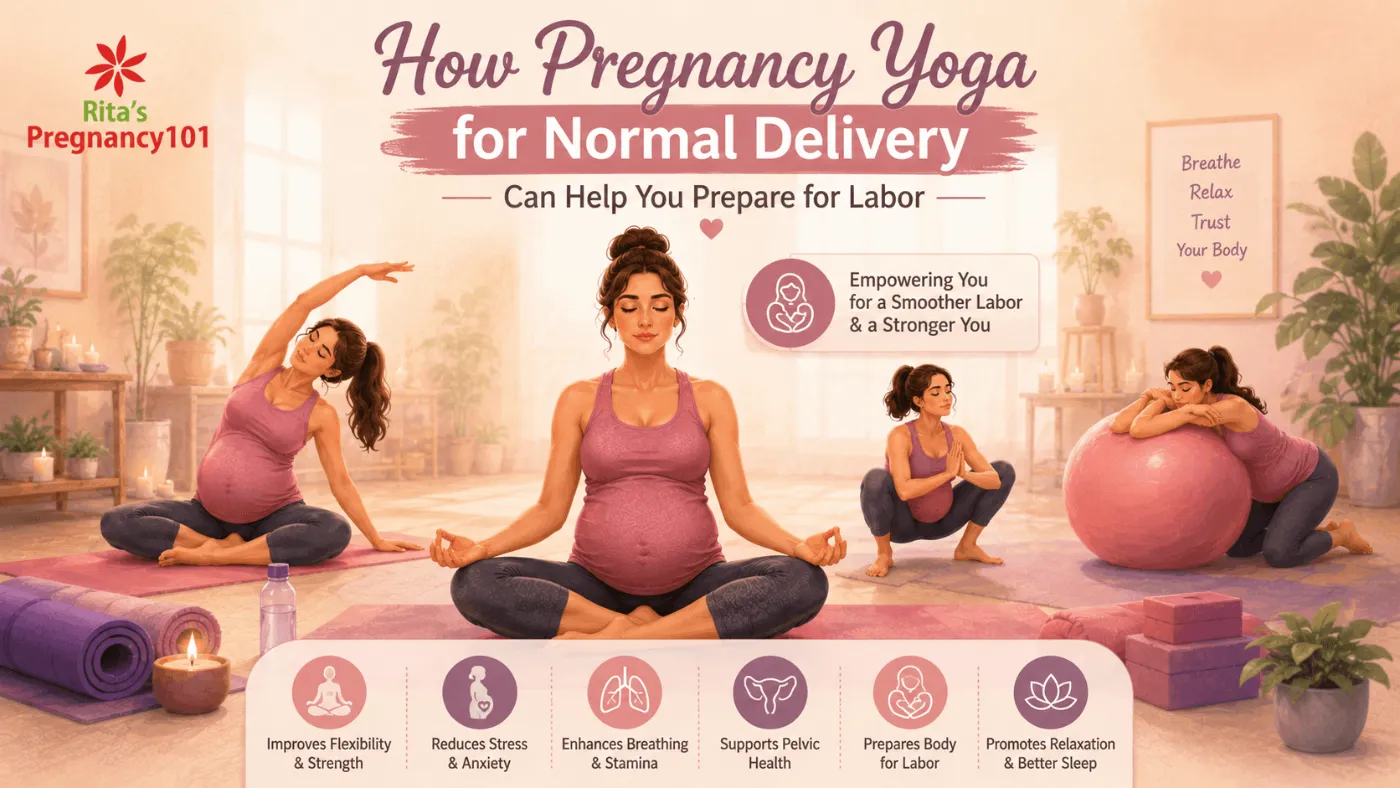
In this guide, you will learn how to use specific movements to prepare your body for childbirth. You will also learn how to reduce labor pain and support a smooth delivery.
Starting the journey toward motherhood is a big change. Using pregnancy yoga for normal delivery is one of the best ways to prepare your body and mind for the big day.
Many mothers feel worried about the physical work of labor. However, regular prenatal practice can help ease these worries. By focusing on flexibility, strength, and mindfulness, you can create the best physical state for a natural birth. This ensures you feel ready and strong when labor starts.
At Pregnancy 101, we believe that pregnancy yoga for normal delivery is one of the safest and most effective ways to prepare your body and mind for childbirth.
Understanding the Physical Benefits of Prenatal Yoga for Normal Delivery
Prenatal yoga is more than just gentle stretching. It is a full preparation tool that helps with the body changes that happen during pregnancy. As your baby grows, your center of gravity shifts. This often leads to back pain and pelvic discomfort. By doing regular yoga, you strengthen the muscles that support your spine and pelvis. These muscles are key for good posture.
This physical training helps spread your weight more evenly. It lowers the strain on your lower back and legs as you get closer to your due date.
Also, yoga exercises for normal delivery focus on making your hip joints and pelvic floor more flexible. When these areas are supple and strong, your body handles the stress of labor better. These movements also increase your blood flow. This helps reduce common swelling during pregnancy.
By doing these targeted movements, you train your body for the endurance needed during labor. This makes the process feel easier and less hard on your body. The benefits of yoga during pregnancy also include better stamina. This is key for a smooth, normal vaginal delivery.
Key Physiological Advantages
Enhanced Pelvic Mobility: Opens the hips to allow for easier fetal descent.
Improved Circulation: Reduces edema and supports healthy blood flow to the placenta.
Core Stability: Strengthens the deep abdominal muscles to support the growing belly.
Reduced Muscle Tension: Releases physical stress stored in the shoulders and neck.
As you build this base of strength and flexibility, you will notice that your daily movements become smoother. This physical readiness is important. It helps your body adjust to the changes of pregnancy.
It also prepares the pelvic floor for the intensity of childbirth. Moving from basic stretches to more focused labor preparation movements will give you the confidence you need. This is especially true as you enter your third trimester.
Breathing Techniques for Labor Management and Easy Delivery
One of the best parts of prenatal yoga is learning how to breathe with your diaphragm. This is a main part of pain management during childbirth. When you are in labor, your body naturally tenses up because of pain. This can actually slow down the delivery. By practicing deep, rhythmic breathing, you tell your nervous system that it is safe to relax. This helps you stay calm during contractions. It allows your body to work well instead of fighting against the natural process of birth.
"Conscious breathing is the bridge between the mind and the body. During labor, controlled breath patterns act as an anchor, helping mothers remain present and calm, which can significantly reduce the perception of pain and promote uterine efficiency.", Pregnancy 101 Wellness Expert
Beyond simple relaxation, these breathing techniques for childbirth help ensure that both you and your baby get enough oxygen during labor. When you focus on your breath, you manage your heart rate and lower stress levels. This is vital for a smooth, normal delivery.
Adding these techniques to your daily routine ensures they become a natural response when you are in the delivery room. By mastering your breath, you take back control over your labor experience. You turn a scary prospect into a manageable journey.
At Pregnancy 101, our prenatal yoga experts teach breathing techniques that help mothers stay calm and confident during labor.
Yoga for Pelvic Floor Health and Flexibility
Preparing the pelvic floor is perhaps the most important part of using pregnancy yoga for normal delivery. The pelvic floor muscles support the uterus, bladder, and bowel. During labor, these muscles must be strong enough to support the baby. They must also be flexible enough to stretch during the pushing phase.
Specific poses like the Butterfly Pose (Baddha Konasana) and Garland Pose (Malasana) are great for opening the pelvis. They also increase the stretchiness of the perineal tissues. These are often paired with perineal massage for extra tissue preparation.
These poses work best when you practice them often during the second and third trimesters. By encouraging blood flow to the pelvic area, you help keep the tissues healthy. This may lower the chance of tearing during birth.
Many women find that using a birthing ball with their yoga practice helps even more. The ball allows for gentle, rhythmic pelvic rocking. This encourages the baby to settle into the best position for a vaginal birth.
You should approach these poses with mindfulness and respect for your body’s current limits. As your belly grows, you may need to use props like blocks or blankets. These help you stay stable and comfortable.
By making yoga for pelvic floor health a priority, you are not just preparing for birth. You are also setting the stage for a faster recovery after the baby arrives. A strong, flexible pelvic floor is the secret weapon for any woman aiming for an easy and natural delivery experience.
Safe Yoga for Third Trimester and Labor Preparation
Entering the third trimester means you need to change how you approach your yoga practice. Staying active is vital, but you must put safety and comfort first.
During this phase, focus on restorative and gentle movements that fit your changing body. Avoid deep twists that press on the belly. Also, avoid poses that require lying flat on your back for a long time. This can block blood flow to the baby. Instead, focus on side-lying positions and supported seated poses that provide stability.
Consistent practice during these final weeks is helpful, but you must balance it with enough rest. The goal of pregnancy yoga for normal delivery at this stage is to prepare the mind for labor. It also helps you keep the flexibility you gained in earlier months.
Listen to your body’s signals. If a move feels strained or uncomfortable, change it or skip it. You should always talk to your doctor before starting or continuing any exercise plan.
This is especially true if you have high-risk conditions or pregnancy complications. Adding prenatal yoga poses for labor to your routine can help you feel more ready for the physical work of childbirth.
Modified Sun Salutations: Use blocks to keep your spine tall and avoid overstretching.
Cat-Cow Stretch: Excellent for relieving back pressure and encouraging optimal fetal positioning.
Child’s Pose (Wide-Knee): Provides space for the belly and helps soothe the lower back.
Pelvic Tilts: Gentle movements that improve pelvic mobility and reduce discomfort.
By keeping your practice gentle and consistent, you create a routine that prepares your body for the physical work of labor without overdoing it. This balanced approach ensures you stay vibrant and energized as you get closer to your due date. You will feel confident that your body is well-prepared for the task ahead.
The certified instructors at Pregnancy 101 recommend gentle, trimester-specific yoga practices for maximum safety and comfort.
Mental Preparation and Mindfulness for Childbirth
The mental side of childbirth is just as important as the physical preparation. Labor is an intense experience. Yoga gives you the tools to build the mental strength needed to get through it.
Through mindfulness and meditation, you learn to let go of fear. You learn to accept the feelings of labor as part of a natural process. This change in view can really change your experience. It helps you stay grounded even when the intensity of contractions grows.
Yoga encourages you to be present. It teaches you to focus on the "now" instead of worrying about how long labor will last or how much it will hurt. Many women find that positive thoughts used during their yoga practice become a source of strength during the actual birth. By picturing a smooth and successful delivery, you prepare your mind to stay calm and focused.
This mental clarity is a powerful tool. It helps you talk clearly with your birth team and make smart choices during the delivery process. This is much like the principles taught in Lamaze classes.
When you combine these mindfulness practices with pregnancy yoga for normal delivery, you create a complete approach to birth preparation. You are not just training your muscles. You are building a mindset of trust in your body’s natural ability to give birth.
This emotional and mental readiness is what allows many women to have a positive birth experience. It turns the process from something to fear into an empowering milestone in their lives.
Final Thoughts
Preparing for labor is a complete task that blends physical training with mental strength. By adding pregnancy yoga for normal delivery to your routine, you are taking a smart step toward a smoother, more empowered birthing experience. Remember to listen to your body, stay consistent, and talk with your healthcare provider.
Ready to experience the benefits of pregnancy yoga for normal delivery? Join the expert-led prenatal yoga classes at Pregnancy 101 and prepare your body and mind for a healthier, more confident birth journey.
FAQs:
1. Is pregnancy yoga safe for normal delivery?
Yes. Pregnancy yoga is generally safe when practiced under expert guidance and with your doctor's approval. It helps improve flexibility, strengthen pelvic muscles, and prepare your body for labor.
2. When should I start pregnancy yoga for normal delivery?
Most women can begin prenatal yoga during the second trimester after consulting their healthcare provider. Gentle exercises may also be suitable in the first trimester if approved by a doctor.
3. Can pregnancy yoga reduce labor pain?
Pregnancy yoga cannot eliminate labor pain, but regular practice improves breathing, relaxation, and muscle strength, which can help you manage contractions more comfortably.
4. Can I practice pregnancy yoga during the third trimester?
Yes. Gentle and modified prenatal yoga is usually safe during the third trimester. Avoid deep twists, lying flat on your back for long periods, and any pose that causes discomfort.
5. How often should I practice pregnancy yoga?
Most experts recommend practicing prenatal yoga 3–5 times per week for 20–40 minutes, depending on your health condition and your doctor's advice.
Reading is good. Practicing is better.
Join 5,000+ moms in the P101 Onwards Care programs, yoga, meditation, information classes and a Saturday live Q&A, from ₹1,000/month.
Explore Courses