
Pregnancy Yoga
TL;DR
Prenatal yoga is specifically designed for pregnant women, with every pose, breathing technique, and movement adapted for a changing body; it's not just regular yoga with modifications.
The core differences between prenatal yoga and regular yoga are pose safety (no lying on the back after week 16, no inversions, no deep twists), instructor training, and a slower, more intentional pace.
Key poses to avoid during pregnancy include supine poses after week 16, deep backbends, strong inversions, and forceful pranayama. A certified prenatal instructor replaces these with safe alternatives.
You can start prenatal yoga in any trimester; the second trimester (weeks 13–27) is the most popular starting point, but third-trimester practice is especially valuable for labor preparation.
Prenatal yoga directly supports labor and delivery through hip-opening poses, pelvic floor awareness, and breathwork techniques that translate to managing contractions.
Consistent prenatal yoga reduces back pain, eases swelling, improves sleep, manages stress, and speeds up postpartum recovery, making it especially beneficial for working mothers managing pregnancy alongside demanding careers.
You've been doing yoga for years. Then you get pregnant, and suddenly you're not sure if your usual practice is still safe. Or maybe you've never done yoga before and are wondering if prenatal yoga is right for you. Either way, you're asking the right questions.
Prenatal yoga vs. regular yoga isn't really a debate; it's about understanding what your body needs right now. Pregnancy changes everything, so your yoga practice needs to change with it. This article breaks down exactly how, so you can move through your pregnancy with confidence.
What is regular yoga?
Regular yoga, such as Hatha, Vinyasa, Ashtanga, or Power Yoga, is designed for everyone. It builds strength, flexibility, and mental focus, and it's excellent for overall health. The difference between yoga and prenatal yoga comes down to intent and safety.
Regular yoga classes are not designed for a growing belly, as they require lying flat on your back, which is unsafe during pregnancy. It means it needs significant adjustments once you're pregnant.
What is prenatal yoga?
Prenatal yoga is a form of yoga designed specifically for pregnant women. Every pose, breathing technique, and movement is chosen to keep you and your baby safe and comfortable. It focuses on:
Gentle strengthening of the back, hips, and pelvic floor
Breathing techniques (pranayama) that help during labor
Relaxation and stress relief through guided meditation
Body awareness and learning to listen to what your body needs as it changes
Prenatal yoga is a whole different approach to movement. Understanding prenatal yoga vs regular yoga starts with understanding that your body in pregnancy is fundamentally different.
How is prenatal yoga different from regular yoga?
When you look at prenatal yoga vs regular yoga side by side, the differences are easy to notice. Here’s a simple breakdown to clearly understand the difference between yoga and prenatal yoga:
Regular Yoga | Prenatal Yoga |
Lying on the stomach | Completely avoided |
Lying flat on the back | Avoided after first trimester |
Deep twists and inversions | Modified or removed |
Strong core work (crunches, boat pose) | Replaced with safe pelvic floor work |
Heated/hot yoga possible | Never recommended during pregnancy |
Instructor may not be pregnancy-trained | Taught by certified prenatal instructors |
Prenatal yoga differs from regular yoga in terms of intensity. Regular yoga classes can be fast-moving and intense. Prenatal yoga classes are slow. You spend more time in each pose, move gently between positions, and are offered simple modifications to stay comfortable and safe throughout the practice.
A prenatal class has a community that understands exactly what you're going through. That shared experience is especially valuable for working mothers who have little time to process their pregnancy. It creates a support system that regular yoga classes can't replicate.
The biggest shift is in instructor training. A certified prenatal yoga teacher knows which poses risk diastasis recti, which can restrict blood flow, and how to adapt every class to trimesters-wise guidance. That expertise matters.
What yoga poses should be modified during pregnancy?
Understanding which yoga poses need to be modified during pregnancy helps you avoid unnecessary discomfort and reduces the risk of injury.
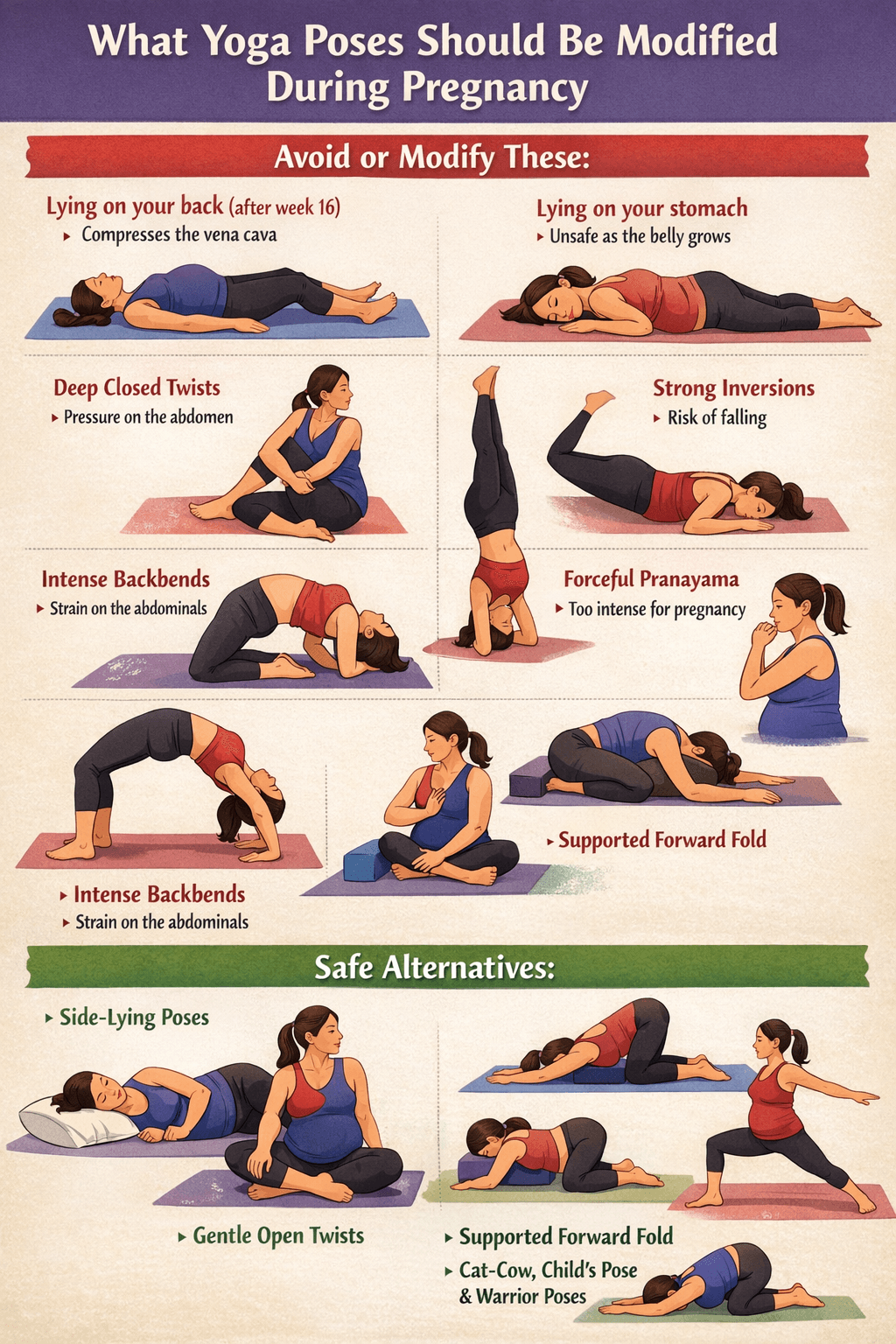
Avoid or modify these:
Lying on your back (after week 16) compresses the vena cava and reduces blood flow to the baby.
Lying on your stomach is uncomfortable and unsafe as the belly grows.
Deep closed twists can put pressure on the abdomen.
Strong inversions like headstands, and shoulder stands create a risk of falling significantly.
Intense backbends, such as wheel pose, and full camel, strain the already-stretched abdominals.
Safe alternatives:
Side-lying poses instead of supine ones
Open twists from the upper back (not the waist)
Supported forward folds with a block or bolster
Cat-cow, child's pose, and warrior poses with a wider stance
These are exactly the kind of prenatal yoga modifications a good instructor guides you through. It's a core part of what makes prenatal yoga vs regular yoga such a distinct practice.
What trimester should I start prenatal yoga?
You can start in any trimester, but there are a few important details to keep in mind.
First trimester (weeks 1–12): If you were already doing yoga before pregnancy, you can continue with modifications. If you're a beginner, wait until week 12, when the risk of miscarriage drops and morning sickness typically eases.
Second trimester (weeks 13–27): This is the perfect time. Energy is back, the belly is visible but manageable, and your body responds beautifully to prenatal practice. Most of the Indian moms start here.
Third trimester (weeks 28–40): Absolutely safe and arguably the most beneficial time. Prenatal yoga at this stage helps prepare the body for labor, opens the hips, and keeps anxiety in check.
If you are still confused about when you should start?
Read our detailed guide on when to start pregnancy yoga online to understand what’s safe, what to expect, and how to begin with confidence.
Does prenatal yoga help with labor and delivery?
Yes, and this is one of the most underrated benefits.
Breathing techniques practiced in class directly translate to labor. Slow, controlled breath helps manage contractions.
Hip-opening poses like malasana, deep squat, and pigeon pose encourage the baby into an optimal position for birth.
Pelvic floor exercise helps you both engage and release muscles during child birth. Here most Indian women have never consciously practised.
Mental resilience. Yoga teaches you to stay calm under physical intensity. That training helps.
If you want to learn more about preparing for birth, Rita’s Pregnancy 101 information sessions explain labor, delivery, and newborn care in a simple and detailed way. You feel informed, prepared, and confident for the big day.
The benefit of prenatal yoga
Beyond labor preparation, here's what consistent prenatal yoga delivers:
Reduces back pain: Targeted lower back and hip work directly addresses the #1 pregnancy complaint.
Eases swelling: It improves circulation and reduces edema in feet and hands (especially important since pregnant women have ~50% more blood volume).
Better sleep: Stretching and relaxation help you wind down despite physical discomfort.
Manages stress and anxiety: It is critical for working mothers to manage pregnancy alongside demanding careers.
Faster postpartum recovery: Stronger core and pelvic floor muscles mean your body bounces back quicker after delivery.
Community support: Connecting with other expecting mothers in your city is genuinely priceless.
Is prenatal yoga safe in the third trimester?
Yes, with the right guidance. In the third trimester, your body is preparing for birth. Prenatal yoga at this stage focuses on:
Hip and pelvic opening to prepare for labor
Breathwork to manage the intensity of contractions
Gentle strengthening to support the extra weight
Relaxation to reduce anxiety
The key is who's guiding you. An experienced prenatal instructor knows exactly what to do and what to avoid. These prenatal yoga modifications vary from trimester to trimester. So, a good instructor adjusts every session accordingly.
Explore our prenatal yoga classes to see exactly how we do it.
Start your prenatal yoga journey
The difference between yoga and prenatal yoga isn't about one being better than the other. It's about choosing what's right for where you are right now. Prenatal yoga vs regular yoga comes down to safety, intention, and expertise.
With the right practice, yoga can make your pregnancy more comfortable, your labor more manageable, and your recovery faster. You don't need to give up movement; you just need to move smarter. And when you're ready to take that step, we're here.
Book your 1-week free trial with Rita’s Pregnancy 101 and experience expert-led classes designed for every stage of your pregnancy, right from home.
FAQs
Can I do normal yoga while pregnant?
Yes, with modifications. It depends on which trimester you’re in, how much yoga experience you already have, and whether your instructor knows how to safely modify poses for pregnancy.
Is vinyasa yoga safe during pregnancy?
Yes, you can usually continue Vinyasa yoga during pregnancy if you’re experienced, listen to your body, and make the right modifications. But always check with your doctor first. Avoid deep twists, and don’t lie flat on your back after the first trimester.
How often should I do prenatal yoga each week?
2 to 4 times per week is ideal. It improves strength, promotes better sleep, and reduces back pain without overexerting yourself. On days when you're tired or uncomfortable, rest. Consistency matters more than frequency.
Can prenatal yoga help with back pain during pregnancy?
Yes. It's one of the most common reasons women start. Cat-cow, child's pose, directly targets the lower back and hips. Most women notice improvement within 2–3 weeks of consistent practice.