
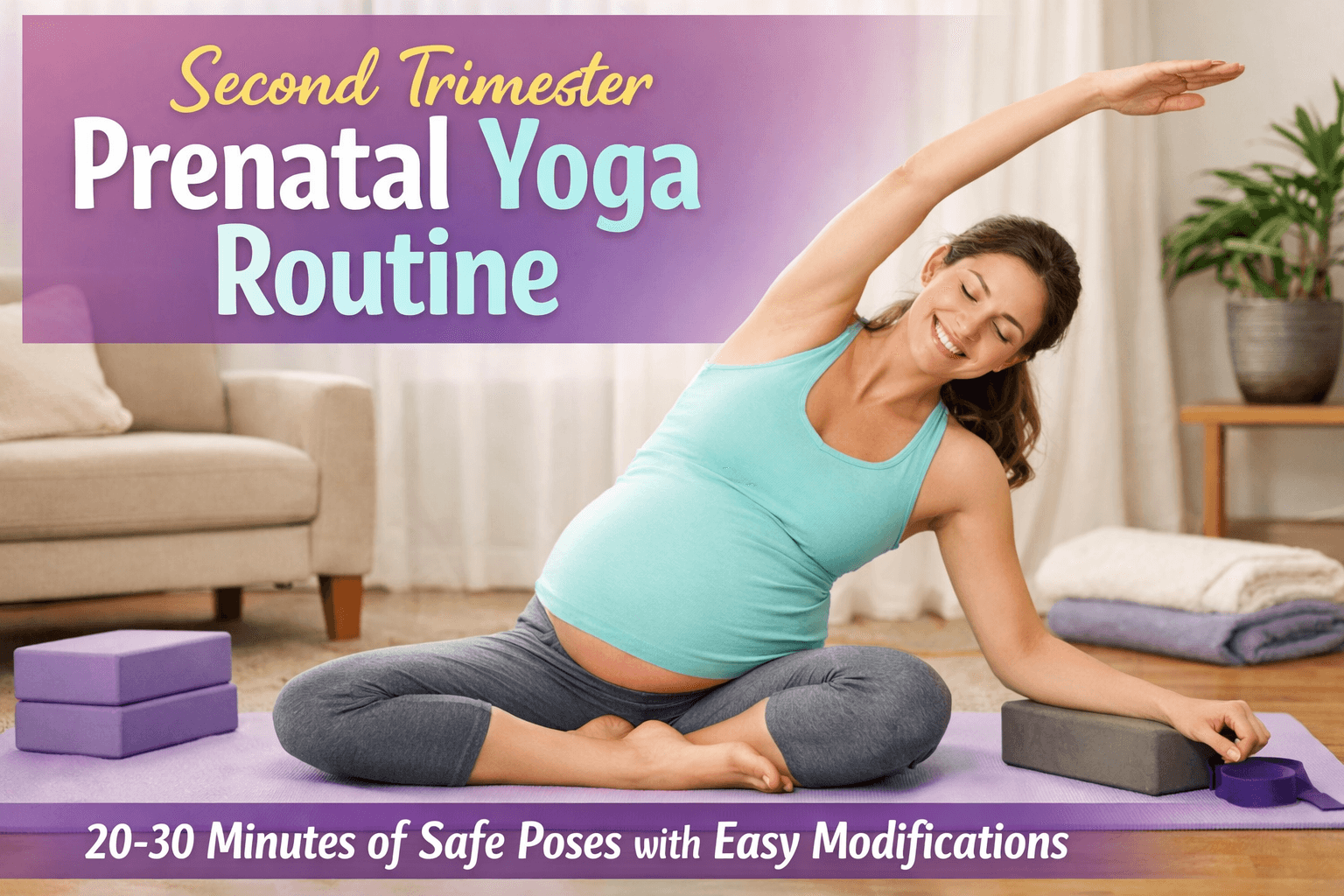
Trimester 2
TL;DR
The second trimester (weeks 13 to 27) is the safest and most comfortable time to start a prenatal yoga practice.
A simple 20-minute prenatal yoga second-trimester routine can relieve back pain, open hips, improve sleep, and reduce anxiety.
This blog includes 6 beginner-friendly, safe yoga poses with easy modifications for every body and fitness level.
Always avoid deep twists, backbends, inversions, and lying flat on your back after 20 weeks.
Butterfly Pose, Cat-Cow, and Side-Lying Savasana are among the most beneficial and safest poses for second-trimester mamas.
Consistency matters more than perfection; even 10 minutes of prenatal yoga daily can make a real difference for you and your baby.
Welcome to the most beautiful phase of your pregnancy! Second trimester.
If you're somewhere between weeks 13 and 27, you've probably noticed something wonderful. Your energy is back, that queasy feeling has finally left, and you're starting to really feel pregnant in the best way possible.
This is the perfect time to start a second-trimester prenatal yoga practice that makes you feel strong, calm, and connected to your baby. No fancy equipment needed, and no previous yoga experience required. All you need is yourself, your mat, and 20 minutes.
By the end of this blog, you'll have a complete, safe routine that helps with back pain, prepares your body for delivery, and gives you that precious "me time" with your growing baby.
Is yoga good for pregnancy in the second trimester?
Yes, your body is doing something incredible right now. Your baby is growing fast, and your belly is expanding, bringing on some everyday pregnancy struggles, such as backaches, stiff hips, trouble sleeping, and a constant feeling of heaviness.
A prenatal yoga routine can genuinely offer physical relief from pregnancy discomfort. Studies show that prenatal yoga during the second trimester helps boost energy levels, improve sleep quality, and reduce anxiety.
If you've been struggling with that nagging lower back pain, one of the biggest pregnancy yoga benefits is that it offers safe and effective relief. Gentle stretches open up the hips, strengthen the spine, and release tension that builds up from carrying extra weight in front.
What you need to know before starting the second trimester prenatal yoga
Before you roll out that mat, let's talk safety. Finding safe pregnancy yoga second trimester poses is really important because your body is going through a lot right now and needs to be treated gently.
Always check with your doctor first, especially if you have a high-risk pregnancy or any complications.
Skip deep twists and strong backbends; these put pressure on your belly and aren't safe right now.
Don't lie flat on your back after 20 weeks; the weight of your uterus can compress a major blood vessel. Use a bolster or pillow instead.
Stay hydrated and keep a water bottle within arm's reach.
Listen to your body, always. If something feels off, stop. Yoga should feel good, never painful.
Breathe normally and avoid holding your breath or intense pranayama like Kapalabhati.
A simple 20 minute prenatal yoga sequence for your second trimester
Here's a beginner 20 minute prenatal yoga second trimester sequence that covers stretching, strengthening, and relaxation. Set a timer, put on some calming music, and let's flow.
1. Cat-cow pose (Marjariasana-Bitilasana) — 2 min
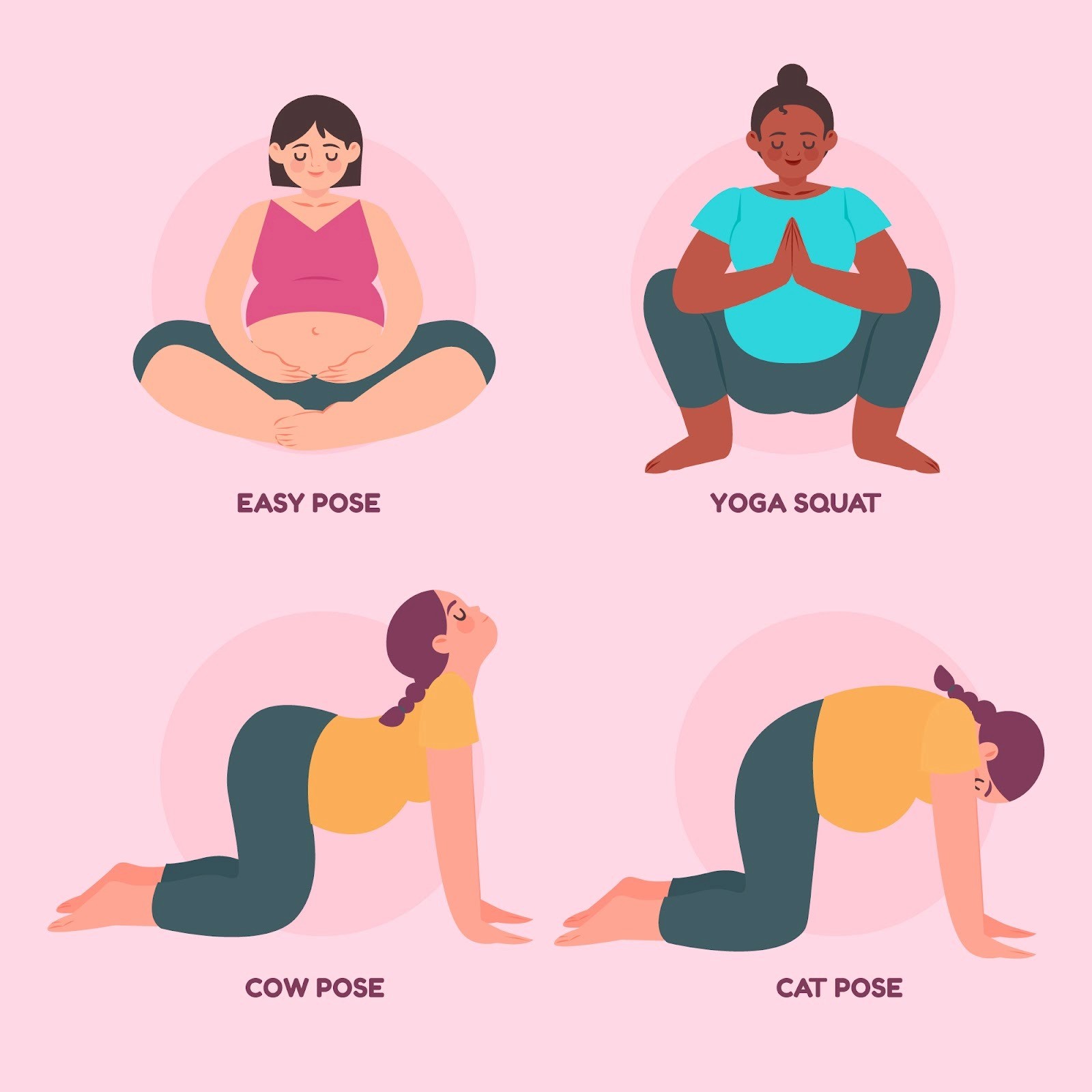
All fours, wrists under shoulders, knees under hips. Inhale and drop belly, look up (Cow). Exhale and then round back, tuck chin (Cat). Move slowly with your breath.
Benefits: Amazing for back pain relief. Loosens the entire spine and improves posture.
Modify: Folded blanket under knees. Keep movements small and slow. Watch out: Don't overarch your lower back in Cow.
2. Goddess Pose (Utkata Konasana) — 2 min
Stand wide, toes turned out. Bend knees, sink hips. Back straight, hands on thighs or in prayer.
Benefits: Strengthens thighs, opens hips, builds stamina for labour.
Modify: A slight bend is enough. Hold a chair for balance. Watch out: Knees should track over toes, not cave inward.
3. Virabhadrasana II — 3 min each side
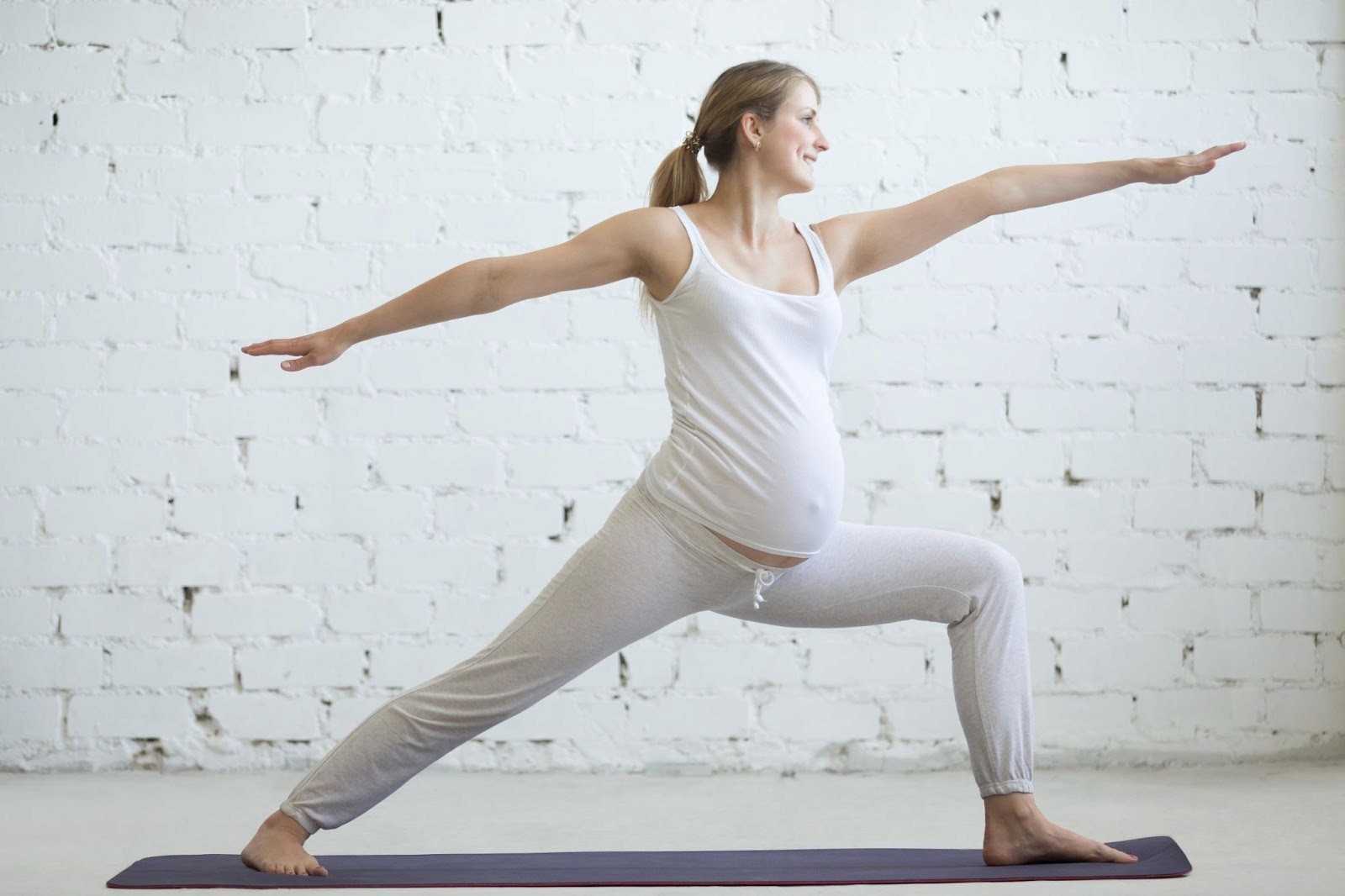
Wide stance. Right foot out 90°, bend right knee. Arms extended at shoulder height. Gaze over the right hand. 5 to 8 breaths, then switch.
Benefits: Leg strength, hip opening, better balance as your centre of gravity shifts.
Modify: Shorten your stance. Use a wall for support. Watch out: Front knee should not go past your ankle.
4. Butterfly Pose (Baddha Konasana) — 3 min
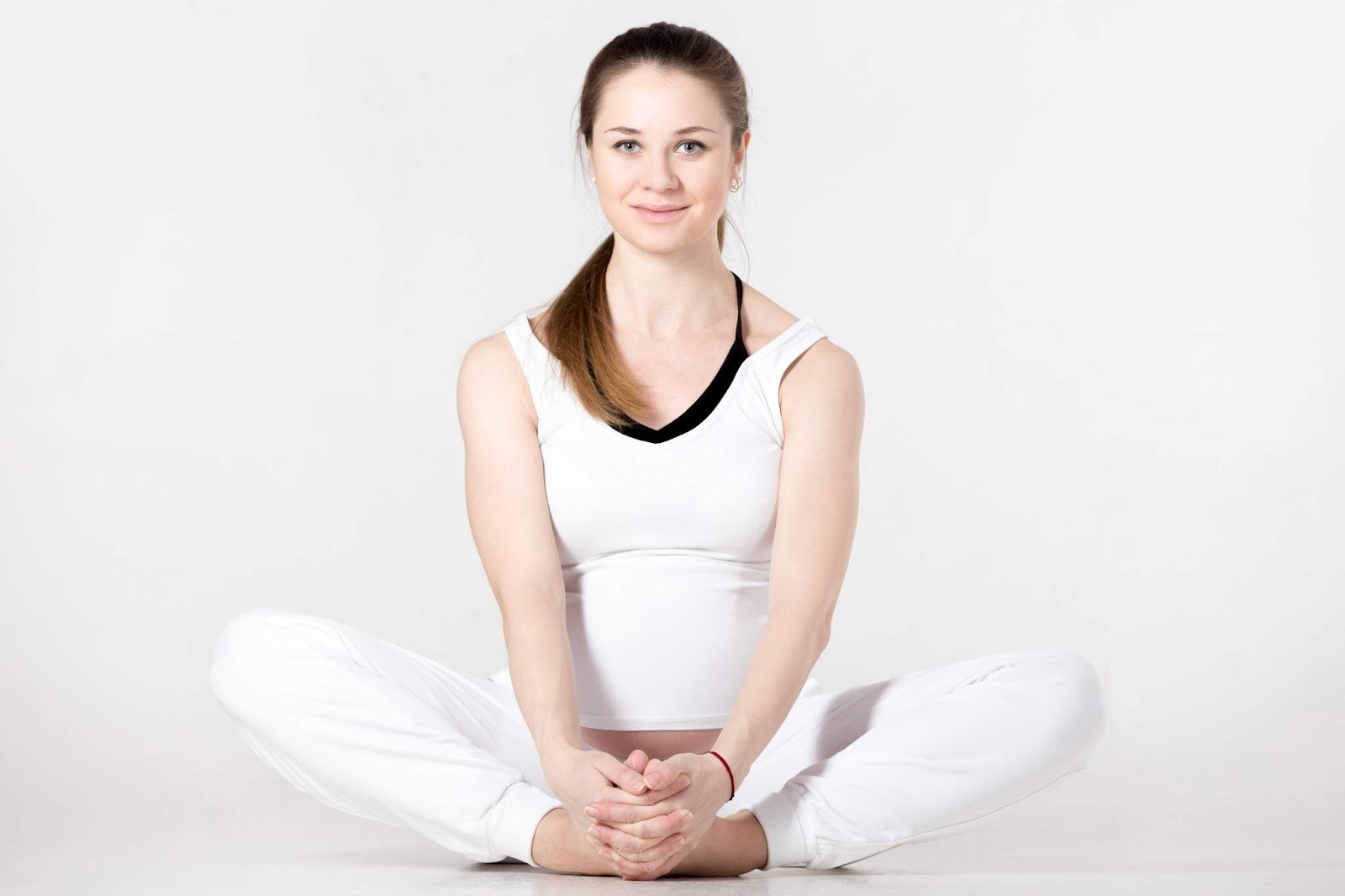
Sit, soles of feet together, knees falling open. Hold feet, gently press knees with elbows. Sit tall and breathe.
Benefits: A favourite among Indian mothers. Opens hips and pelvis, improves circulation, and its traditionally believed to ease delivery.
Modify: Sit on a cushion. Don't bounce your knees. Watch out: Ease off if you feel sharp pain in the pubic bone area.
5. Side-Lying Savasana (Modified Savasana) — 3 min

Lie on your left side, pillow between your knees, another under your head. Close eyes. Relax completely.
Benefits: Calms the nervous system, reduces stress. The left side improves blood flow to the baby.
Modify: Pillow under the belly for extra support. Use as many as you need. Watch out: Avoid lying flat on your back.
6. Seated Side Stretch — 2 min each side
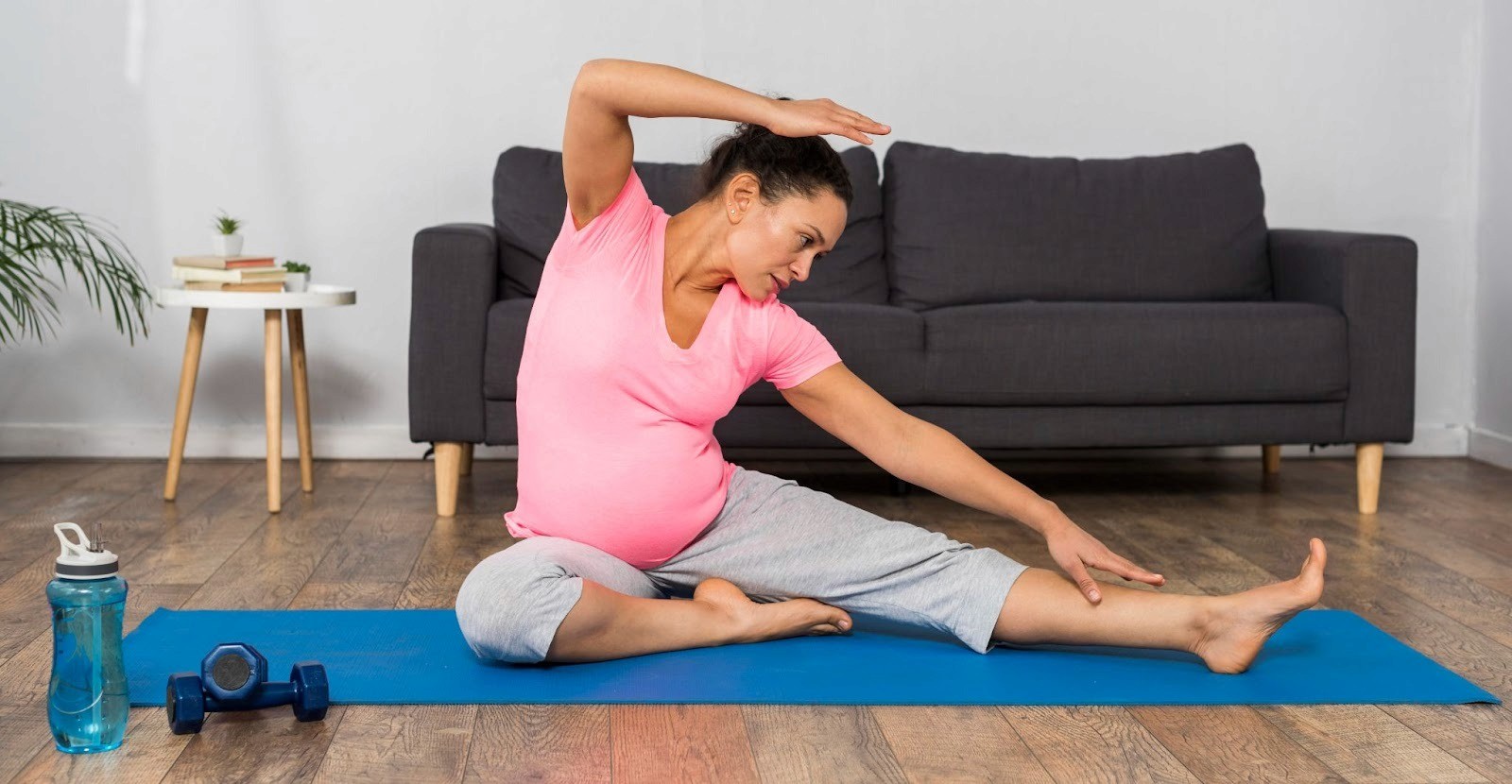
Cross-legged, right hand on the floor. Inhale, lift left arm overhead, and reach right. Feel the stretch. Switch.
Benefits: Creates space in your ribcage (baby's taking up a lot of room!), eases breathing.
Modify: Sit on a block or cushion. Watch out: Keep both sit bones grounded.
What yoga poses to avoid in the second trimester?
What to avoid | Why it is risky |
Lying flat on back (after 20 weeks) | Reduces blood flow to the baby and may cause dizziness |
Deep backbends (wheel, full camel) | Overstretches abdominal muscles and strains the lower back |
Deep twists | Compresses the belly and restricts the baby’s space |
Inversions (headstand, shoulder stand) | Risk of falling and sudden blood pressure changes |
Belly down poses (cobra, locust) | Direct pressure on the growing belly |
Jumping or bouncing movements | Unstable joints and increased risk of falling |
Hot yoga | Overheating may affect the baby’s development |
Deep forward folds | Uncomfortable compression of the belly |
Core work (crunches, planks) | May worsen abdominal separation |
Unsupported balancing poses | Shifted center of gravity increases fall risk |
How Rita's Pregnancy 101 Online Prenatal Classes Support Every Stage of Pregnancy
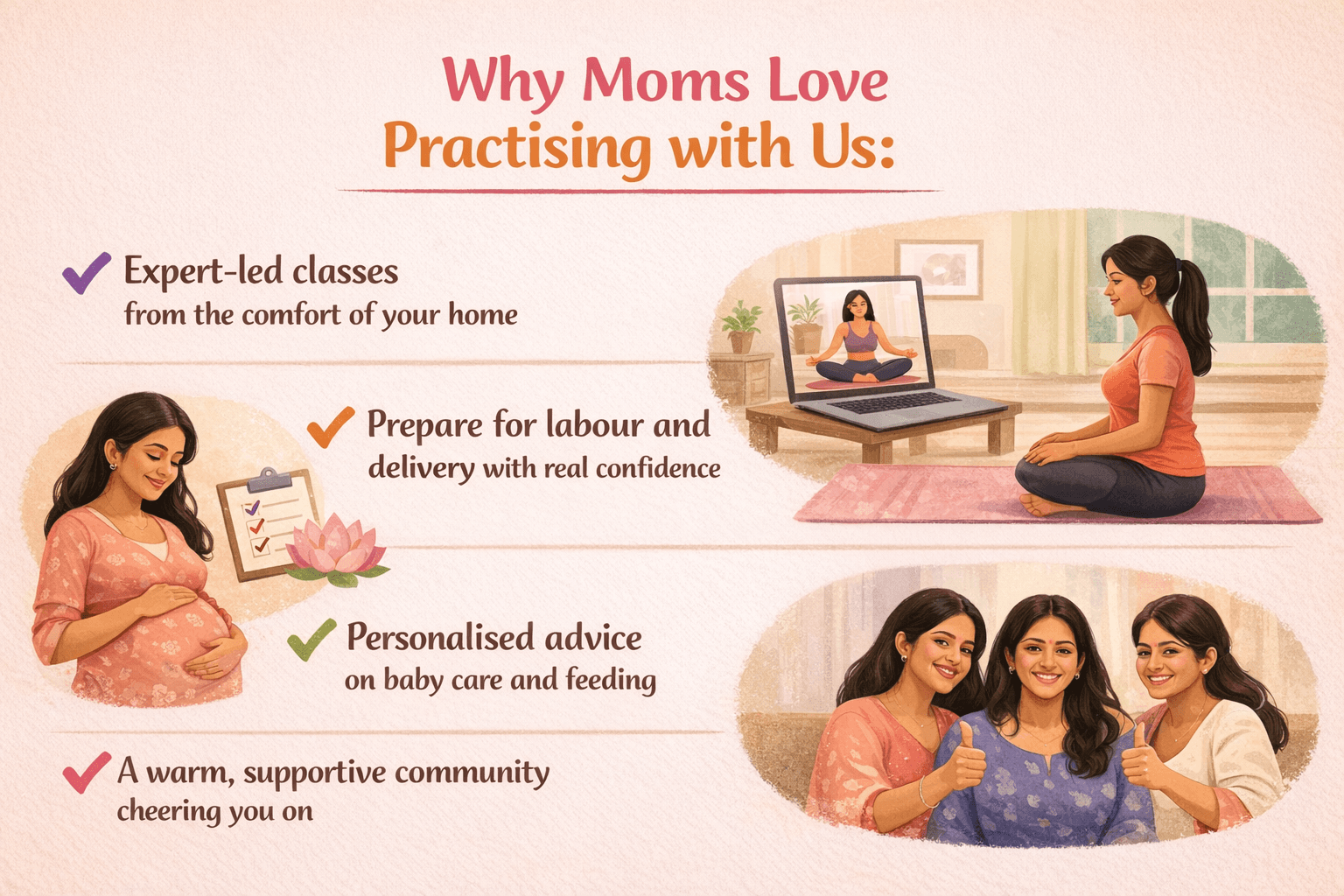
Pregnancy 101 gives Indian moms-to-be the expert support they truly deserve. Over 5,000+ mothers already trust the team of certified instructors, and it all starts with a free session.
What's included in our live online classes?
Prenatal yoga & meditation to stay active, sleep better, reduce stress
Garbh Sanskar help nurture your baby's growth right from the womb
Information sessions that are trimester-wise guidance on labour, breastfeeding, and newborn care
Community-building activities that connect with other moms who truly get it
How to get started?
Step 1: Book your free introductory session and meet our instructors, experience the program. Zero pressure.
Step 2: Join our scheduled classes for prenatal yoga, meditation, Garbh Sanskar, and so much more.
Step 3: Enjoy complete prenatal support to stay active, informed, and fully prepared for your little one's arrival.
Book Your 1 Week of FREE Prenatal Classes
You can join from anywhere in India. Flexible timings. No strings attached.
Ready to practice with expert guidance?
The second trimester prenatal yoga routine isn't just about physical preparation; it's about carving out 20 minutes where YOU matter, where baby matters, where you connect with your changing body and honor the incredible work it's doing.
Some days you'll do all 20 minutes. Some days just Cat-Cow. Both are wins! Consistency matters more than perfection. Better to do 10 minutes regularly than plan for 60 and never start.
Join Rita’s Pregnancy 101's live prenatal yoga classes designed specifically for Indian mothers. Our certified instructors understand your body, your concerns, and your cultural context.
FAQs
Why is yoga important during pregnancy?
It keeps your body strong, flexible, and relaxed as it goes through so many changes. It also reduces common discomforts like back pain, improves sleep, and helps you feel calm and connected to your baby.
Can yoga cause a miscarriage in the second trimester?
No, there's zero scientific evidence linking it to pregnancy loss. A safe, pregnancy-friendly pose is the best thing you can do for yourself and your baby right now.
Can I do Surya Namaskar during the second trimester of pregnancy?
You can do a modified Surya Namaskar during the second trimester, but only under expert guidance. Skip Bhujangasana and Ashtanga Namaskar, widen your stance to make room for your belly, and always move slowly.
My elders say I should only rest during pregnancy. Is doing yoga really safe?
Rest is important, but so is gentle movement. Moderate exercise per week during pregnancy is beneficial. Complete bed rest is advised only in specific high-risk situations, not for every pregnancy.
I've never done yoga before. Can I start directly in the second trimester?
Yes, the second trimester is the perfect time, because morning sickness has eased, energy is back, and your body is stable enough for gentle movement. Start with simple poses, and go at your own pace.
Will prenatal yoga help me have a normal delivery?
Prenatal yoga strengthens your pelvic floor, opens your hips, and teaches breathing techniques that are directly useful during labor, all of which can genuinely improve your body's readiness for a delivery.