
Trimester 3
TL;DR
Third trimester prenatal yoga focuses on preparing your body and mind for labor through safe, gentle movements, guided breathwork, and pelvic floor awareness rather than intense workouts.
Specific breathing techniques like Ujjayi breath, Golden Thread breath, and counted breathing (4-7-8) help manage contraction pain, reduce anxiety, and improve recovery between contractions.
Pelvic floor training in pregnancy must include both Kegels (strengthening) and reverse Kegels (relaxation) to support the baby’s descent and allow effective pushing during delivery.
Safe third trimester yoga poses such as Malasana (yogic squat), Baddha Konasana (butterfly pose), and Cat-Cow improve hip mobility, pelvic opening, spinal flexibility, and optimal baby positioning for normal delivery.
Safety is essential: always get medical clearance, avoid lying flat on your back, skip deep twists and inversions, and practice under a certified prenatal yoga instructor.
Practicing prenatal yoga 3–4 times per week in the third trimester can reduce labor anxiety, improve pain management, and build confidence for childbirth.
The third trimester is when everything starts to feel real. Your due date is closer, your body is changing rapidly, and the thought of labor can bring both excitement and nervousness. This is exactly where third- trimester yoga becomes more important.
It is not about complicated poses or intense workouts. It is about preparing your body, your breath, and your mind for what lies ahead. From strengthening your pelvic floor to learning breathing patterns that actually work during contractions, prenatal yoga for labor gives you practical tools you will use in the delivery room.
Whether you are in Mumbai, Delhi, Ahmedabad, or a smaller town, these techniques are accessible, safe, and designed for every experience level. Let us walk through what works, why it works, and how you can start today.
Is prenatal yoga safe in the third trimester?
Third trimester yoga is considered safe for most healthy pregnancies when practiced under proper guidance. But first, there are a few important safety rules you should never skip:
Get a clearance from your gynecologist first. If you have conditions like placenta previa, preeclampsia, or risk of preterm labor, certain movements may not be suitable for you.
Listen to your body at every step. The third trimester is not the time to push limits. If a pose causes discomfort, dizziness, or shortness of breath, stop immediately.
Avoid lying flat on your back. The weight of your uterus can compress the large vein that returns blood to your heart, which may reduce blood flow to your baby.
Skip deep twists, inversions, and hot yoga. Stick to gentle, pregnancy-specific sequences.
Read our guide on safe sleeping positions during pregnancy for simple tips that protect both you and your baby.
The goal of third trimester yoga for normal delivery is not performance. It is about gentle, intentional movement that supports your changing body and builds confidence for the big day. A certified prenatal yoga instructor will know how to modify every pose for your stage of pregnancy, which is why guided classes matter far more than generic YouTube videos.
What breathing techniques help during labor and delivery?
If there is one skill from prenatal yoga that delivers the most value in the labor room, it is breathwork. The right breathing exercises for labor and delivery can help you manage pain and stay focused during contractions. Here are three techniques worth practicing regularly in your third trimester yoga routine:
1. Ujjayi breath
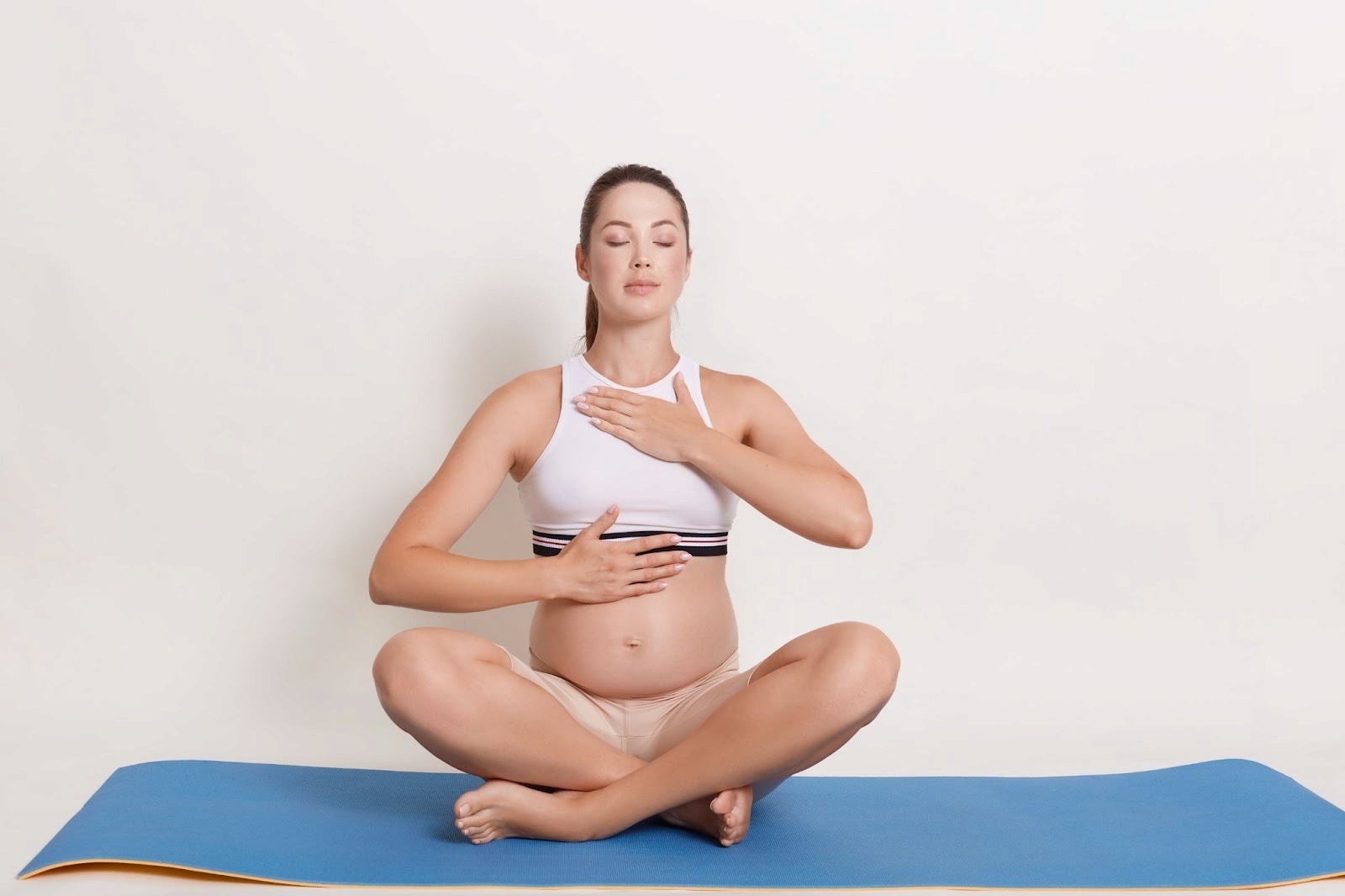
Ujjayi is a slow, deep breathing technique where you inhale through the nose and exhale through the nose while gently constricting the back of your throat. The result is a soft, ocean-like sound.
How it helps during labor:
It activates your parasympathetic nervous system, the body's natural calming mechanism. During early and active labor, Ujjayi breath slows your heart rate, reduces anxiety, and helps you stay present instead of tensing up against the pain.
How to practice:
Sit comfortably with a straight spine. Inhale for 4 counts, exhale for 6 counts. Focus on making the exhale longer than the inhale. Practice for 5 minutes daily.
2. Golden thread breath
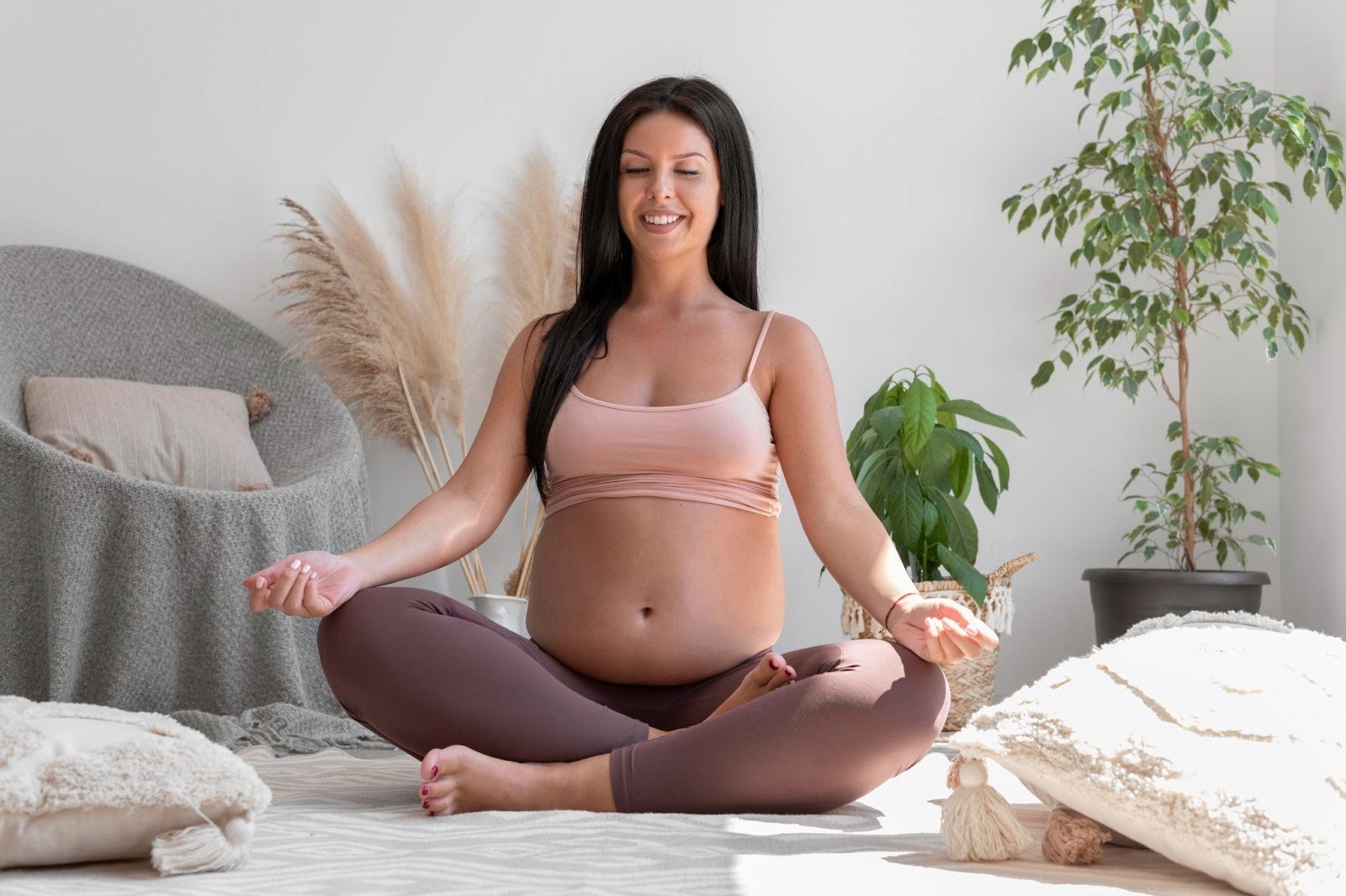
This is one of the most widely recommended breathing exercises for labor and delivery. Inhale gently through the nose, then exhale slowly through barely parted lips, as if you are blowing on a thin golden thread and watching it float away.
How it helps during labor:
The long, soft exhale helps release tension in the jaw, shoulders, and pelvic floor areas that tighten involuntarily during contractions. A relaxed jaw directly correlates with a relaxed pelvic floor.
How to practise:
Use this breath during relaxation at the end of your yoga session. Visualise the golden thread extending further with each exhale.
3. Counted breathing
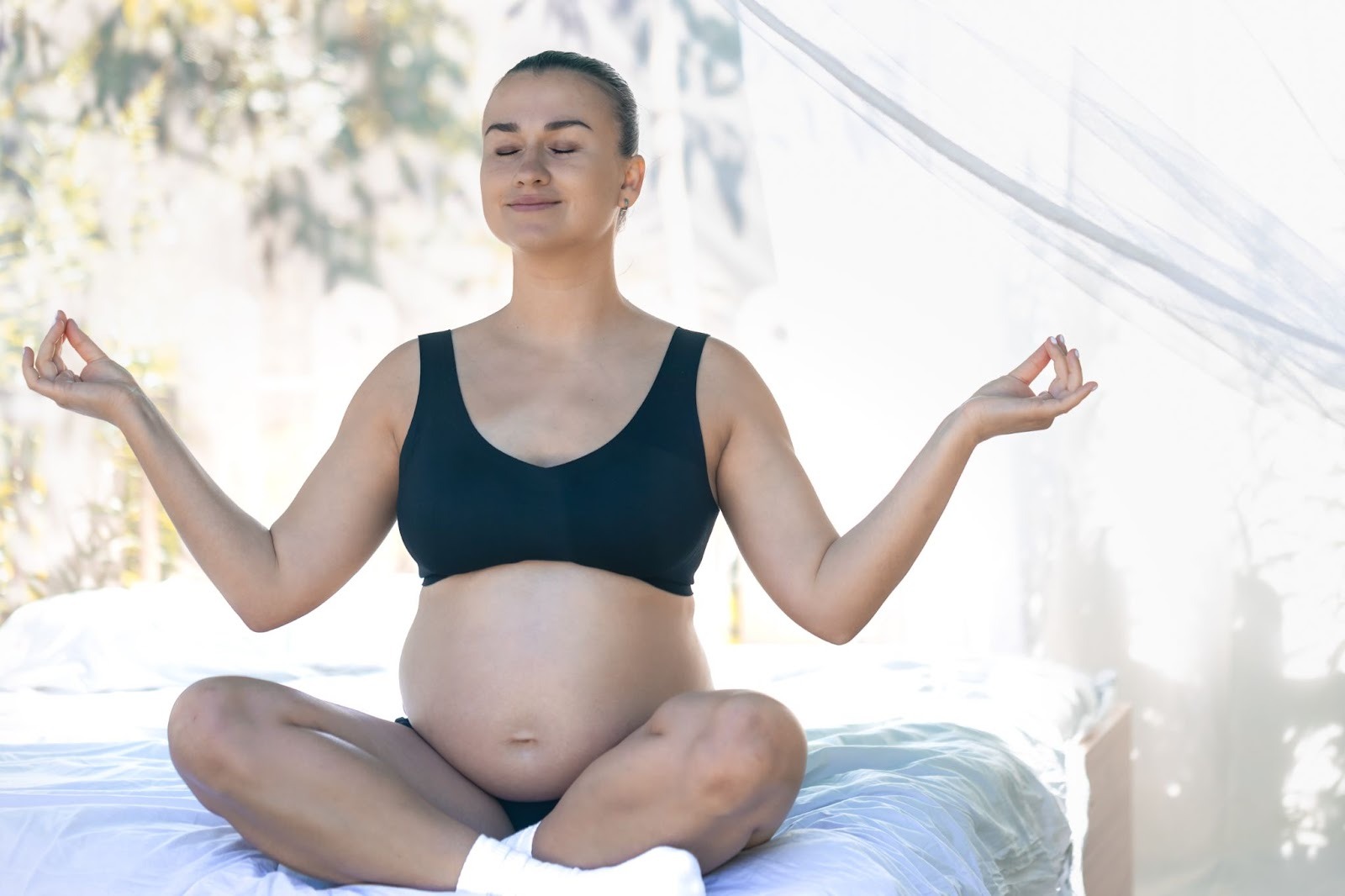
Inhale for 4 counts, hold for 7 counts, and exhale for 8 counts.
How it helps during labor:
This is particularly useful between contractions when you need to recover quickly. The extended hold and exhale help reset your nervous system and restore calm before the next wave.
How to practise:
Do not hold your breath during a contraction. Save the counted breathing for rest periods between them.
How do pelvic floor exercises help with labor?
Your pelvic floor is a group of muscles that sits like a hammock at the base of your pelvis. These muscles support your uterus, bladder, and bowel. During childbirth, they need to do two things: stay strong enough to support the baby's head as it descends, and relax enough to allow the baby to pass through.
This is why pelvic floor exercises for pregnancy routines include both tightening and releasing, you need control in both directions.
#1 Kegels (Tightening)
Contract your pelvic floor muscles as if you are stopping the flow of urine midstream. Hold for 5 seconds, then release for 5 seconds. Repeat 10 times. Do this 3 times a day.
Why it matters:
Strong pelvic floor muscles reduce the risk of urinary incontinence during and after pregnancy. They also support the weight of your growing baby in the third trimester.
Once your baby arrives, our postnatal exercise classes continue this work with safe recovery-focused routines.
#2 Reverse Kegels
This is equally important but often overlooked. Instead of tightening, you consciously relax and gently push downward, as if you are letting go completely.
Why it matters:
During the pushing stage of labor, you need to release these muscles fully. Women who only practise tightening may find it harder to let go when it counts.
#3 Pelvic floor breathing coordination
The most effective approach combines breathwork with pelvic floor movement. These pelvic floor breathing exercises for pregnant women work like this: as you inhale, gently relax and expand the pelvic floor. As you exhale, lightly engage and lift it.
How to practise:
Sit on a firm surface or a yoga ball. Place your hands on your lower belly. Breathe in and feel the pelvic floor soften downward.
Breathe out and feel a gentle lift.
This coordination trains the body-breath connection you will rely on during labor.
What are the best yoga poses to prepare for labor?
These prenatal yoga poses to open hips for labor are safe, effective, and can be modified for any fitness level. They specifically target hip mobility, pelvic opening, and spinal flexibility, all essential for third trimester prenatal yoga for normal delivery.
1. Malasana
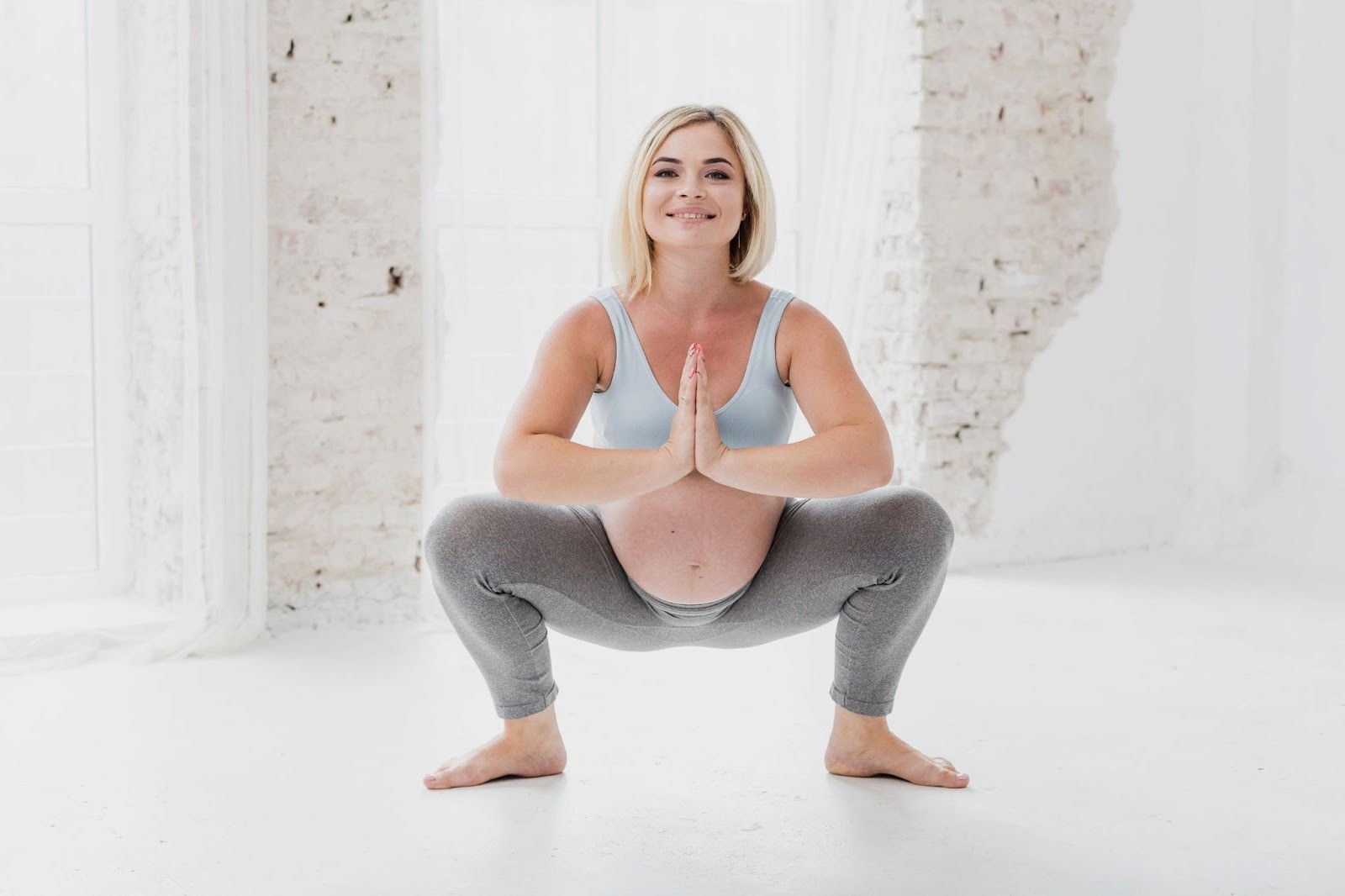
Stand with feet slightly wider than hip-width apart, toes turned outward. Slowly lower your hips into a deep squat. Bring your palms together at your chest and use your elbows to gently press your knees apart.
Benefits:
Opens the hips and pelvis, lengthens the pelvic floor, and encourages the baby to move downward into an optimal position.
Modification:
If your heels lift off the ground, place a rolled blanket or yoga block under them. You can also do this with your back against a wall for extra support.
2. Baddha Konasana (Butterfly pose)
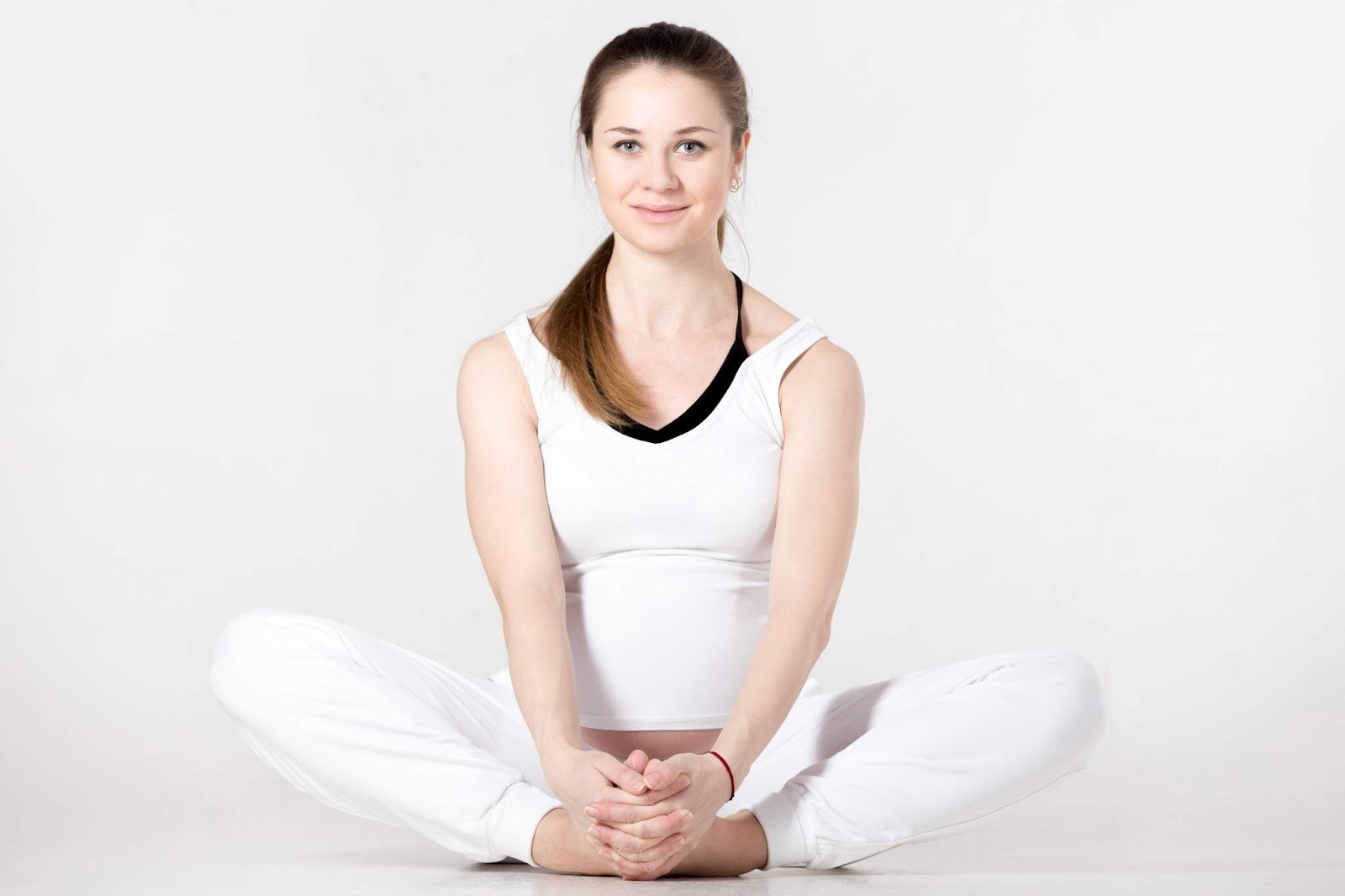
Sit on the floor with the soles of your feet together, knees falling open to the sides. Hold your feet with your hands and sit tall through the spine. Gently press your knees toward the floor using your elbows; never force them down.
Benefits:
Stretches the inner thighs and groin, improves hip flexibility, and increases blood circulation to the pelvic area.
Modification:
Sit on a cushion or folded blanket to elevate your hips if you feel strain in your lower back. Place yoga blocks under each knee for support if the stretch is too intense.
3. Marjariasana-Bitilasana (Cat-Cow Pose)
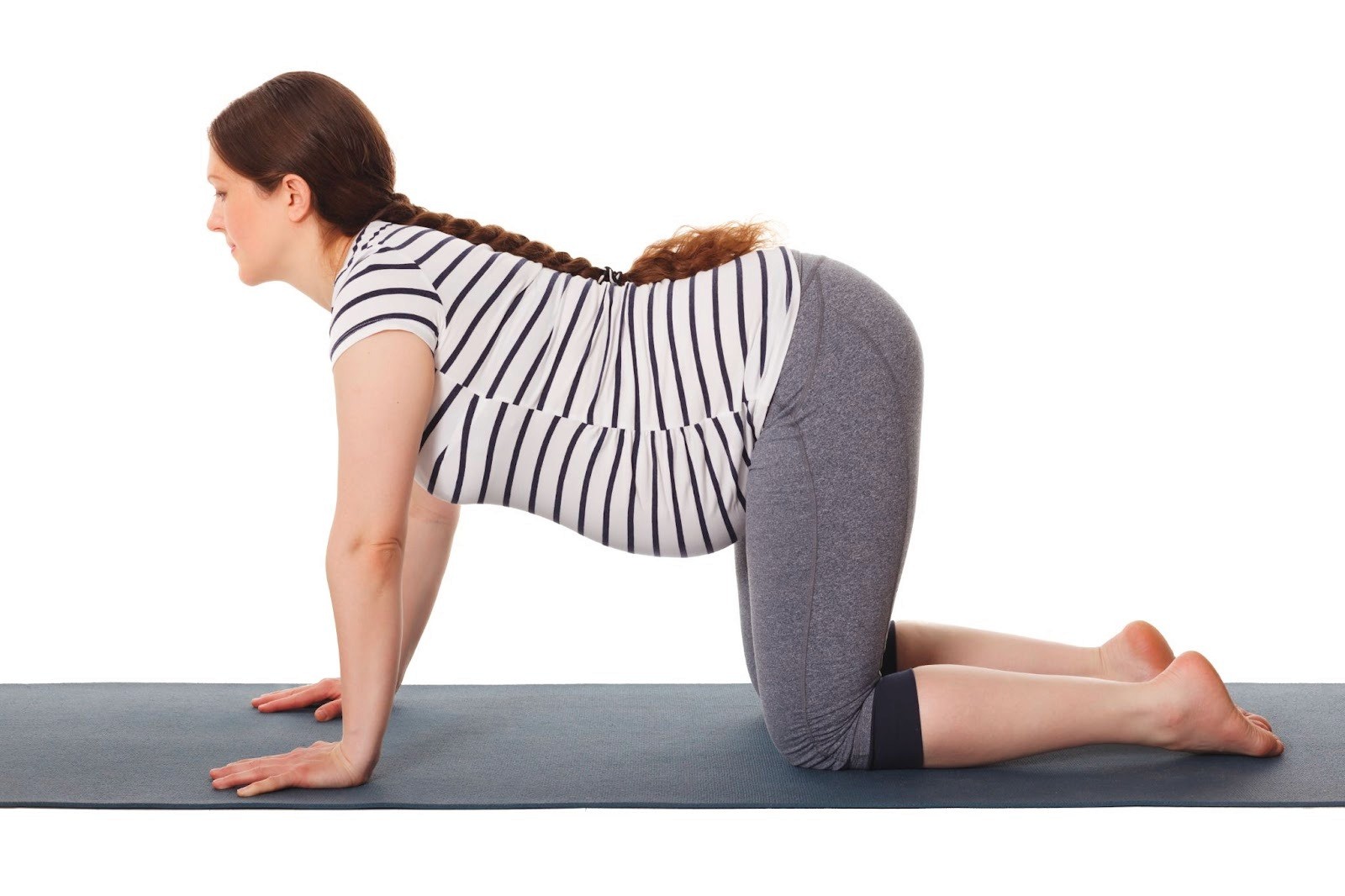
Come onto all fours with wrists under shoulders and knees under hips. On the inhale, drop your belly toward the floor, lift your chest and tailbone (Cow). On the exhale, round your spine toward the ceiling and tuck your chin to your chest (Cat). Move slowly, one breath per movement.
Benefits:
Relieves lower back pain, improves spinal flexibility, and helps the baby shift into an anterior (head-down, facing your back) position, the ideal position for delivery.
Modification:
Place a folded blanket under your knees for cushioning. If you have wrist pain, come down onto your forearms instead.
Final words
Preparing for labor is not about controlling every detail. It is about equipping yourself with techniques that help you stay calm, strong, and confident when the time comes. Third trimester yoga gives you exactly that through breathing techniques that manage contraction pain, pelvic floor exercises that prepare your body for delivery, and gentle poses that open your hips and build endurance.
These are not abstract benefits; they are practical skills that thousands of women use in delivery rooms every day. The best way to learn them safely is with expert guidance tailored to your body and your pregnancy.
If you are ready to feel more prepared and less anxious about birth, join a prenatal yoga class at Rita’s Pregnancy 101, where experienced instructors guide you through every step, from your first deep breath to the day you hold your baby.
FAQs
Can yoga help induce labor naturally?
Yoga alone does not induce labor. However, certain poses like Malasana and Baddha Konasana can help open the pelvis and support the natural onset of labor when your body is ready, but they will not trigger it prematurely.
How to breathe during contractions?
Use slow, deep belly breathing (during contractions. Inhale through your nose and exhale through your mouth or nose with a long, steady breath. Focus on making your exhale longer than your inhale. Between contractions, use counted breathing (4-7-8) to rest and recover.
What yoga poses should I avoid in the third trimester?
Avoid deep backbends, headstands, hot yoga, poses that require lying flat on your back for long periods, deep twists, and any pose that causes pain or dizziness. Stick to gentle, prenatal-specific yoga poses.
Can prenatal yoga reduce labor pain?
Yes, prenatal yoga practice helps manage labor pain through trained breathing techniques, improved body awareness, and reduced muscle tension. A study found that women who practiced prenatal yoga reported lower pain intensity during labor compared to those who did not.
How often should I do prenatal yoga in the third trimester?
Three to four sessions per week is a good target for most women. Even 15 to 20 minutes of daily breathwork and gentle stretching makes a meaningful difference. If you are new to yoga, start with two sessions per week and build up gradually with your instructor's guidance.