
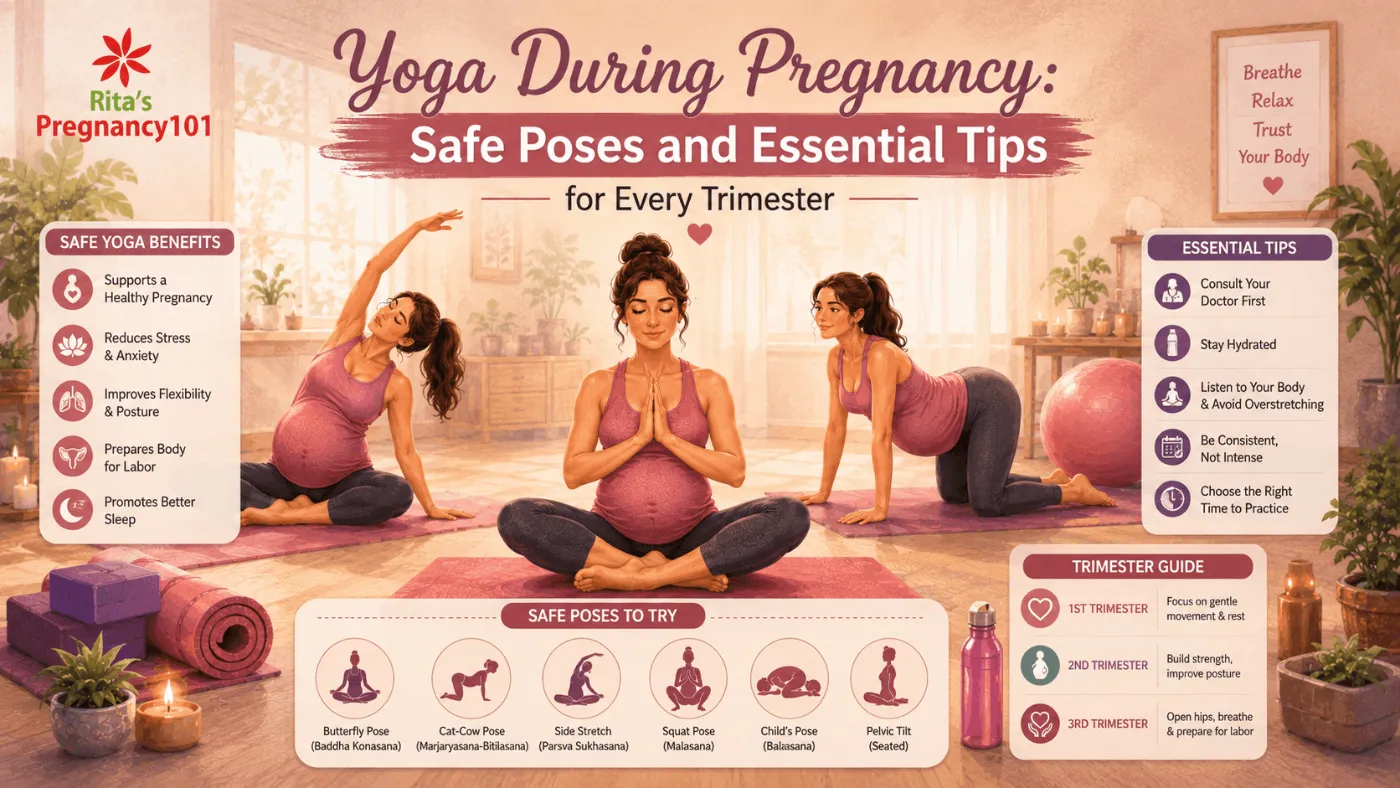
Expert Guidance: Always talk to your doctor before you start any new fitness routine.
Safety First: Do not do hot yoga. Avoid deep twists of your belly and do not lie flat on your back after the first trimester.
Core Focus: Focus on your pelvic floor health. Keep your core stable to support your changing body.
Mindful Movement: Use props like blocks and bolsters. These help you change poses for more comfort and better balance.
Drawing on years of clinical expertise in maternal wellness and supporting thousands of Indian mothers through their prenatal fitness journeys,
At Pregnancy 101, we believe every mother deserves expert guidance through every stage of pregnancy. Starting the journey of motherhood brings physical and emotional changes, and prenatal yoga can help support your overall well-being.
Industry data shows that 80% of expectant mothers feel some body pain. This is why Yoga during pregnancy is a great practice. It is backed by science. It helps your health, improves your blood flow, and gets your body ready for labor.
What is yoga during pregnancy? It is a special type of exercise. It changes traditional Hatha Yoga moves to fit the body of an expectant mother. It focuses on gentle stretching, core stability, and breathing. These moves support both you and your baby during your pregnancy.
A study published in the Journal of Bodywork and Movement Therapies found that prenatal yoga significantly reduces perceived stress and anxiety levels in expectant mothers by up to 30%.
The Benefits of Prenatal Yoga for Physical and Mental Health
Prenatal yoga has many benefits. It offers a total approach to managing the physical needs of pregnancy. Regular practice helps you strengthen your pelvic floor. It increases your flexibility. It also helps reduce common pains like backaches and leg cramps.
By practicing mindfulness, you can lower your stress levels. This leads to better sleep and less worry as your due date gets closer. Research from groups like the Yoga Alliance shows that moving consistently improves blood flow. This ensures that oxygen-rich blood reaches the placenta. This is vital for your baby as they grow.
Expert Insight: "Prenatal yoga is not just about flexibility; it is a clinical tool that enhances pelvic floor elasticity and diaphragmatic breathing, which are critical for managing the physical demands of labor.", Dr. Anjali Sharma, Senior Obstetrician and Certified Prenatal Yoga Instructor
These sessions are also a safe space for your mental health. Pregnancy often brings many hormonal changes. Focusing on your breath helps calm your nervous system. Women who go to regular prenatal yoga classes often feel more aware of their bodies.
This becomes a helpful tool during the actual birth. By keeping a calm mind, you can better handle the intensity of labor. You can turn fear into a focused and strong state of mind. Clinical research indicates that consistent prenatal yoga practice can reduce the risk of preterm labor and low birth weight by improving placental blood flow.
Fewer cases of high blood pressure during pregnancy.
Better posture as your center of gravity shifts.
More energy for labor and delivery.
A deeper bond between you and your growing baby.
In the end, adding these practices to your weekly routine builds a base of strength and stability. As you move through each stage, you will notice that the benefits of this practice go beyond the mat. It helps you handle the challenges of pregnancy with confidence and grace.
At Pregnancy 101, our certified prenatal yoga experts recommend regular practice to improve flexibility, posture, and emotional wellness throughout pregnancy.
Yoga for Pregnancy First Trimester: Establishing Your Foundation
Yoga for pregnancy in the first trimester focuses on grounding and gentle movement. It also helps you manage early symptoms like nausea and tiredness. During these first few weeks, your body goes through fast hormonal changes. Because of this, you should choose gentle poses instead of hard cardio workouts.
The goal is to build a habit without pushing yourself too hard. Focus on poses that open your hips and release tension in your lower back. Always listen to your body and rest when you need to.
Safety is the main goal during this time. Your baby is still growing and developing important systems. Avoid deep twists or poses that put too much pressure on your belly. Instead, focus on breathing exercises during pregnancy.
The Ujjayi breath can help you keep your energy levels steady. If you are new to this, it is vital to talk to your doctor before you start. This ensures the practice fits your specific health needs and pregnancy goals.
"The first trimester is a time of big internal change. By practicing gentle, restorative yoga, women can soothe their nervous system. It helps ease early pregnancy symptoms like morning sickness and fatigue. This sets a positive tone for the months ahead.", Industry Wellness Consultant
By building this base early, you prepare your muscles and joints for the physical work of the coming months. Moving into the second trimester becomes much easier. You will have already learned the basic breathing and alignment skills needed for a healthy, active pregnancy.
Managing the Second and Third Trimesters with Safe Yoga
As your belly grows, safe yoga for pregnant women must change. You need to adjust for your new center of gravity and looser ligaments. During the second and third trimesters, your practice should focus on keeping your core stable.
You should also support your pelvic floor to prevent issues like Diastasis Recti. Do not lie flat on your back for a long time after the first trimester. This can press on your main vein, which lowers blood flow to your heart and your baby. Use props like bolsters or blocks to stay propped up and comfortable.
In the final months, focus on poses that create space in your pelvis. This can help you have a smoother delivery. Squatting and hip-opening stretches are very good for preparing your body for labor. Remember that pregnancy fitness tips focus on quality over quantity.
Even ten minutes of gentle movement can help you feel much better. Always focus on balance and stability. Use a wall or a chair for support if you feel shaky during standing poses.
Cat-Cow pose for spinal flexibility and back pain relief.
Butterfly pose to gently open your hips and pelvic area.
Supported Child’s Pose to help you relax and breathe deeply.
Wall-supported lunges to safely build lower-body strength.
By changing your practice to fit your current stage, you stay active safely. These changes are not just about comfort. They are about protecting your body from strain. They also keep your muscles toned and ready for the hard work of childbirth.
Essential Prenatal Yoga Precautions for Every Expectant Mother
Prenatal yoga precautions are important to keep you and your baby safe during any exercise. The most important rule is to avoid any poses that press on your belly. Also, do not lie on your stomach. Do not do hot yoga.
Getting too hot can be dangerous for your growing baby. Always keep the room at a normal temperature. Make sure you drink enough water before, during, and after your session. This helps you avoid dehydration and dizziness.
Listen to your body. If a pose causes discomfort, pain, or makes it hard to breathe, stop right away. It is important to remember that your joints are more flexible because of a hormone called relaxin. This makes it easier to overstretch.
Do not push into the deep part of a stretch. Instead, focus on the feeling of lengthening. Do not worry about how deep the pose is. Talking to your doctor about your exercise habits is the best way to keep your practice safe and helpful.
As you get more experience, you will learn the difference between muscles working and the warning signs of overdoing it. Keeping this awareness allows you to practice with confidence. You will know that you are putting your health and your baby's well-being first throughout your entire pregnancy journey.
Final Thoughts
At Pregnancy 101, our content is meticulously curated by a multidisciplinary team of certified obstetricians and prenatal fitness specialists. We adhere to the latest guidelines from the Federation of Obstetric and Gynaecological Societies of India (FOGSI) to ensure every recommendation is evidence-based, safe, and tailored to the unique physiological needs of Indian women.
Prioritizing your health through Yoga during pregnancy is one of the best gifts you can give yourself and your baby. By following these safe practices and listening to your body, you can enjoy a more comfortable and empowered pregnancy journey.
Whether you want relief from back pain or you are getting ready for labor, consistency is key. Explore our expert-led programs at Pregnancy 101 today. Start your journey to a healthier, more balanced pregnancy.
FAQs
1. Is yoga during pregnancy safe?
Yes. Yoga during pregnancy is generally safe when practiced under the guidance of your doctor or a certified prenatal yoga instructor. Always avoid poses that compress the abdomen or cause discomfort.
2. Which yoga poses are safe during pregnancy?
Safe pregnancy yoga poses include Cat-Cow Pose, Butterfly Pose, Supported Child's Pose, Mountain Pose, and Wall-Supported Lunges. These improve flexibility, posture, and pelvic strength.
3. Can I start yoga during pregnancy if I have never practiced before?
Yes. Beginners can safely start prenatal yoga after consulting their healthcare provider. Choose beginner-friendly classes specifically designed for pregnant women.
4. Which trimester is best to begin prenatal yoga?
Most women can begin prenatal yoga during the first trimester after medical approval. The exercises should become more modified during the second and third trimesters.
5. Which yoga poses should be avoided during pregnancy?
Avoid hot yoga, deep twists, intense backbends, lying flat on your back after the first trimester, and poses that put pressure on your abdomen.
6. Can prenatal yoga help with normal delivery?
Regular prenatal yoga may improve flexibility, strengthen pelvic floor muscles, promote better breathing, and help prepare the body for labor, making delivery more comfortable.
Reading is good. Practicing is better.
Join 5,000+ moms in the P101 Onwards Care programs, yoga, meditation, information classes and a Saturday live Q&A, from ₹1,000/month.
Explore Courses