
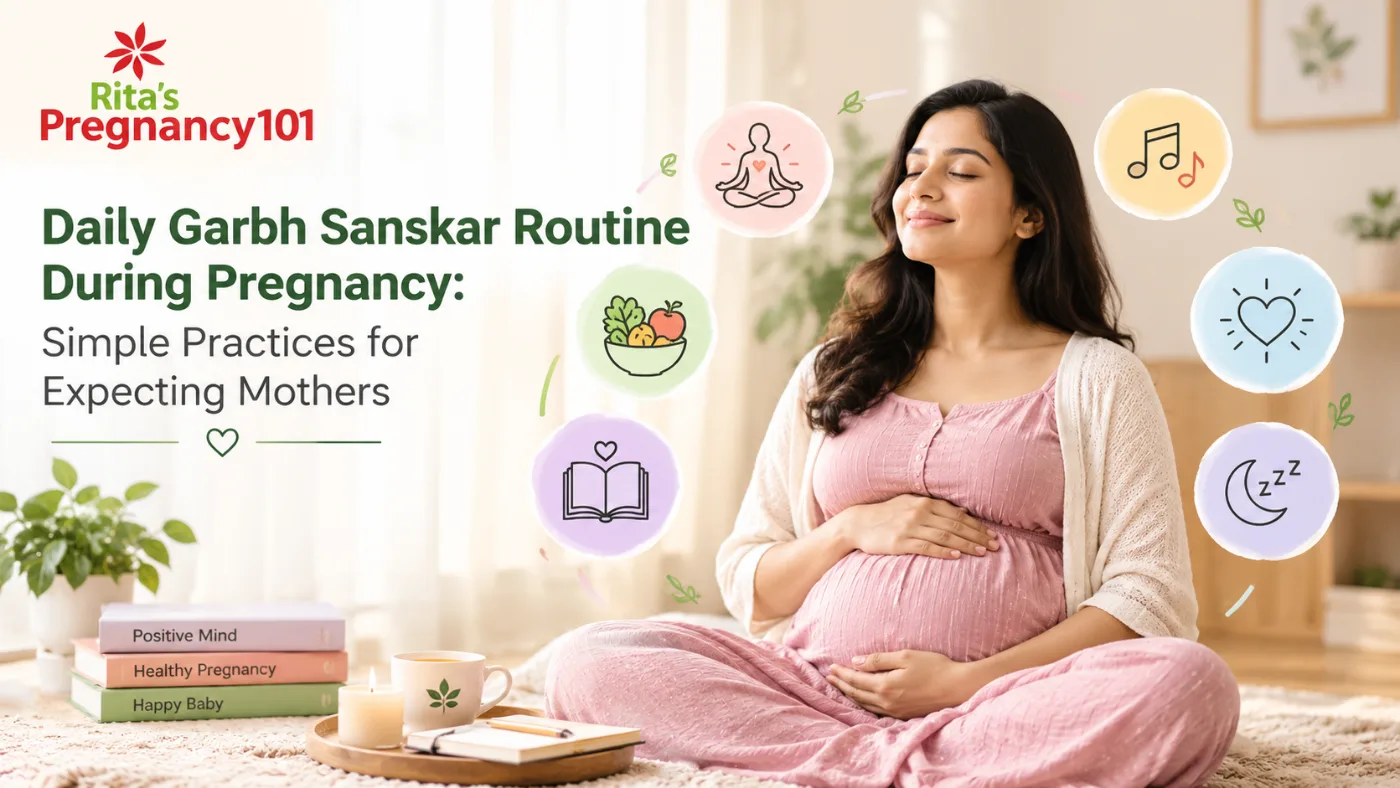
Pregnancy is a time when your body, emotions, thoughts, and daily routine can change quickly. Along with nutrition and regular prenatal care, many Indian mothers look for simple ways to create a calm, positive, and meaningful pregnancy experience. This is where a daily Garbh Sanskar routine can become a gentle part of everyday life.
Garbh Sanskar is traditionally associated with nurturing the baby during pregnancy through positive thoughts, mindful habits, music, meditation, storytelling, and emotional connection. Today, many expecting mothers adapt these traditional ideas into simple wellness practices that fit their modern lifestyle.
A daily Garbh Sanskar routine does not need to involve hours of meditation, complicated rituals, or a strict schedule. Even 20–30 minutes of mindful activities spread throughout the day can give you time to slow down, connect with your baby, and focus on your own emotional well-being.
In this guide, we will explore simple Garbh Sanskar activities, how to practice Garbh Sanskar at home, and how to create a routine that can be adjusted according to your trimester, energy levels, and pregnancy needs.
What Is Garbh Sanskar During Pregnancy?
Garbh Sanskar during pregnancy is traditionally understood as a holistic approach to nurturing the baby through the mother's thoughts, emotions, lifestyle, environment, and positive activities.
At Pregnancy101, Garbh Sanskar is presented through practices such as meditation, mindfulness, positive affirmations, soothing music, prenatal yoga, and emotional bonding.
From a modern wellness perspective, many of these activities can simply be viewed as ways to encourage relaxation, self-awareness, movement, and emotional connection during pregnancy.
For example, taking a few quiet minutes to breathe, listening to calming music, reading something uplifting, or talking lovingly to your baby can become meaningful parts of your pregnancy routine.
There is no requirement to follow one particular religious, spiritual, or cultural format. You can choose the practices that make you feel comfortable and supported.
Why Follow a Daily Garbh Sanskar Routine?
The purpose of a daily Garbh Sanskar routine should not be to create pressure around being a “perfect” mother. Pregnancy already brings enough physical and emotional changes.
Instead, think of your routine as a small daily pause.
Regular relaxation activities can help you manage everyday stress. Breathing exercises and meditation are among the strategies recommended by the NHS for managing anxiety during pregnancy, while staying active through appropriate exercise can also support mental well-being.
A simple routine can help you:
- Create dedicated quiet time during the day
- Develop a stronger sense of connection with your pregnancy
- Practice relaxation and mindful breathing
- Include gentle movement where medically appropriate
- Build positive daily habits
- Spend intentional time talking or bonding with your baby
- Create a peaceful bedtime routine
- Make pregnancy feel more personal and emotionally connected
The goal is consistency without pressure.
Simple Daily Garbh Sanskar Routine for Expecting Mothers
You do not have to complete every activity every day. Choose a few practices that fit your energy and schedule.
Here is an example of a simple routine:
| Time | Practice | Suggested Duration |
|---|---|---|
| Morning | Gratitude and deep breathing | 5 minutes |
| Morning | Positive affirmations or baby talk | 5 minutes |
| Daytime | Gentle prenatal movement | 10–20 minutes |
| Afternoon | Uplifting reading or music | 10 minutes |
| Evening | Quiet bonding time | 5–10 minutes |
| Before bed | Meditation or relaxation | 5–10 minutes |
This routine can be shortened on tiring days. Pregnancy is not the time to force yourself through a checklist.
Garbh Sanskar for Pregnant Women: Focus on the Mother Too
Garbh Sanskar for pregnant women should not be understood only as activities performed “for the baby.”
The mother's well-being matters too.
Pregnancy can bring worries about childbirth, changing relationships, finances, work, body changes, and the responsibilities of becoming a parent. Mental health is an important part of pregnancy care, and pregnant women should have support when stress, anxiety, or low mood begins affecting daily life.
Therefore, your routine can include activities that are simply enjoyable for you.
For example:
- Take a relaxed walk if approved by your doctor.
- Sit outside and get some fresh air.
- Listen to your favorite music.
- Talk to your partner.
- Call a supportive friend.
- Read something enjoyable.
- Practice gentle stretching.
- Take a short rest without feeling guilty.
- Write down three things you appreciated that day.
A healthy pregnancy routine should leave space for rest, enjoyment, and flexibility.
Garbh Sanskar at Home: Create a Peaceful Pregnancy Space
One of the easiest ways to practice Garbh Sanskar at home is to create a small space where you can relax.
You don't need a separate meditation room.
A comfortable corner with a chair, cushion, yoga mat, or quiet place near a window can be enough.
You could keep:
- A comfortable cushion
- A pregnancy journal
- A book
- Earphones or a small speaker
- A water bottle
- A soft light
- Your preferred devotional or calming music
Use this space for breathing, meditation, reading, music, or simply sitting quietly.
Pregnancy101 also explains how mothers can practice Garbh Sanskar at home through meditation, mantras, soothing music, reading, and other flexible activities.
The important thing is to make the space comfortable rather than trying to create a perfect Instagram-style setup.
Garbh Sanskar Practices for Emotional Bonding
The emotional aspect of pregnancy deserves attention alongside physical care.
Some simple Garbh Sanskar practices can become opportunities for bonding.
Practice 1: Baby talk
Spend five minutes talking to your baby.
You could say:
“Good morning, little one. I hope you are growing well. Today we are going to have a peaceful day together.”
There is no need to use special words.
Practice 2: Bump connection
Sit comfortably, place your hands gently over your belly, and take a few relaxed breaths.
Instead of focusing on whether you are doing the practice correctly, simply notice the experience of being pregnant.
Practice 3: Shared time with your partner
Garbh Sanskar does not have to be a mother-only activity.
Your partner can join you for:
- Reading
- Music
- Meditation
- Talking to the baby
- Evening walks
- Pregnancy preparation
- Gratitude conversations
This can also create opportunities for both parents to feel involved in the pregnancy.
A 20-Minute Daily Garbh Sanskar Routine
If you have a busy schedule, start small.
Try this daily Garbh Sanskar routine:
5 minutes — Breathing
Sit comfortably and take slow, relaxed breaths.
5 minutes — Affirmations and baby talk
Repeat a few positive statements and talk gently to your baby.
5 minutes — Music or reading
Listen to calming music or read something uplifting.
5 minutes — Quiet reflection
Close your eyes, relax your shoulders, and notice how you feel.
That's it.
You don't need a one-hour routine to make your day meaningful.
On days when you have more energy, you can add a medically appropriate prenatal yoga session or a relaxed walk.
Daily Garbh Sanskar Routine According to Your Trimester
Your routine can change as your pregnancy progresses.
First trimester
Fatigue, nausea, and emotional changes can make long routines difficult.
Focus on:
- Short breathing sessions
- Rest
- Positive affirmations
- Gentle relaxation
- Nutritious meals
- Medical appointments
- Emotional support
Don't feel guilty if you need more rest than activity.
Second trimester
Many women find they have more energy during this phase.
You may gradually include:
- Prenatal yoga
- Walking, if approved
- Longer meditation
- Reading
- Music
- Baby bonding activities
Pregnancy101's second-trimester prenatal yoga routine includes pregnancy-specific modifications and beginner-friendly movements.
Third trimester
Your body may feel heavier and everyday activities can become more tiring.
Keep your routine gentle:
- Relaxation
- Breathing
- Meditation
- Comfortable music
- Baby talk
- Gentle movement if approved
- Rest and sleep preparation
At this stage, your routine should support comfort rather than achievement.
What Should You Avoid During a Garbh Sanskar Routine?
A daily Garbh Sanskar routine should never become another source of stress.
Avoid the idea that you must:
- Meditate for a specific number of hours
- Listen to a particular type of music all day
- Follow a rigid spiritual routine
- Perform exercises without pregnancy-specific guidance
- Ignore physical discomfort
- Stop prescribed treatment
- Feel guilty for having negative emotions
- Believe that one missed day will affect your baby's development
Pregnancy involves normal emotional ups and downs. Having an anxious, tired, or difficult day does not mean you have failed at Garbh Sanskar. That is the only reason Rita’s Pregnancy 101 introduces Garbh Sanskar Classes.
If anxiety or low mood becomes persistent or starts interfering with your everyday life, speak with your doctor, midwife, or another qualified healthcare professional. Support is available during pregnancy.
How to Make Your Daily Garbh Sanskar Routine Sustainable
The best routine is the one you can actually continue.
Try these simple strategies:
Start with 10 minutes.Don't begin with an elaborate one-hour schedule.
Connect activities to existing habits.Practice breathing after brushing your teeth or meditation before bedtime.
Keep your routine flexible.Some days may be more active, while others may require more rest.
Involve your partner.Shared activities can make pregnancy bonding more meaningful.
Don't compare yourself with other mothers.Every pregnancy is different.
Choose practices you genuinely enjoy.If you dislike a particular activity, replace it with something calming that suits you.
Pregnancy wellness is not about completing a checklist. It is about creating habits that support your physical and emotional well-being.
Can You Practice Garbh Sanskar Without Joining a Class?
Yes. Many simple Garbh Sanskar practices can be incorporated into your home routine.
You can begin with breathing, meditation, music, positive affirmations, reading, baby talk, and appropriate prenatal movement.
However, structured guidance can be useful if you are unsure about what to practice, how to adapt activities during different trimesters, or how to maintain consistency.
Pregnancy101 offers Good Online Garbh Sanskar Program that combines practices such as guided meditation, positive affirmations, soothing music, and prenatal exercises.
You can also read Pregnancy101's guide on Garbh Sanskar at home versus expert-led classes to understand the two approaches.
Final Thoughts
A daily Garbh Sanskar routine doesn't need to be complicated. The heart of the routine is creating small moments of calm, connection, mindfulness, and self-care throughout pregnancy.
You can begin your morning with breathing, spend a few minutes talking to your baby, listen to soothing music, practice appropriate prenatal yoga, read something uplifting, and finish your day with quiet reflection.
Most importantly, remember that Garbh Sanskar is not about achieving a perfect pregnancy. It is about creating a supportive environment for yourself while preparing emotionally and mindfully for motherhood.
Choose the practices that feel meaningful to you, keep them flexible, and let your routine grow with your pregnancy.
For more structured support, explore Rita's Pregnancy 101 and its pregnancy wellness resources designed for expecting mothers.
FAQS for Daily Garbh Sanskar routine
1. What is a simple daily Garbh Sanskar routine during pregnancy?
A simple daily Garbh Sanskar routine can include 5 minutes of breathing, positive affirmations, baby talk, calming music, meditation, reading, and pregnancy-safe movement. You can adjust the routine according to your trimester, energy, and doctor's recommendations.
2. What are the best Garbh Sanskar activities for expecting mothers?
Common Garbh Sanskar activities include meditation, positive affirmations, talking to the baby, listening to soothing music, reading uplifting stories, mindfulness, and appropriate prenatal yoga. Choose activities that help you feel calm and comfortable.
3. How can I practice Garbh Sanskar at home?
You can practice Garbh Sanskar at home by creating a quiet space for meditation, listening to calming music, reading, practicing affirmations, talking to your baby, and doing pregnancy-safe exercises when medically appropriate.
4. Is Garbh Sanskar during pregnancy only about the baby's development?
No. Garbh Sanskar during pregnancy can also be approached as a way for the mother to focus on relaxation, emotional well-being, mindful living, and bonding with her baby. It should complement—not replace—routine prenatal healthcare.
5. Can Garbh Sanskar for pregnant women include prenatal yoga?
Yes, Garbh Sanskar for pregnant women can include gentle prenatal yoga when it is appropriate for their pregnancy. Prenatal yoga should be adapted to the individual's trimester and health needs, preferably with guidance from a qualified prenatal yoga instructor and clearance from the healthcare provider when needed.
6. How long should I follow Garbh Sanskar practices each day?
There is no universal required duration for Garbh Sanskar practices. You can start with 10–20 minutes a day and increase or decrease the time depending on your comfort and schedule. Consistency and enjoyment are more practical than following a rigid routine.
7. Can I practice Garbh Sanskar if I have a busy schedule?
Yes. Garbh Sanskar practices can be divided into small activities throughout the day. Five minutes of breathing in the morning, a few minutes of baby talk or music during the afternoon, and short relaxation before bed can create a simple routine without requiring a large block of time.
Reading is good. Practicing is better.
Join 5,000+ moms in the P101 Onwards Care programs, yoga, meditation, information classes and a Saturday live Q&A, from ₹1,000/month.
Explore Courses