
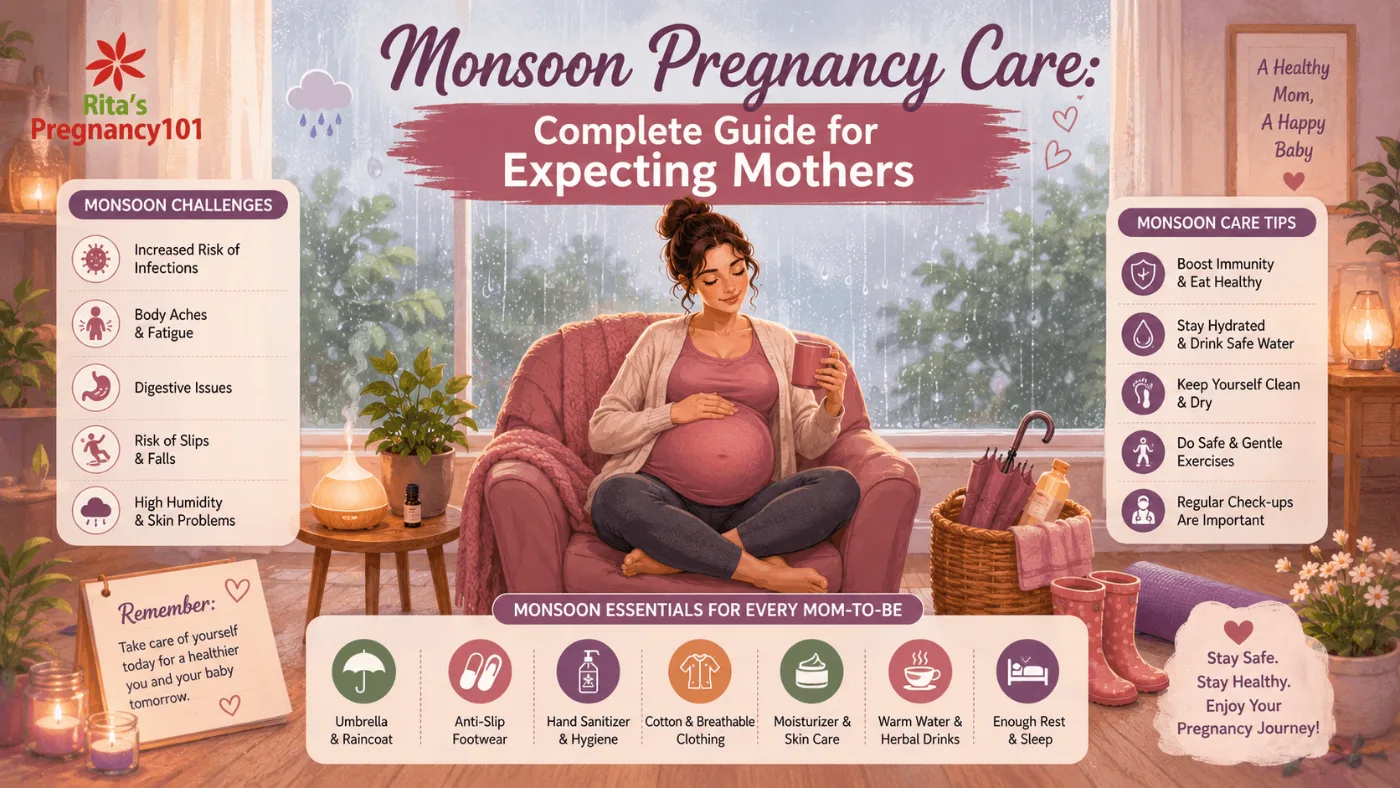
The first rains of monsoon bring relief from the heat, the smell of wet earth, and a welcome change of pace. But if you're expecting, this season also comes with its own set of challenges, from humidity and waterborne infections to slippery floors and sluggish digestion. Good pregnancy care during monsoon isn't about staying indoors and anxious for three months. With a few simple, doable habits, protecting your pregnancy health in the rainy season can be straightforward, and monsoon can be one of the most comfortable stretches of your pregnancy.
This guide walks you through why monsoon needs a little extra care, the health risks to watch for, the foods that help (and hurt), safe ways to stay active, and when it's time to call your doctor. Whether you're in your first trimester or counting down to your due date, you'll find practical, no-nonsense tips you can start using today, brought to you by Pregnancy101, trusted by thousands of expecting mothers across India for safe, expert-guided prenatal care.
Why Monsoon Requires Special Pregnancy Care
Pregnancy already asks a lot of your immune system, digestion, and circulation. Monsoon adds humidity, temperature swings, and a spike in waterborne and vector-borne illnesses on top of that, which is why thoughtful monsoon pregnancy care matters, and why the same season that feels refreshing to most people needs a bit more planning when you're expecting.
Changes Your Body Experiences During Monsoon
Humidity makes it harder for your body to regulate temperature, so you may sweat more and feel more fatigued than usual. Your skin can become oilier or more prone to rashes and fungal infections in the folds and creases that pregnancy naturally creates. Swelling in the feet and ankles, common in the second and third trimesters, can also feel more pronounced in humid weather. And because appetite and digestion are already sensitive during pregnancy, the heavier, damper air of monsoon can make bloating and sluggish digestion more noticeable.
Common Seasonal Pregnancy Challenges
A few monsoon-specific issues tend to come up again and again for expecting mothers:
Humidity that leaves you feeling constantly tired or clammy
Dehydration, which is easy to overlook since you may feel less thirsty in cooler, rainy weather
Food contamination, as bacteria multiply faster in damp conditions
Mosquito-borne illnesses like dengue and malaria, which peak during monsoon
Slippery roads and fall risks, especially as your centre of gravity shifts later in pregnancy
Common Health Risks During Pregnancy in the Rainy Season
Knowing what to watch for is half the battle. Here are the conditions that tend to affect pregnant women more often during monsoon.
Viral Infections
Seasonal flu, colds, and viral fevers circulate widely during monsoon. Pregnancy naturally suppresses parts of the immune response so your body doesn't reject the growing baby, which unfortunately also means you may catch common viruses more easily and take longer to recover.
Food Poisoning
Damp weather is ideal for bacterial growth in food and water. Combined with pregnancy's heightened sensitivity to foodborne illness, this makes monsoon a season to be extra careful about what and where you eat.
Urinary Tract Infections
Hormonal changes already make pregnant women more prone to UTIs, and humid weather combined with tighter, less breathable clothing can add to the risk. Left untreated, UTIs during pregnancy can lead to more serious complications, so they're worth taking seriously.
Dengue and Malaria Precautions
Mosquito-borne diseases are a genuine concern during pregnancy, as some of them are linked to complications for both mother and baby. Preventing mosquito bites is far easier and safer than treating an infection once it occurs.
Fungal Infections
Warm, moist conditions encourage fungal growth on the skin, particularly in areas prone to sweating. Pregnant women, especially in the later trimesters, may notice this more around the abdomen, underarms, or groin.
Essential Monsoon Pregnancy Care Tips
The good news: most monsoon risks are manageable with consistent daily habits. Getting the basics of pregnancy care during monsoon right hydration, food safety, hygiene, and movement- goes a long way toward a comfortable, healthy season.
Stay Hydrated
It's easy to drink less water when the weather is cool, but your body needs the same (or more) fluid intake during pregnancy regardless of season. Stick to boiled or filtered water, and consider herbal teas or fresh coconut water as hydrating alternatives.
Eat Freshly Cooked Food
Freshly prepared, hot food is far safer than anything left standing, since bacteria multiply quickly in humid conditions. Avoid leftovers that have been sitting out, and reheat food thoroughly before eating.
Avoid Roadside Food
As tempting as monsoon street snacks can be, roadside food is one of the biggest sources of food poisoning during this season. It's best avoided entirely during pregnancy.
Wear Breathable Clothing
Loose, breathable, cotton clothing helps reduce sweating and lowers your risk of fungal infections and heat rash. Avoid synthetic fabrics that trap moisture against the skin.
Maintain Personal Hygiene
Keep your skin dry, especially in areas prone to sweating, and change out of damp clothes as soon as possible after getting caught in the rain. Regular bathing and dry, clean undergarments go a long way in preventing infections.
Keep Your Home Mosquito-Free
Use mosquito nets, repellents that are pregnancy-safe (check with your doctor first), and make sure there's no stagnant water around your home, since that's where mosquitoes breed.
Exercise Safely Indoors
Wet, slippery roads make outdoor walks riskier during monsoon, but staying active is still important for managing weight gain, back pain, and mood. Moving indoors with guided online pregnancy yoga classes from Pregnancy101 is a safe, effective way to stay consistent with movement no matter what the weather is doing outside.
Best Foods to Eat During Monsoon Pregnancy
A well-rounded, immunity-supporting diet becomes even more important during monsoon.
Seasonal Fruits
Fruits like pears, pomegranates, and apples are generally easier on digestion during monsoon and provide fibre and vitamins without the contamination risk of cut fruit.
Protein-Rich Foods
Lentils, dals, well-cooked eggs, and paneer support your baby's growth and help keep you feeling fuller for longer, which can help with monsoon-related sluggishness.
Vitamin C-Rich Foods
Citrus fruits, amla, and bell peppers help support your immune system at a time when viral infections are more common.
Iron-Rich Foods
Leafy greens (well washed and cooked), jaggery, and lentils help maintain healthy iron levels, which pregnancy already demands more of.
Calcium-Rich Foods
Milk, curd made at home, and sesame seeds support your bone health and your baby's development.
Healthy Soups
Warm vegetable or lentil soups are gentle on digestion, hydrating, and comforting on a rainy day.
Probiotic Foods
Fresh homemade curd or buttermilk supports gut health, which can help offset the digestive sluggishness that monsoon humidity often brings.
Foods to Avoid During the Rainy Season
Just as important as what to eat is what to steer clear of:
Raw salads and uncooked vegetables, which can carry bacteria from contaminated water
Street food of any kind
Pre-cut fruit sold outside the home
Unpasteurised dairy products
Excess fried or oily food, which can worsen bloating and indigestion
Water from unreliable or unfiltered sources
Safe Exercises During Monsoon Pregnancy
Staying active doesn't have to stop just because it's raining outside.
Walking Indoors
If outdoor walks aren't safe due to wet or slippery surfaces, walking laps indoors or on a treadmill (at a gentle pace, with your doctor's clearance) is a good substitute.
Stretching
Gentle stretches help ease the muscle tension and stiffness that can build up from reduced outdoor movement.
Breathing Exercises
Simple breathing practices support oxygen flow for you and your baby and can help calm the nervous system, especially useful if monsoon weather is affecting your mood or sleep.
Prenatal Yoga
Guided, trimester-appropriate yoga is one of the safest and most complete ways to stay active indoors. It combines gentle strength work, flexibility, and breathing in a single session designed specifically for pregnant bodies. Joining structured pregnancy yoga classes online with Pregnancy101 means you get the benefits of movement without ever having to step out into the rain.
How Prenatal Yoga Helps During Monsoon
Beyond simply keeping you active, prenatal yoga offers a few monsoon-specific benefits worth highlighting:
Better immunity through improved circulation and reduced stress hormones
Reduced swelling in the legs and feet, which can feel worse in humid weather
Better circulation, helping counter the sluggishness that comes with reduced outdoor activity
Better sleep, which monsoon's temperature and humidity swings can otherwise disrupt
Stress reduction, especially helpful if monsoon keeps you cooped up indoors more than usual
Improved flexibility, which supports your body as it prepares for labour
If you haven't already built a routine, this is a good season to start with Pregnancy101's online yoga classes for pregnancy guided by certified instructors who understand exactly what's safe for each trimester.
Mental Wellness During Monsoon Pregnancy
Physical health tends to get most of the attention, but monsoon can affect your mental wellbeing too.
Reduced sunlight and more time indoors can contribute to mood swings or a low, restless feeling. Anxiety about infections or falls can also creep in, especially if you're reading a lot about monsoon health risks (understandably, given this article). Meditation is one of the most effective, low-effort ways to steady your mood during this season, and it also supports better sleep quality when humidity or discomfort makes rest harder to come by. If you're looking for structure, Pregnancy101's pregnancy meditation classes online in India offer guided sessions designed specifically for expecting mothers, so you're not figuring it out alone.
When Should You Contact Your Doctor?
Most monsoon-related discomfort is manageable at home, but certain symptoms need prompt medical attention regardless of season:
High fever
Any bleeding
Reduced or noticeably different baby movements
Severe or persistent vomiting
Persistent diarrhoea
Sudden or severe swelling
If you notice any of these, don't wait it out; contact your doctor right away.
Monsoon Pregnancy Care Checklist
Keep this simple checklist handy through the season:
✔ Drink boiled or filtered water
✔ Eat fresh, home-cooked food
✔ Wear clean, dry, breathable clothing
✔ Keep your surroundings dry and mosquito-free
✔ Prioritise good sleep
✔ Practice prenatal yoga regularly
✔ Attend all your scheduled check-ups
Conclusion
Monsoon doesn't have to be a season of worry during pregnancy. With a healthy, home-cooked diet, good hygiene, proper hydration, regular doctor visits, and safe indoor exercise, you can stay well-protected through the rains. Prenatal yoga in particular offers a simple, consistent way to support your immunity, mood, and body all at once, rain or shine.
Take it one habit at a time, trust your body, and lean on your care team whenever something feels off. This season, like every stage of pregnancy, is temporary, and you're more capable of navigating it well than you might feel on a gloomy, rainy day. And whenever you need extra support, Pregnancy101 is here to guide you through it.
Ready to stay healthy throughout your pregnancy, whatever the season?
Join Pregnancy101's online pregnancy yoga classes, pregnancy fitness classes, and pregnancy meditation classes online, recognised among the best online pregnancy classes India has to offer, to receive expert guidance, safe workouts, and personalised support from certified instructors.
Frequently Asked Questions
1. Is monsoon safe during pregnancy?
Yes, monsoon is safe during pregnancy as long as you take a few extra precautions around hygiene, food safety, and mosquito prevention. Most of the season's risks are preventable with consistent habits.
2. Can pregnant women walk in rain?
Getting caught in light rain occasionally isn't harmful, but it's best to avoid walking in heavy rain due to slippery surfaces and fall risk. If you do get wet, change into dry clothes as soon as possible.
3. Which fruits are best during monsoon pregnancy?
Pears, pomegranates, and apples are generally well tolerated and easier on digestion during monsoon. Avoid pre-cut fruit from outside, and always wash fruit thoroughly before eating.
4. How much water should pregnant women drink during monsoon?
Pregnant women generally need around 8–10 glasses of water a day, and this doesn't change in monsoon even though you may feel less thirsty in cooler weather. Stick to boiled or filtered water.
5. Can pregnant women do yoga during rainy season?
Yes, in fact, monsoon is one of the best times to lean on indoor, guided prenatal yoga since it lets you stay active safely without depending on outdoor walks or weather conditions.
6. How can I prevent infections during pregnancy?
Focus on hand hygiene, eating only fresh and thoroughly cooked food, wearing breathable clothing, keeping your surroundings dry, and using mosquito protection. Staying on top of your prenatal check-ups also helps catch any issues early.
7. Which foods should I avoid during monsoon pregnancy?
Avoid raw salads, street food, pre-cut fruit, unpasteurised dairy, excess fried food, and any water from unreliable sources.
Reading is good. Practicing is better.
Join 5,000+ moms in the P101 Onwards Care programs, yoga, meditation, information classes and a Saturday Q&A, from ₹1,000/month.
Explore Courses