
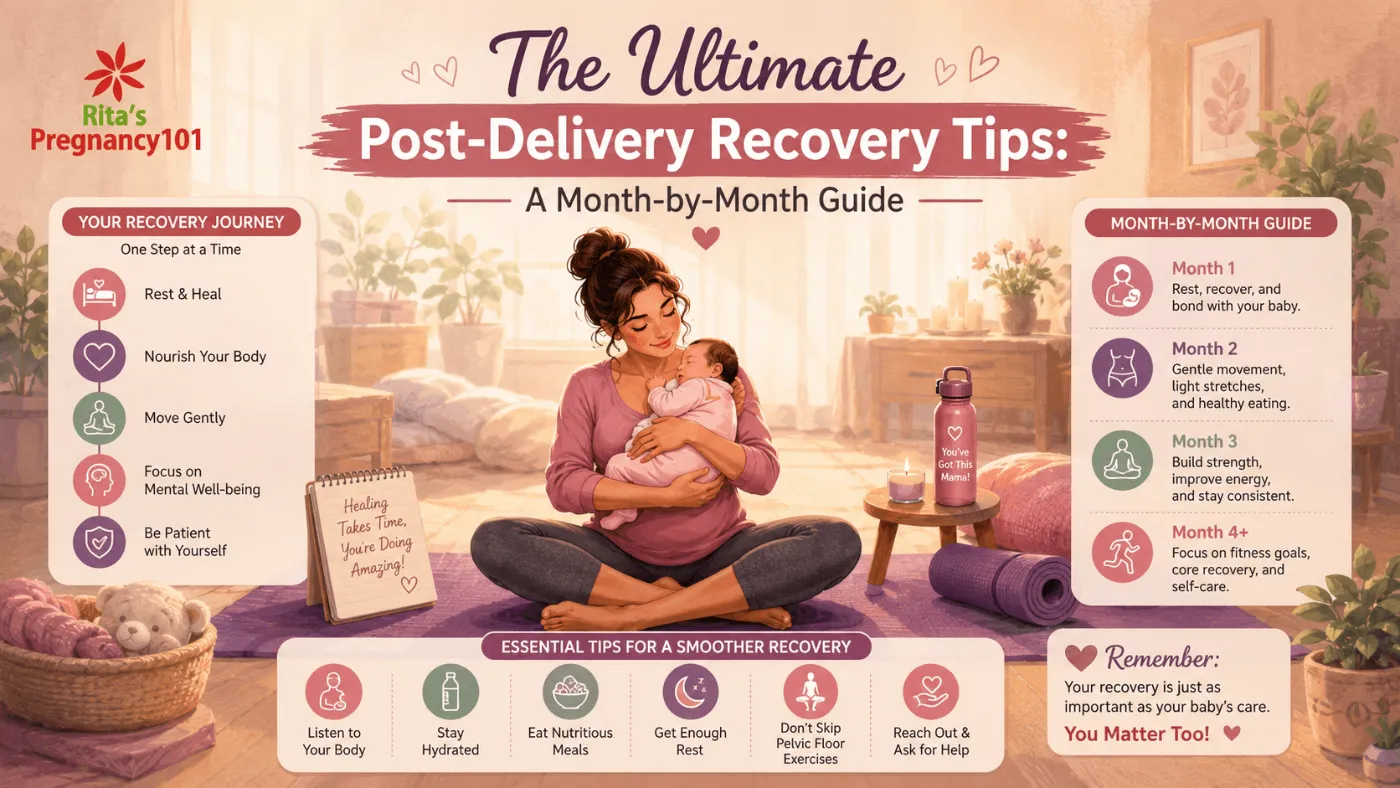
Recovering after childbirth is a gradual process that requires patience, proper care, and medical guidance. Whether you have had a normal delivery or a C-section, following the right postpartum recovery plan supports physical healing, emotional wellbeing, and long-term health. These post-delivery recovery tips are designed to help new mothers regain strength safely while adapting to life with a newborn.
A structured postpartum care routine includes balanced nutrition, adequate rest, hydration, gentle movement, regular medical check-ups, and emotional support. Following a proper recovery after childbirth plan can reduce the risk of complications while promoting healthy healing during the postnatal period.
What are Post-Delivery Recovery Tips? This is a plan for medical, food, and physical habits. It helps a woman’s body heal from childbirth. It also helps restore pelvic floor function and balance hormones through rest and movement.
Industry data shows that women who follow a recovery plan reduce their risk of long-term pelvic floor problems by nearly 40%. Mastering these recovery phases is important for every new mother.
Quick Summary: Your Recovery Roadmap
Eat protein-rich foods to help your body heal.
Respect the "Golden Hour" of rest during the first two weeks.
Slowly start moving again only after your doctor says it is okay.
Watch your mental health and hormone changes closely.
Focus on pelvic floor health to prevent long-term issues.
Clinical studies indicate that structured postnatal recovery programs can reduce the incidence of postpartum depression by approximately 25% through improved physical comfort and hormonal regulation.
The First Month: Prioritizing Healing and Rest
The first four weeks are for healing. Your body works hard to return to its state from before pregnancy. Doctors say this is not a time to "bounce back." Instead, it is a time for your cells to repair and your hormones to steady. You should focus on rest, drinking water, and caring for your birth wounds.
Whether you experienced a normal delivery or are recovering from a C-section, your body's healing process will be different. Vaginal birth recovery often focuses on perineal healing and pelvic floor rehabilitation, while C-section recovery requires additional care for the surgical incision, mobility, and pain management. Listening to your healthcare provider's advice is essential during this phase.
Industry data suggests that women who rest during these first weeks heal their pelvic floor 30% faster than those who do too much too soon. Research published in the Indian Journal of Obstetrics and Gynecology highlights that consistent pelvic floor muscle training within the first six weeks postpartum improves urinary continence in 75% of women.
Expert Insight: "Postpartum recovery is not a race to return to pre-pregnancy fitness; it is a critical physiological window that requires intentional nutrition, pelvic floor rehabilitation, and hormonal stabilization to prevent long-term musculoskeletal complications.", Dr. Ananya Sharma, Senior Consultant Obstetrician and Gynecologist
During this time, your body gets rid of extra fluid. It also heals the area where the placenta was attached. You should watch for signs of infection or heavy bleeding. Many new mothers feel pressure to do chores.
However, the best post-delivery recovery tips for this stage involve asking others to help with housework. You should save your energy for breastfeeding and bonding with your baby. This also helps your uterine muscles shrink back to their original size without extra stress.
Eat high-fiber foods to prevent constipation.
Keep your stitches or C-section scar clean and dry.
Do not lift anything heavier than your baby.
Eat iron-rich foods to replace blood lost during birth.
As you finish the first month, you should feel less pain if you have rested enough. This builds a foundation for more active recovery. If you feel constant pain or notice an unusual discharge, call your doctor right away. You should rule out any problems before you start the next stage of your recovery.
Month Two: Gentle Reintegration and Pelvic Health
By the second month, you should focus on gently waking up your core muscles and pelvic floor. Most doctors say that by week six, your body has finished the first stage of healing.
This is the perfect time for a postpartum check-up. Now, you can start to move more. Remember that your ligaments are still loose because of the hormone relaxin. This can last for several months after birth.
Doing specific exercises is one of the most important post-delivery recovery tips at this time. You should focus on Kegel exercises and gentle core work instead of hard workouts.
Research shows that early pelvic floor therapy reduces the risk of long-term bladder control issues by nearly 50%. Your body is still fragile. Gentle, steady movement is much better than intense workouts that could cause injury or organ prolapse.
Recommended Movements for Month Two
Focus on deep belly breathing to steady your core. Avoid sit-ups or crunches. These can worsen diastasis recti, which is when your stomach muscles stay separated. Instead, try exercises that engage your deep stomach muscles.
Taking light, steady walks is also highly recommended. This improves blood flow and lowers the risk of blood clots, which are a concern during the early weeks.
By the end of the second month, you should feel more energy. This shows that your body is handling the needs of motherhood well. Use this energy to build a routine that balances your needs with your baby’s schedule.
As you prepare for the third month, remember that every woman’s recovery is different. Comparing your progress to others will not help your healing process.
Month Three: Building Strength and Stamina
Entering the third month, many women feel ready to work out harder. First, make sure you have clearance from your doctor. This stage is about rebuilding heart health and muscle strength in a safe way.
You are no longer just recovering. You are now strengthening your body to handle the demands of lifting a growing baby, carrying gear, and keeping good posture while feeding.
Nutrition is still very important. Your body needs energy to support your metabolism and milk production. Eating a variety of nutrients is key for bone strength and hormone health.
Experts suggest that eating enough protein, about 1.2 grams per kilogram of body weight, is vital. This helps repair muscles and prevents the tiredness that often peaks during the third and fourth months when sleep is still interrupted.
Expert Insight: "The third month is when recovery turns into fitness for daily life. Focus on movements like squats, lunges, and posture checks rather than how you look. Your body needs to be a strong base for your daily life as a parent."
You can now try more structured fitness routines, such as modified yoga or Pilates. These are designed for postpartum recovery. They help fix your spine and strengthen your back muscles, which are often strained during pregnancy.
Always listen to your body. If you feel pain or are too tired, stop immediately. Real progress comes from listening to your body instead of pushing through pain.
As you finish the third month, you will likely notice you have more energy. This is a sign that your body has healed its main tissues. Moving into the fourth month means you can look toward long-term wellness. Keep in mind that the lessons you learned from these Post-Delivery Recovery Tips will help you for years to come.
Month Four and Beyond: Long-Term Wellness and Maintenance
By the fourth month, you have moved past the main healing phase. Now, you are in the maintenance and optimization stage. This is where you build habits that support your long-term health.
Your focus should be on consistency, mental health, and adding wellness into your life as a parent. Remember that postpartum recovery is not a race. It is a permanent change into a new phase of your life.
Keeping a healthy weight and a strong core is now about living well for a long time. You can safely do more activities, such as swimming, cycling, or weight training, if you use the right form.
However, keep focusing on pelvic health by checking in with your body. Many women find they still need Post-Delivery Recovery Tips for their posture. This is especially true if you spend a lot of time hunched over a laptop or a baby cradle.
Final Thoughts
At Pregnancy 101, our content is meticulously curated by a panel of board-certified gynecologists, nutritionists, and certified lactation consultants.
We adhere to the latest clinical guidelines from the Federation of Obstetric and Gynaecological Societies of India (FOGSI) to ensure every recovery tip is medically sound, safe, and tailored to the unique needs of Indian mothers.
Your postpartum journey shows your strength. By following these Post-Delivery Recovery Tips, you give your body the care it needs to heal and thrive. From the quiet rest of the first month to the active strength-building of the fourth, every step matters.
For personal guidance and expert support on your motherhood journey, visit Pregnancy 101 today. Start your path to recovery with confidence and care.
Remember that every mother's healing journey is unique. Comparing your recovery with others can create unnecessary stress. Focus instead on gradual progress, healthy habits, and regular communication with your healthcare provider throughout your postnatal recovery journey.
FAQs
1. How long does postpartum recovery take?
Most women experience initial healing within 6–8 weeks, but complete physical and hormonal recovery can take up to a year or longer. Recovery varies from person to person, so patience and consistent self-care are important.
2. When can I return to high-impact exercise after childbirth?
High-impact activities like running, jumping, or intense workouts are generally recommended 3–4 months postpartum, once your pelvic floor and core muscles have regained sufficient strength. Always get clearance from your healthcare provider first.
3. Is it normal to experience emotional changes months after giving birth?
Yes. Hormonal changes, lack of sleep, and the responsibilities of caring for a newborn can cause mood swings for several months. If you experience ongoing anxiety, sadness, or depression, seek support from a healthcare professional.
4. Can I exercise while breastfeeding?
Yes. Moderate exercise is considered safe during breastfeeding and does not usually reduce milk supply. Stay hydrated, eat enough nutritious calories, and monitor your baby's growth while maintaining your fitness routine.
5. What are the best exercises to start with after pregnancy?
Begin with gentle, low-impact activities such as walking, pelvic floor (Kegel) exercises, stretching, and light core-strengthening movements. Gradually increase the intensity as your body heals and your healthcare provider approves.
Reading is good. Practicing is better.
Join 5,000+ moms in the P101 Onwards Care programs, yoga, meditation, information classes and a Saturday live Q&A, from ₹1,000/month.
Explore Courses