
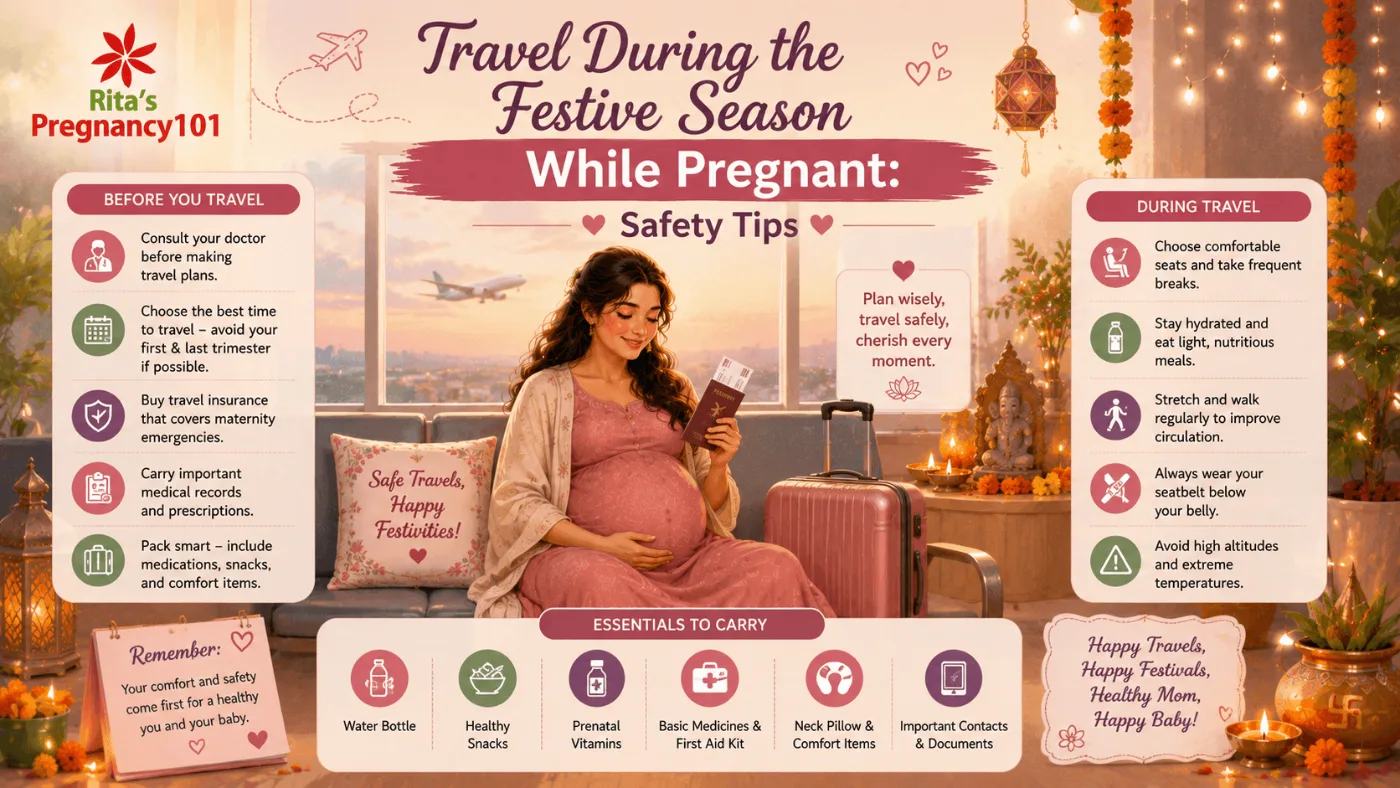
Festivals in India almost always come with travel — a trip to your hometown, a family reunion, a short holiday, or simply visiting relatives for Diwali, Navratri, Durga Puja, or the New Year. If you're expecting, the excitement of the festive season often comes with a natural question: is it safe to travel during pregnancy?
The good news is that pregnancy doesn't automatically mean cancelling every trip. For most healthy, low-risk pregnancies, travel is possible — but it does need a little extra planning. This guide covers pregnancy travel safety tips for road trips, trains, and flights, along with festive-season specific advice on crowds, food, and packing, so you can enjoy the celebrations without unnecessary stress.
Is It Safe to Travel During Pregnancy?
Whether travel is safe for you depends on a few factors:
Your trimester — some periods of pregnancy are generally easier for travel than others.
Your overall health and whether your pregnancy is low-risk or has any complications.
The length and mode of your journey — a short local trip is very different from an overnight train ride or a long car journey.
Your doctor's advice — this is the most important factor of all.
Before you finalize any festive travel plans, it's worth having a quick conversation with your healthcare provider. They know your medical history and can flag anything specific to your pregnancy that you should watch out for. Long or tiring journeys, in particular, need a bit more preparation, from choosing the right seating to planning rest stops.
For a broader look at what's generally considered safe during pregnancy — including travel, exercise, and daily activity — see our detailed guide: [Pregnancy Exercise, Travel, and Sex: What's Safe for Indian Moms and What to Avoid].
Which Trimester Is Best for Travelling?
Travelling During the First Trimester
The first trimester often brings nausea, vomiting, fatigue, and sometimes motion sickness — all of which can make travel more tiring. If you do need to travel during this stage:
Keep dry snacks or ginger candies handy for nausea.
Stay hydrated, but sip water frequently rather than drinking large amounts at once.
Plan for frequent rest breaks rather than pushing through long stretches of travel.
Carry any prescribed medicines (including anti-nausea medication, if advised by your doctor).
Travelling During the Second Trimester
Many women find the second trimester the most comfortable window for travel. Morning sickness has usually eased, energy levels tend to improve, and the baby bump is not yet large enough to make movement difficult. If your festive plans are flexible, this is often a good stretch to plan a trip in — though it's still worth checking in with your doctor beforehand.
Travelling During the Third Trimester
Travel becomes more physically demanding in the third trimester. You may notice increasing discomfort, more frequent bathroom breaks, swelling in the feet and ankles, and general fatigue. Since you're also closer to your delivery date, it's important to:
Discuss any travel plans with your doctor first.
Know where the nearest hospital or clinic is at your destination.
Avoid very long or physically strenuous journeys unless your doctor has cleared it.
There's no single "safe until this week" rule that applies to everyone — every pregnancy is different, so let your doctor's advice guide your final decision.
Festive Season Travel Safety Tips for Pregnant Women
This is where festive travel differs from an everyday pregnancy trip — bigger crowds, longer outings, and packed schedules all add extra considerations.
Plan Your Journey Before Leaving
Check your route in advance, including road conditions if you're driving.
Avoid unnecessarily long journeys where a shorter route or mode of travel is available.
Identify rest stops along the way.
Look up healthcare facilities near your destination, just in case.
Keep emergency contact numbers saved and easily accessible.
Avoid Overcrowded Festival Areas
Crowded pandals, fairs, concerts, and busy markets are part of the festive charm, but they can be tiring and even risky when you're pregnant. Standing for long periods, navigating dense crowds, and the possibility of accidental bumps or falls are all worth keeping in mind. Where possible, visit popular spots during quieter hours and avoid pushing through packed areas.
Take Regular Breaks During Long Journeys
Whether you're travelling by road, rail, or air, sitting in one position for too long isn't ideal during pregnancy. Try to:
Get out and stretch when you can (especially on car journeys).
Change your sitting position periodically.
Choose comfortable seating whenever you have the option.
Stay Hydrated
Dehydration during pregnancy travel is a common but avoidable problem. Carry a water bottle, sip through the day rather than waiting until you're very thirsty, and be cautious with unfamiliar water sources at your destination.
Choose Comfortable Clothing and Footwear
Loose, breathable clothing and supportive, comfortable footwear make a real difference on long festive outings. Skip anything tight around the waist, and avoid heels or unsupportive shoes if you'll be on your feet for a while.
Carry Your Pregnancy Essentials
A little preparation goes a long way. Pack:
Prenatal vitamins and any prescribed medicines
Copies of your medical records
Your doctor's contact information
A water bottle and healthy snacks
Comfortable clothing layers
Maternity support items, if recommended
Phone and a charger or power bank
Travelling by Car During Pregnancy
Wear Your Seat Belt Correctly
The lap belt should sit low, across your hips and pelvis, and below your belly — never across your bump. The shoulder belt should cross your chest and sit between your breasts, not under your arm.
Take Breaks on Long Car Journeys
Long, uninterrupted drives can be uncomfortable and increase the risk of swelling or stiffness. Plan to stop every hour or two to stretch and move around.
Avoid Rough or Unnecessarily Bumpy Routes
Where you have a choice of routes, pick the smoother one. Excessively bumpy roads can add unnecessary discomfort.
Don't Carry Heavy Luggage
Let someone else handle the heavy bags. Lifting and carrying heavy luggage is best avoided during pregnancy, especially at busy stations or airports.
Travelling by Train During Pregnancy
Train travel can be a comfortable option for pregnancy if you plan ahead:
Choose a comfortable seat or berth (a lower berth is often easier to access).
Keep your essentials — water, snacks, medicines — within easy reach.
Avoid lifting heavy luggage onto overhead racks.
Walk carefully, especially on a moving train.
Stay hydrated throughout the journey.
Use clean washrooms where possible.
Avoid standing for long periods, particularly in crowded compartments.
Flying During Pregnancy
Flying is generally an option for many pregnant women, but a few precautions matter:
Consult your doctor before booking, especially for longer flights.
Check the airline's pregnancy policy — many airlines have specific guidelines or require documentation after a certain point in pregnancy.
Keep your medical documents accessible during travel.
Choose an aisle seat if it's more comfortable for getting up and moving.
Stay hydrated, since cabin air can be dehydrating.
Move or stretch periodically on longer flights to support circulation.
Wear comfortable clothing suited for the flight.
There's no universal week up to which every pregnant woman can safely fly — this varies by individual health and airline policy, so always confirm with your doctor and airline directly.
Festival Food Safety While Travelling During Pregnancy
Festive travel often means festive food — but a few precautions help keep both you and your baby safe.
Choose Freshly Prepared Food
Freshly cooked, hot food is generally a safer choice than food that has been sitting out for a while.
Be Careful With Street Food
Festival stalls are tempting, but hygiene standards can vary. If you do indulge, choose stalls with visibly clean preparation areas and food that's cooked fresh in front of you.
Avoid Unpasteurized or Unsafe Foods
Steer clear of unpasteurized dairy, raw or undercooked items, and anything that seems questionable in terms of freshness or storage.
Carry Pregnancy-Friendly Snacks
Having your own healthy snacks on hand — nuts, fruits, roasted chana, or similar — means you're not solely dependent on what's available at a given stop.
Drink Safe Water
Stick to sealed bottled water or water you know is safe, especially when travelling to a new place.
How to Manage Crowds and Festival Celebrations While Pregnant
Festive celebrations are meant to be enjoyed, and with a bit of care, they can be:
Avoid overcrowded areas when you can, especially during peak hours.
Don't stand for very long stretches — sit and rest whenever you feel the need.
Stay with someone you trust who can help you navigate crowds.
Choose less crowded times to visit popular spots.
Avoid excessive heat and stay in shaded or cooler areas where possible.
Leave any situation that starts to feel uncomfortable or overwhelming — there's no need to push through it.
What Should You Pack for Festive Travel During Pregnancy?
Pregnancy Travel Checklist
Medical records
Prescribed medicines
Prenatal vitamins
Water bottle
Healthy snacks
Comfortable clothes
Comfortable footwear
Phone + charger
Emergency contact details
Doctor/healthcare provider details
Basic personal hygiene items
When Should You Avoid Travel During Pregnancy?
Travel may need to be postponed or restricted if your healthcare provider advises against it, or if you're experiencing certain symptoms. It's important to speak with your doctor before travelling if you notice:
Vaginal bleeding
Significant abdominal pain
Leaking fluid
Contractions
Severe dizziness or fainting
Severe shortness of breath
Any other symptoms that concern you
This list isn't meant to diagnose your situation — only your doctor can assess whether travel is advisable for your specific pregnancy. When in doubt, it's always best to check with them first.
When to Seek Medical Help While Travelling
If you notice any concerning symptoms while travelling:
Stop travelling if necessary and find a safe place to rest.
Contact your healthcare provider as soon as possible.
Seek local medical care if the situation feels urgent.
Keep your emergency contacts and medical records accessible at all times, so any local doctor can quickly understand your history.
Festive Travel During Pregnancy: Quick Safety Checklist
Before Travel | During Travel | At Destination |
Speak with your doctor | Stay hydrated | Avoid overcrowded areas |
Plan your route | Take regular breaks | Rest when tired |
Pack medicines | Wear seat belt correctly | Choose safe food |
Carry medical records | Avoid heavy luggage | Know nearby medical facilities |
Check destination healthcare | Wear comfortable clothes | Don't overexert yourself |
Conclusion
Festive travel during pregnancy is possible with the right precautions — plan ahead, listen to your body, and always check with your doctor before you go. At Pregnancy 101, we believe a little preparation goes a long way in helping Indian moms-to-be celebrate the season safely and joyfully.
FAQs
1. Is it safe to travel during pregnancy?
For most healthy, low-risk pregnancies, travel is generally possible with a doctor's approval. Safety depends on your trimester, health condition, and the nature of the journey.
2. Which trimester is safest for travel?
The second trimester is often considered the most comfortable for travel, though this varies by individual. Always check with your doctor regardless of trimester.
3. Can I travel by car during pregnancy?
Yes, with precautions — wear your seat belt correctly, take regular breaks, avoid heavy luggage, and choose smoother routes where possible.
4. Can I travel by train while pregnant?
Yes, train travel can be comfortable with some planning — choose a good seat, stay hydrated, avoid lifting heavy bags, and avoid standing for long periods.
5. Can I fly during pregnancy?
Many pregnant women can fly, but it's important to check your airline's pregnancy policy and consult your doctor first, especially for longer flights or later in pregnancy.
6. What should I pack for pregnancy travel?
Medical records, prescribed medicines, prenatal vitamins, water, healthy snacks, comfortable clothing and footwear, and your doctor's contact details are all worth packing.
7. Is it safe to attend crowded festivals while pregnant?
It can be, with care — avoid standing for too long, stay with someone you trust, choose quieter times to visit, and leave if you feel uncomfortable.
8. What food should I carry when travelling during pregnancy?
Freshly prepared, pregnancy-friendly snacks like fruits, nuts, or roasted chana, along with safe, sealed drinking water, are good options to carry along.
Reading is good. Practicing is better.
Join 5,000+ moms in the P101 Onwards Care programs, yoga, meditation, information classes and a Saturday live Q&A, from ₹1,000/month.
Explore Courses