
8 Common Footwear Mistakes During Pregnancy
Mar 24, 2025
Rita Singha
Pregnancy Health
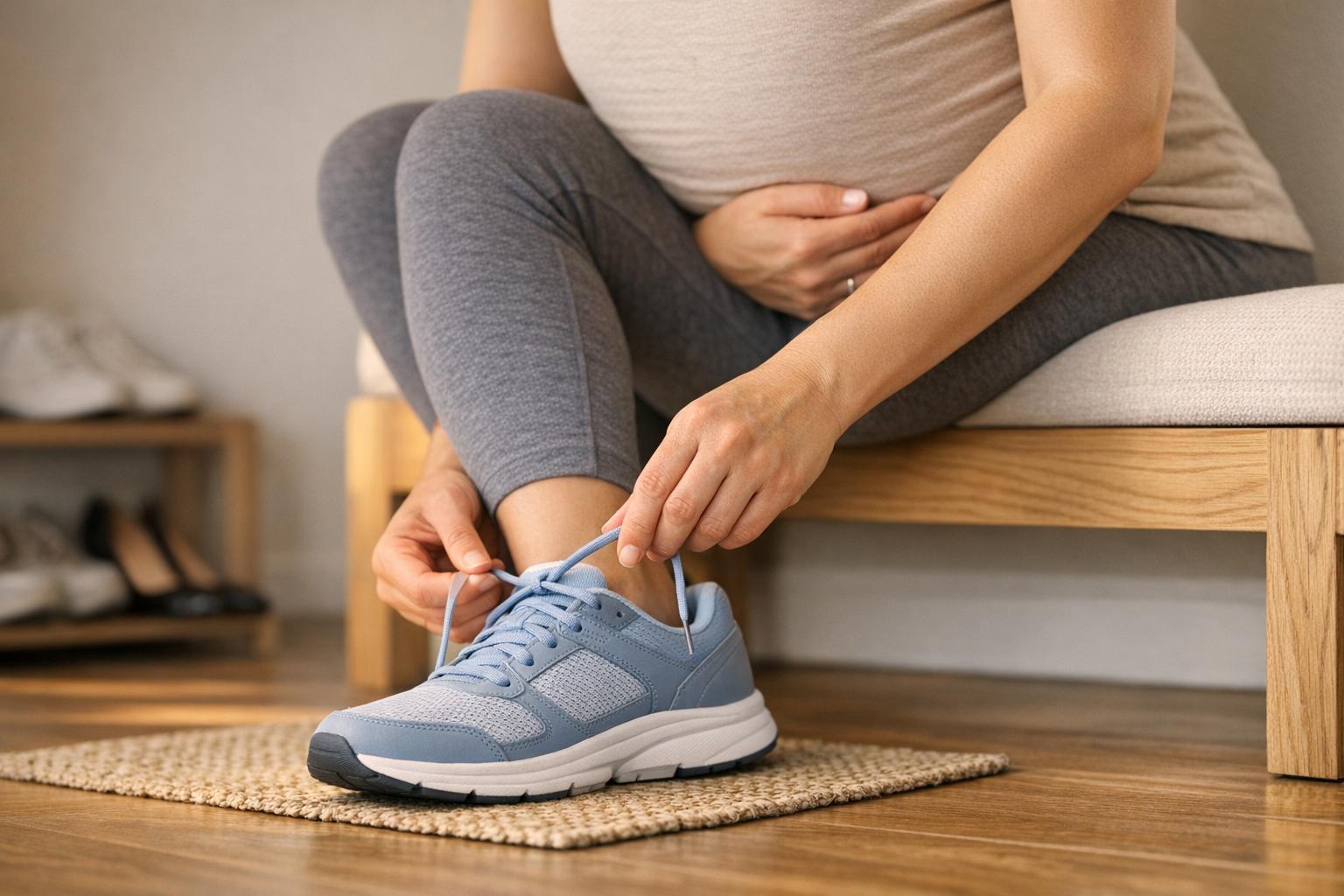
Pregnancy changes your body in many ways, and your feet are no exception. Hormonal shifts, weight gain, and posture adjustments can lead to swelling, arch collapse, and even permanent changes to foot size. Wearing the wrong shoes during this time can worsen foot pain, increase the risk of falls, and contribute to long-term discomfort.
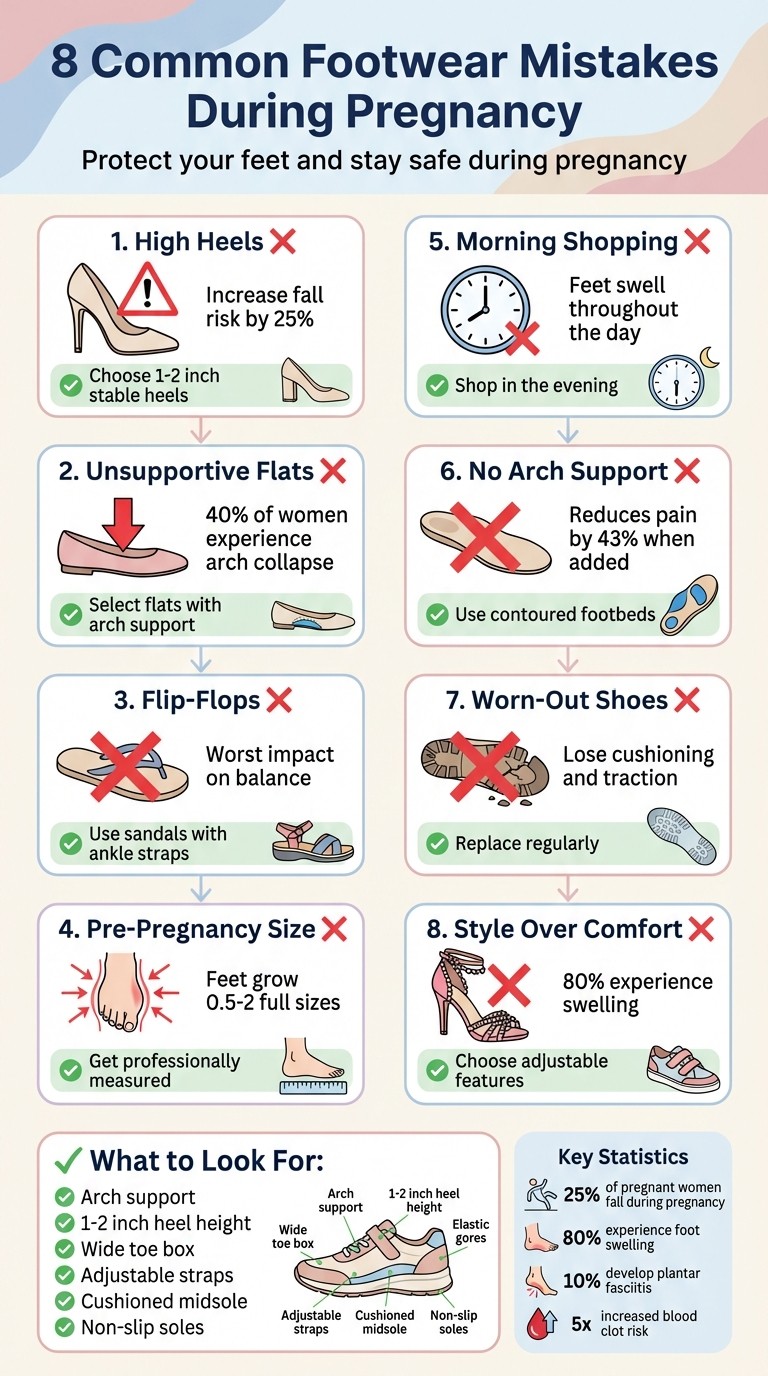
Here’s a quick rundown of common footwear mistakes to avoid during pregnancy and what to look for instead:
High Heels: Increase fall risk and strain on arches. Opt for low, stable heels if needed.
Flats Without Support: Cause overpronation and heel pain. Choose flats with arch support and cushioning.
Flip-Flops/Open-Backed Shoes: Lack stability and support. Go for sandals with ankle straps and arch support.
Pre-Pregnancy Shoe Size: Feet often grow permanently. Get properly sized shoes with room for swelling.
Shopping in the Morning: Feet swell throughout the day. Shop in the evening for a better fit.
Shoes Without Arch Support: Lead to misalignment and pain. Use shoes with firm arch support.
Worn-Out Shoes: Lose cushioning and traction. Replace old shoes regularly.
Prioritizing Style Over Comfort: Choose supportive, stable shoes over trendy but unsupportive options.
The right footwear can help reduce discomfort, prevent injuries, and support your body’s changes during pregnancy. Look for shoes with arch support, cushioning, adjustable features, and a proper fit to stay comfortable and safe.
8 Common Footwear Mistakes to Avoid During Pregnancy
Pregnancy and Foot Changes: Care Tips for Expectant Mothers
1. Wearing High Heels
High heels might look stylish, but during pregnancy, they can pose serious safety risks. The physical changes your body goes through - like a shifting center of gravity - already make balance tricky. Adding high heels to the mix only increases the likelihood of falls.
Safety and Stability to Prevent Slips or Falls
Did you know that around 25% of pregnant women experience a fall during pregnancy? High heels amplify this risk. As your uterus grows, your posture and walking pattern naturally adjust, often resulting in the well-known "pregnancy waddle." Heels, especially stilettos or pumps with narrow bases, offer minimal stability - something your body desperately needs during this time. On slippery or uneven surfaces, this lack of stability can lead to dangerous falls, potentially harming both you and your baby.
But it’s not just about balance. High heels also take a toll on the structure and support of your feet.
Support for Arches and Ankles
During pregnancy, your body produces relaxin, a hormone that loosens ligaments to prepare for childbirth. While this is helpful for labor, it also affects the ligaments in your feet and ankles, making them less stable. This instability can make you more prone to rolling your ankles, especially in heels.
"The ligaments in your feet will be looser, leading to joint instability and muscle strain. This means your feet might hurt more, and they may not help you balance in high heels like they used to." - BabyCenter
On top of that, heels shift your weight onto the balls of your feet, which can cause pain and worsen conditions like bunions or flattening arches. Add the extra 25–35 pounds of pregnancy weight, and the strain becomes even more intense. If you must wear heels, stick to these guidelines: opt for a heel height of 1–2 inches, choose wide or chunky heels (or wedges), look for non-skid rubber soles, and save them for occasions where you’ll be mostly seated. Your feet - and your safety - will thank you.
2. Choosing Flats Without Support
Switching from high heels to flats during pregnancy might feel like a safer choice, but not all flats are created equal. Many styles, like ballet flats or slip-ons with thin, flimsy soles, can lack the support your feet need during this time of significant change. Surprisingly, these seemingly comfortable shoes might actually cause more harm than good.
Support for Arches and Ankles
Pregnancy hormones loosen ligaments, which can lead to a collapse in the arches and overpronation. Without the right support, this can worsen, increasing the risk of issues like plantar fasciitis or chronic heel pain that may linger well beyond pregnancy.
"The increase in weight during a pregnancy exacerbates the pressure on these looser structures of the feet, which can cause various types of pain and problems to the feet, such as muscle or tendon strains and plantar fasciitis." - Rebecca Burmeister, D.P.M., M.P.H., Podiatrist, Michigan Medicine
Studies reveal that around 40% of women experience noticeable increases in foot length and significant drops in arch height during pregnancy. Flats without proper support can speed up these changes, and unfortunately, these structural shifts often don’t reverse after delivery.
Comfort and Cushioning for Pregnancy-Related Foot Changes
Flats with thin soles often lack the cushioning needed to absorb shock. This puts added strain on your feet, ankles, knees, and even your lower back. Shoes without proper padding, such as midsoles made from EVA or memory foam, can lead to fatigue, muscle strain, and joint pain. Flat shoes can also tilt your pelvis unnaturally, which may worsen lower back and sacroiliac joint discomfort, especially in the later stages of pregnancy.
When choosing flats, test their flexibility by bending them. They should flex at the toes but remain firm at the arch. Look for features like a contoured footbed and a stiff midsole to help maintain proper alignment and provide the stability your body needs during pregnancy. These small adjustments can make a big difference in keeping you comfortable and supported.
3. Wearing Flip-Flops or Open-Backed Shoes
Flip-flops might seem like a comfortable choice, but during pregnancy, they’re one of the worst footwear options. With the changes in balance and ligament stability that come with pregnancy, these shoes can increase your risk of injury. Their open-backed design offers almost no support, which is exactly what your body needs during this time.
Safety and Stability to Prevent Slips or Falls
As your belly grows, your center of gravity shifts forward, creating challenges for balance. A study involving 43 pregnant women in their second and third trimesters revealed that flip-flops had the most negative impact on static balance, especially when compared to other options like work shoes or ankle-strap sandals. The loose design of flip-flops means your feet aren’t secured, forcing your toes to grip to keep them on. This unnatural motion increases the likelihood of trips and falls, further reducing the support your feet need.
"Work shoes and ankle strap sandals have a greater tendency to improve static balance in pregnant women while flip flop slippers may contribute to poor balance performance." - West African Journal of Medicine
Support for Arches and Ankles
Flip-flops lack both arch support and ankle stability, which becomes even riskier during pregnancy. The hormone relaxin increases significantly during this time, loosening ligaments and making joints less stable. Without proper ankle support, you’re more susceptible to sprains, ligament injuries, and tendon strains.
"The loosening of the ligaments during pregnancy from relaxin can cause the woman to overstretch her foot and ankle, causing severe sprains and ligament tears." - Dr. Frank Chervenak, Past Chairman of Obstetrics and Gynecology, New York-Presbyterian Hospital
Additionally, the flat design of flip-flops puts strain on your Achilles tendon, heels, knees, and lower back. Surprisingly, shoes with a 1–2 inch heel provide better mechanical support than completely flat footwear. To stay safe and comfortable, consider sandals with ankle straps and built-in arch support instead of flip-flops.
4. Sticking to Your Pre-Pregnancy Shoe Size
Choosing the wrong shoe size after pregnancy can lead to ongoing discomfort. Many women assume their feet will return to their pre-pregnancy size, but that's often not the case. During pregnancy, the hormone relaxin increases, loosening ligaments throughout the body - including those in your feet. This can cause your arches to flatten and your feet to lengthen and widen, often permanently. In fact, your shoe size may increase by 0.5 to 2 full sizes, making your pre-pregnancy shoes a poor fit for your new needs.
Comfort and Cushioning for Pregnancy-Related Foot Changes
For many women, these foot changes are here to stay. Studies reveal that the most noticeable changes, like a permanent decrease in arch height and an increase in foot length, often occur during a first pregnancy. Wearing shoes that are too tight can lead to painful foot problems.
"Pregnancy is also treated as a temporary condition, so some doctors just kick the can down the road and say once you deliver, things will go back to normal. But... that just isn't the case for many women." - Neil Segal, Associate Professor of Orthopedics and Rehabilitation, University of Iowa
Adjustability for Swelling
Swelling adds another layer of complexity when it comes to finding the right footwear. Edema, or swelling, affects up to 80% of healthy pregnant women. Tight shoes can restrict circulation, worsening swelling and increasing the risk of complications like varicose veins. Pregnancy also raises the risk of blood clots by five times, with venous thromboembolism accounting for over 9% of maternal deaths.
To ensure a proper fit, have your feet measured professionally and look for at least a thumb's width of space between your longest toe and the front of the shoe. Shop in the evening when your feet are likely to be most swollen, ensuring your shoes will stay comfortable all day long.
5. Shopping for Shoes in the Morning
Buying shoes in the morning might seem convenient, but it can lead to discomfort later on. Early in the day, your feet are at their smallest size. As the day goes on, gravity and fluid retention cause your feet to expand. Shoes that feel perfect at 9:00 AM can become painfully tight by mid-afternoon. This daily swelling is a natural process and highlights the importance of timing your shoe shopping.
Why Timing Matters
Dan Geller, a foot and ankle surgeon at Kane Footwear, explains it best: "Gravity wins here, with fluid retention typically heading south towards the feet and ankles." In other words, the shoes that fit comfortably in the morning might feel restrictive by evening, potentially causing circulation issues or worsening swelling.
To avoid this, plan your shoe shopping for the afternoon or evening. Miguel Cunha, DPM, a podiatrist, advises: "If the shoes feel comfortable at the end of the day, they will most likely feel comfortable throughout the day." This strategy ensures your shoes will accommodate your feet at their largest, not their smallest.
When trying on shoes, stand up to check the fit. Make sure there’s a thumb’s width of space between your longest toe and the tip of the shoe. This extra room allows for natural expansion throughout the day, reducing the risk of pinching or numbness. Opt for shoes with adjustable features like buckles, Velcro straps, or stretchy materials. These elements let you fine-tune the fit as your feet swell during the day or even throughout different stages of life, like pregnancy.
6. Choosing Shoes Without Arch Support
Your arches are your body’s natural shock absorbers. During pregnancy, hormones like relaxin and progesterone loosen the ligaments in your feet. While this is a normal part of pregnancy, it can cause your arches to flatten and lose stability. Without the right support, this flattening can lead to improper foot alignment and added strain.
Support for Arches and Ankles
When your arches lack support, your feet may roll inward excessively - a condition known as overpronation. This doesn’t just affect your feet. The misalignment ripples upward, forcing your ankles, knees, and hips to adjust unnaturally. For pregnant women, this can worsen back pain, which already affects more than half of them.
"The increase in weight during a pregnancy exacerbates the pressure on these looser structures of the feet, which can cause various types of pain and problems to the feet, such as muscle or tendon strains and plantar fasciitis." - Rebecca Burmeister, D.P.M., M.P.H., Podiatrist, Michigan Medicine
Comfort and Cushioning for Pregnancy-Related Foot Changes
Studies show that using medial arch support insoles can reduce foot pain by 43% in just two weeks for pregnant women dealing with plantar fasciitis. Proper arch support helps distribute your body weight evenly, easing the strain on the plantar fascia - the connective tissue running from your heel to your toes.
"Your foot only bends at the toes when you walk, so should the shoe. If the shoe has too much give in the arch, it will bend under pressure... [and] will bend under your body weight." - Dr. Chelsea Viola, Board-Certified Podiatrist, Vale Foot and Ankle Surgery
7. Wearing Worn-Out or Ill-Fitting Shoes
Your favorite sneakers might not be up to the task during pregnancy. Old shoes lose their ability to support your feet just when you need it most. With the extra weight your body is carrying, the cushioning and stability in worn-out shoes break down faster, leading to potential issues.
Reduced Cushioning and Shock Absorption
As shoes age, their midsole compresses, reducing their ability to absorb shock. This puts added strain on your feet, ankles, and knees, which are already under extra pressure. Without proper cushioning, conditions like plantar fasciitis can become more severe.
"Increased weight means that shoes will break down sooner and therefore will need to be replaced earlier as they will not provide the same amount of protection." - Dr. Sooji Kim, Foot and Ankle Surgeon, Gotham Footcare
Safety and Stability to Prevent Slips or Falls
Beyond cushioning, worn-out shoes also lose traction. Soles that have lost their tread can make walking on wet or slippery surfaces risky. Combine that with the changes to your center of gravity and gait during pregnancy, and the risk of falling increases significantly. Regularly check the soles of your shoes - if you notice excessive wear on the edges or the tread is gone, it’s time for a new pair. Also, shoes should only bend at the toes; if they flex in the middle, they no longer provide the support your feet need.
Ill-fitting shoes can add to the problem as your feet naturally widen and lengthen during pregnancy. Studies show that 63%–72% of people already wear the wrong shoe size. Shoes that are too tight can lead to painful ingrown toenails, which are more prone to infection during pregnancy. On the other hand, shoes that are too loose can cause blisters and instability, increasing the chances of ankle sprains. This risk is heightened by the hormone relaxin, which loosens ligaments during pregnancy.
"The loosening of the ligaments during pregnancy from relaxin can cause the woman to overstretch her foot and ankle, causing severe sprains and ligament tears." - Dr. Frank Chervenak, Past Chairman of Obstetrics and Gynecology, New York-Presbyterian Hospital
8. Choosing Style Over Comfort and Stability
During pregnancy, prioritizing style over support can lead to serious risks. As your body undergoes significant changes, stability and comfort become essential - not optional.
Safety and Stability to Prevent Slips or Falls
With your center of gravity shifting, maintaining balance becomes more challenging. Shoes that prioritize fashion over function, like stilettos or flimsy flats, can increase the risk of slips and falls. To ensure proper stability, check that the shoe bends only at the toe box and resists twisting. If it flexes in the middle or twists too easily, it’s not stable enough. Choosing style over support can have serious consequences.
"The changed centre of gravity may make you walk less steadily... Any kind of fall in pregnancy may not only be fatal for the would-be-mommy, but it can also be dangerous for her unborn baby as well." - Dr. Deepinder Kaur, Gynaecologist
Comfort and Cushioning for Pregnancy-Related Foot Changes
The extra weight you carry during pregnancy puts added pressure on your feet. Thin-soled, unsupportive shoes can worsen common conditions like plantar fasciitis and bunions. Over time, wearing unstable footwear can exacerbate these issues. Additionally, narrow, pointed-toe shoes can contribute to bunions and ingrown toenails, making comfort-focused choices even more important.
Adjustability for Swelling
Swelling, or edema, affects up to 80% of healthy pregnant women, causing feet to expand throughout the day. Shoes that feel fine in the morning may become uncomfortably tight by afternoon. Opt for footwear with adjustable features like velcro straps, buckles, or stretchy materials to accommodate these changes. Finding shoes that balance comfort, safety, and style is key to protecting both your immediate well-being and long-term foot health.
Why Proper Footwear Matters During Pregnancy
Pregnancy puts immense strain on your feet - not just from weight gain, but because of the physical changes your body undergoes. This makes your pre-pregnancy shoes less suitable, and highlights the importance of wearing proper footwear for stability and comfort.
Hormonal changes play a big role in altering your feet. Your body produces hormones like relaxin and progesterone to prepare for childbirth, but these hormones also loosen ligaments throughout your body, including in your feet. Elevated relaxin levels often lead to a permanent increase in shoe size.
"The loosening of the ligaments during pregnancy from relaxin can cause the woman to overstretch her foot and ankle, causing severe sprains and ligament tears." - Dr. Frank Chervenak, Past Chairman of Obstetrics and Gynecology, New York-Presbyterian Hospital
These loosened ligaments, combined with an additional 25 to 35 pounds of weight, create the perfect storm for foot problems. The arches of your feet flatten under the extra load, causing your feet to roll inward (a condition called overpronation). This puts stress on the plantar fascia - the thick tissue along the bottom of your foot - leading to heel pain, which affects nearly 10% of pregnant women. On top of that, your shifting center of gravity changes your walking pattern, often resulting in a less stable "waddling" gait that increases your risk of falls and ankle injuries.
Swelling, or edema, adds another layer of discomfort. Daily swelling can make shoes feel tighter and less supportive. But it’s not just about comfort - pregnancy increases the risk of blood clots by 5 times, and venous thromboembolism accounts for over 9% of maternal deaths. Wearing shoes that provide adequate support and room isn’t just about feeling better - it’s about safeguarding your health during this critical time.
Rita's Pregnancy 101 Recommendations for Safe Footwear
Pregnancy brings about significant changes, and choosing the right footwear is a small but crucial step toward staying comfortable and safe. Rita's Pregnancy 101 provides expert advice to help navigate these changes, offering prenatal classes that cover all aspects of pregnancy wellness - including how to select footwear that supports your changing body. Founded by Rita Singha, these sessions are designed to provide trimester-specific guidance, helping you make informed decisions that align with your needs.
Footwear plays a vital role in maintaining stability as your body adapts to pregnancy. Rita's Pregnancy 101 emphasizes this through physical classes like prenatal yoga and meditation, which aim to strengthen key muscle groups and support your musculoskeletal system. These exercises are especially important as your center of gravity shifts, reinforcing the need for shoes that provide proper support.
For around $33 per month, the Complete Care Prenatal Classes offer a range of resources, including online support to address common concerns like foot swelling, arch pain, and choosing shoes for activities like prenatal yoga. The program also includes Garbh Sanskar sessions, guided meditations, and practical tips for labor preparation. Trimester-specific sessions ensure you’re equipped to handle the evolving challenges of each stage, from the subtle shifts in the first trimester to the more noticeable changes in the third.
With a flexible schedule for live online classes, you can participate from home at your convenience. Additionally, community activities provide a space to learn from other mothers, offering practical insights and shared experiences to help you feel supported throughout your journey.
Conclusion
Choosing the right footwear during pregnancy goes beyond just comfort - it’s about safeguarding your body from unnecessary aches and reducing the chance of falls. The shoes you wear play a big role in how you feel and move throughout the day.
Here’s what to keep in mind: steer clear of extremes. High heels and completely flat, unsupportive shoes won’t meet the needs of your changing body. Instead, look for shoes with built-in arch support, a wide toe box, and solid stability. Make sure there’s a thumb’s width of space at the front, and check that the shoe only bends at the toe. As podiatrist Miguel Cunha, DPM, wisely says:
"Shoes should accommodate your feet, not the other way around."
Keep in mind that your feet may permanently grow in size, so choose shoes that fit your new measurements. Use the thumb test and bend test to ensure proper fit and support.
When shopping, focus on support, stability, and ease of use. Slip-on styles, adjustable straps, and breathable materials are practical choices that adapt to your body’s needs as it changes through each trimester. By prioritizing supportive footwear, you’re not just taking care of your feet - you’re supporting your overall well-being during this remarkable time. Your feet are carrying you through an incredible journey, so treat them with care.
FAQs
How do I choose the right shoe size during pregnancy?
During pregnancy, your feet can change in both size and shape. Hormonal shifts, added weight, and fluid retention can all play a role in these changes. That’s why it’s important to measure your feet regularly - your size might increase or your feet may widen as time goes on.
Here’s an easy way to measure your feet at home:
Stand on a piece of paper and trace your foot.
Mark the tip of your longest toe and the back of your heel.
Measure the distance between the two marks in inches or centimeters. Make sure to measure both feet, as they might not be the same size.
When choosing shoes, look for ones that offer enough room for your toes to move, provide solid arch support, and have non-slip soles for safety. Keep checking your shoe size throughout your pregnancy to stay comfortable and avoid unnecessary foot pain.
Why is proper arch support important during pregnancy?
During pregnancy, your body goes through a whirlwind of changes, and your feet aren't spared. Hormonal shifts, especially the increase in relaxin, can loosen the ligaments in your feet. This often leads to your arches flattening, which can cause discomfort and even instability.
Without proper arch support, you might find yourself dealing with issues like overpronation (where your feet roll inward too much) or plantar fasciitis (that nagging heel pain). The right support can make a big difference - it helps ease the strain on your feet, improves balance, and keeps you more comfortable as your body adjusts to the extra weight and changes pregnancy brings.
What kind of shoes provide the best support and stability during pregnancy?
During pregnancy, choosing comfortable and supportive shoes is essential for your well-being. Opt for sneakers or flat-soled shoes that provide strong arch support to ease the strain on your feet and back. Steer clear of high heels or shoes with poor cushioning, as they can cause discomfort and make balancing more difficult.
Shoes with adjustable straps or stretchy fabrics are a great choice, as they can adapt to swelling - a common experience during pregnancy. Prioritizing footwear that offers both comfort and stability can help you feel more at ease as your body undergoes changes.