
Benefits of Breathing Exercises in Garbh Sanskar
Mar 24, 2025
Rita Singha
Pregnancy Health
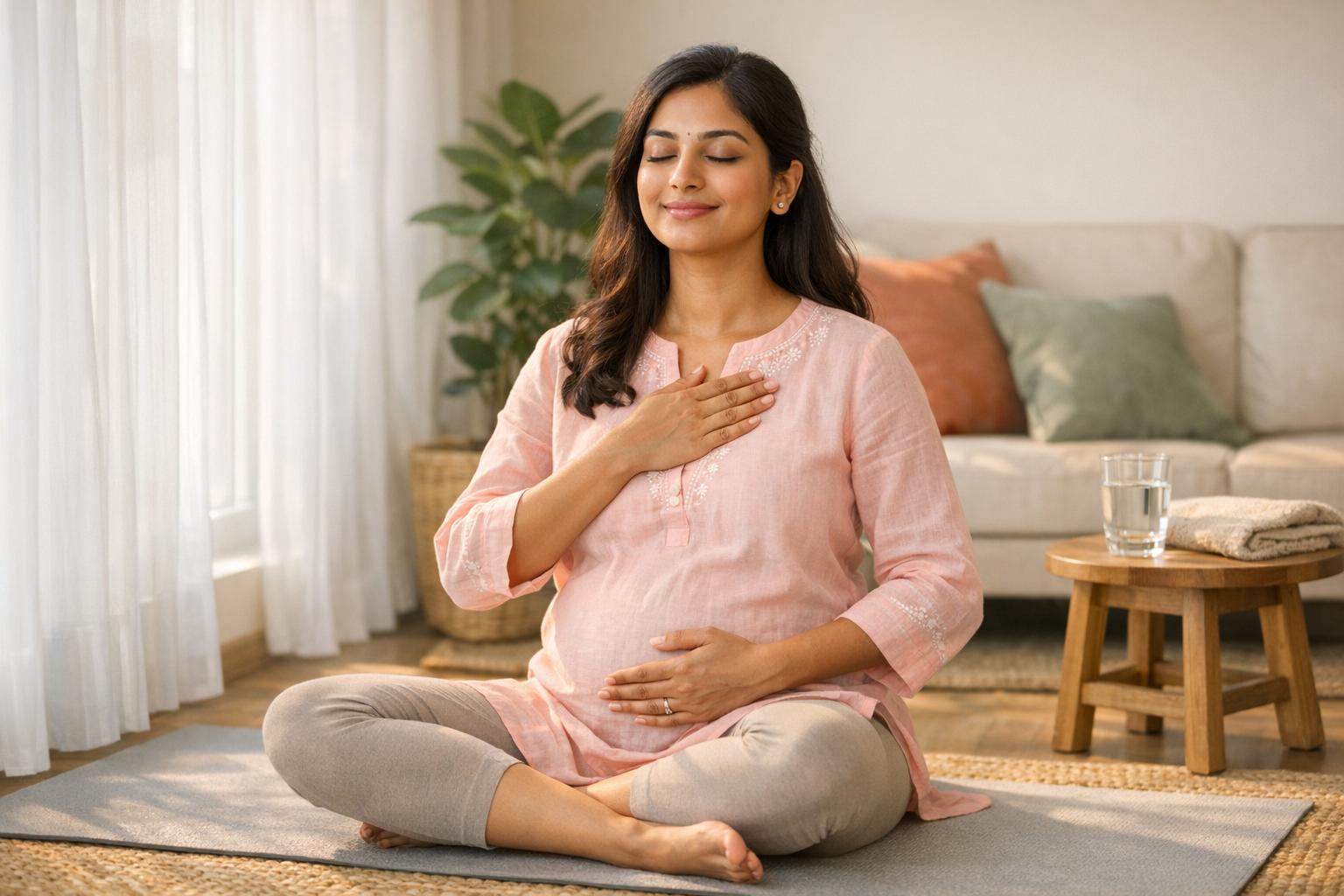
Breathing exercises during pregnancy, especially as part of Garbh Sanskar, can help reduce stress, improve maternal health, and support fetal development. Backed by modern research and rooted in ancient Ayurvedic practices, these techniques lower cortisol levels, enhance oxygen flow, and create a calming environment for both mother and baby. Key takeaways include:
Stress Reduction: Maternal stress scores can drop by over 46%, with anxiety levels decreasing by 64%.
Better Birth Outcomes: 74% of women practicing these techniques experience normal vaginal deliveries, and 88% of babies score above 7 on the Apgar test.
Improved Maternal Health: Techniques like diaphragmatic breathing and Anulom Vilom boost oxygen levels, regulate blood pressure, and prepare mothers for labor.
Fetal Benefits: Lower maternal stress supports brain development, reduces the risk of low birth weight, and ensures steady oxygen supply.
Practicing safe and guided breathing exercises, such as those offered by programs like Rita's Pregnancy 101, ensures you and your baby reap these benefits throughout your pregnancy journey.
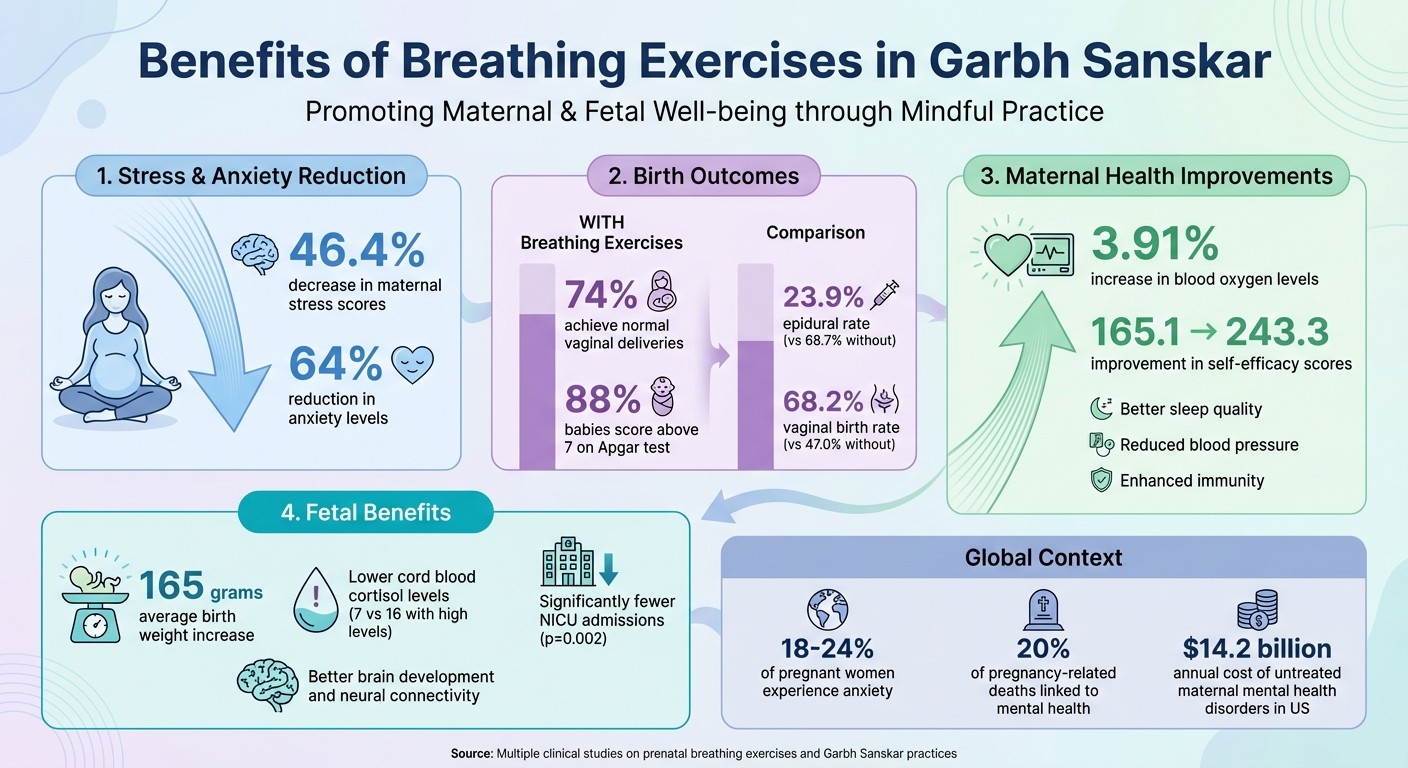
Benefits of Breathing Exercises During Pregnancy: Key Statistics and Outcomes
Pregnancy Breathing Exercises | Pranayama for Pregnant Women | 3 Prenatal Yoga Breathing Practices
How Stress Affects Pregnancy
Pregnancy brings with it a mix of physical and emotional challenges that can feel overwhelming, even for those who feel prepared. Everyday discomforts like nausea and fatigue, combined with hormonal shifts, can lead to heightened anxiety and mood swings. Add external factors - such as limited social support, financial difficulties, or an unplanned pregnancy - and the stress can multiply quickly.
Studies show that anxiety affects about 18–24% of women during pregnancy, with global estimates indicating that 15–25% of pregnant women experience significant anxiety or depressive symptoms. Even more concerning, maternal mental health conditions are now responsible for 20% of pregnancy-related deaths. Yet, fewer than 20% of pregnant women are screened for mental health disorders, leaving many to navigate these challenges without support. Stress doesn’t just impact emotional well-being - it can lead to serious health complications for both the mother and the baby.
Effects on Maternal Health
When stress becomes chronic, it activates the body’s HPA axis, which causes a surge of stress hormones like cortisol and adrenaline. This isn’t just an emotional response - it has tangible effects on physical health. Chronic stress can increase the risk of high blood pressure, gestational diabetes, heart disease, and other cardiovascular issues.
"Elevated degrees of stress that remain for a long duration may induce health dilemmas like high blood pressure and heart malady." - Bhavika Joshi, Department of Ashtanga Yoga, Lakulish Yoga University
The financial toll is equally striking. Untreated maternal mental health disorders cost an estimated $14.2 billion annually in the United States. Beyond the monetary impact, prolonged stress weakens the immune system, leaving mothers more vulnerable to infections and inflammatory diseases. These issues don’t just affect pregnancy - they also complicate postpartum recovery. But the effects don’t stop with the mother; stress during pregnancy has a direct influence on the baby as well.
Effects on Fetal Development
Maternal stress doesn’t stay confined to the mother - it crosses the placenta and directly impacts the developing fetus. Elevated cortisol levels can interfere with normal brain development and neural connectivity, potentially affecting the child’s nervous system and emotional regulation well into the future.
The physical repercussions are equally serious. Prolonged stress has been linked to fetal growth restriction, low birth weight, and preterm delivery. A recent study conducted at Babu Jagjivanram Memorial Hospital in Delhi (January 2023) highlighted these effects: 16 women in a control group had cord blood cortisol levels exceeding 10 ng/ml, compared to just 7 women who practiced yoga and meditation during pregnancy. The same study found that NICU admissions were significantly higher (p=0.002) among babies born to mothers who did not practice prenatal relaxation techniques. These findings emphasize how maternal stress can influence not only pregnancy outcomes but also the baby’s long-term health.
This evidence underscores the importance of stress-reduction practices, such as guided breathing exercises, to support both maternal health and fetal development. Addressing stress during pregnancy is not just about improving the experience for the mother - it’s about laying the foundation for a healthier future for the child.
How Breathing Exercises Help
Breathing exercises provide a simple yet effective way to manage stress during pregnancy, benefiting both the mother and baby. When paired with Garbh Sanskar practices, these techniques not only help reduce tension but also bring measurable advantages to maternal and fetal health.
How Breathing Exercises Reduce Stress
The science is straightforward: breathing exercises engage the parasympathetic nervous system, which helps counteract stress. Techniques like diaphragmatic breathing or pranayama increase oxygen levels in the body and release endorphins - natural chemicals that promote relaxation and balance. This process directly combats the stress response, which is driven by cortisol during high-pressure moments.
"Breathing exercises stimulate the parasympathetic nervous system, leading to increased blood oxygenation, thereby releasing endorphins, which would decrease the heart rate and bring forth a sense of calmness." - Alwin Issac et al., Journal of Global Health
Studies, such as those conducted at Aarogya Hospital, have shown that women practicing Garbh Sanskar breathing techniques experience noticeable reductions in stress and anxiety. This physiological shift not only supports the mother’s resilience but also lays the groundwork for healthier fetal development.
Benefits for Mothers
Lowering stress levels has far-reaching effects on a mother’s health. Breathing exercises improve oxygen saturation in the blood, which is crucial during pregnancy when oxygen consumption rises by 15–20%. Combining deep breathing with light aerobic activity can increase blood oxygen levels by 3.91%, optimizing vital functions like heart rate, blood pressure, and respiratory efficiency.
"Breathing well means taking in good amounts of oxygen, which is like invisible food for our bodies." - Dr. Megha Shah, Author
These exercises also prepare mothers for labor. Research reveals that prenatal education incorporating breathing techniques can significantly boost confidence during childbirth, with self-efficacy scores rising from 165.1 to 243.3. The outcomes speak for themselves: women using these techniques had an epidural rate of 23.9%, compared to 68.7% in those who didn’t. Similarly, 68.2% of women practicing these methods achieved vaginal births, versus 47.0% in control groups.
Other benefits include better sleep, reduced anxiety, and stronger immunity. By releasing muscle tension caused by stress, the body operates more effectively, giving mothers a sense of well-being that directly impacts their babies.
Benefits for Babies
When a mother practices deep breathing, the baby reaps the rewards. Enhanced maternal oxygenation ensures better oxygen transfer through the placenta, supporting the baby’s growth and development.
A calmer maternal state leads to healthier outcomes for the baby. Research shows that babies born to mothers practicing relaxation techniques have lower cortisol levels in their cord blood, which supports brain development and neural connectivity.
Deep breathing has also been associated with an average birth weight increase of 165 grams and improved Apgar scores. Beyond the physical benefits, these practices foster a stronger emotional connection between mother and baby. Garbh Sanskar emphasizes that a baby senses the mother’s emotions, and the positive energy cultivated through breathing helps create a nurturing environment.
Technique | Benefit for Mother | Benefit for Baby |
|---|---|---|
Diaphragmatic Breathing | Calms the nervous system, improves oxygenation | Steady oxygen supply for growth |
Anulom Vilom | Reduces anxiety, balances energy | Promotes a calm womb environment |
Bhramari (Humming) | Relieves mental stress, improves sleep | Positive sound vibrations for well-being |
Ujjayi (Ocean Breath) | Enhances focus, prepares for labor pain | Boosts cognitive and brain development |
Breathing Techniques for Pregnancy
Breathing techniques play a crucial role in promoting well-being during pregnancy, especially when practiced safely. In line with Garbh Sanskar principles, breath is often referred to as "invisible food" for your baby - a shared life force connecting mother and child. By incorporating these techniques into your daily routine, you can reduce stress and support both your health and your baby's development.
Diaphragmatic Breathing
This basic yet powerful technique is all about maximizing oxygen intake while encouraging deep relaxation. To practice, sit comfortably or lie on your side to avoid putting pressure on major blood vessels. Place one hand on your chest and the other on your abdomen. Slowly inhale through your nose, allowing your belly to rise and expand while keeping your chest still. Then, exhale gently through your nose or mouth as your abdomen softens.
Diaphragmatic breathing is safe and effective throughout all stages of pregnancy. As your pregnancy progresses and your diaphragm shifts upward to make room for your growing uterus, this method helps you adapt to these changes. Practicing for 10–15 minutes daily can improve lung capacity and ease physical discomfort, particularly back pain, which affects about 50% of pregnant women and can disrupt natural breathing patterns. This technique also complements stress-reduction efforts, enhancing overall well-being.
Anulom Vilom (Alternate Nostril Breathing)
After mastering diaphragmatic breathing, Anulom Vilom can help you achieve emotional balance. This practice calms the nervous system and creates a serene emotional environment for your baby. Sit upright, using cushions for support if needed. Close your right nostril with your thumb and inhale slowly through your left nostril. Then, close your left nostril with your ring finger and exhale through your right nostril. Reverse the process by inhaling through the right nostril, closing it, and exhaling through the left. This completes one round.
Begin with 5–10 rounds in the morning to set a calm tone for your day. The second trimester, when energy levels tend to increase, is a great time to deepen this practice. It helps harmonize the brain's hemispheres and regulate hormonal activity, which can be especially helpful in managing mood swings and anxiety during pregnancy.
Ujjayi Breathing (Ocean Breath)
Ujjayi breathing is a great tool for building the endurance and rhythm you'll need during labor. Start by inhaling deeply through your nose. On the exhale, slightly constrict your throat - similar to the sensation of fogging up a mirror - to create a soft, steady "ocean wave" sound. Once you're comfortable, apply the same gentle constriction during inhalation.
This technique generates internal warmth, so it's best to practice in moderation during warmer months. During the second and third trimesters, Ujjayi breathing helps you stay focused and in control, making it a valuable technique for managing labor intensity and preparing for contractions. Aim to practice 3–4 hours after a heavy meal or 1–2 hours after a light snack.
Important Safety Note: Avoid breath retention or forceful techniques like Kapalbhati or Bhastrika during pregnancy. Stop immediately if you experience dizziness or nausea.
Adding Breathing Exercises to Your Daily Routine with Rita's Pregnancy 101
Expert-Led Sessions for Pregnancy
While breathing exercises can help reduce stress, having expert guidance makes a big difference. Practicing on your own might lead to improper techniques, which can affect both safety and effectiveness. That’s where Rita's Pregnancy 101 steps in. Their expert-led prenatal yoga and meditation sessions are tailored to each trimester, ensuring proper form and technique. For first-time mothers especially, this structured approach builds confidence and ensures you’re doing what’s best for you and your baby.
The program’s focus on adapting to your body’s changes, like the diaphragm’s movement during pregnancy, ensures that you’re practicing safely. Research backs this up, showing that professional instruction leads to better outcomes compared to independent practice.
Flexible Schedules and Online Support
Pregnancy can make sticking to a routine tricky, but Rita's Pregnancy 101 makes it easier with flexible live classes and online support. For around $30 a month, you can join the P101 Complete Care Prenatal Classes from the comfort of your home. Whether you’ve got just 10 minutes in the morning or prefer a longer session in the evening, you’ll find options that fit your schedule. Daily reminders and adaptable sessions help you stay consistent, even on hectic days. This aligns with the Garbh Sanskar principle of nurturing both mother and baby by adjusting to their evolving needs throughout pregnancy.
Breathing Techniques by Trimester
Each trimester brings unique challenges and needs, and Rita's Pregnancy 101 tailors breathing techniques accordingly. Here's a look at the recommended practices for each stage:
Trimester | Technique | Key Benefits |
|---|---|---|
1st Trimester | Nadi Suddhi (Purification Breathing) | Calms the nervous system, removes toxins, and eases feelings of uncertainty. |
2nd Trimester | Bhramari (Bee Breath) | Soothes the senses, lowers blood pressure, and helps with insomnia. |
3rd Trimester | Yoga Nidra / Guided Meditation | Reduces delivery anxiety, prevents postpartum mood dips, and supports positive labor experiences. |
All Trimesters | Deep Diaphragmatic Breathing | Boosts oxygen flow, enhances circulation, and lowers stress hormones. |
This trimester-specific approach considers your energy levels and physical changes. For example, during the second trimester, when energy often increases, you can explore deeper practices like Anulom Vilom. As labor nears in the third trimester, techniques like Ujjayi breathing help build focus and stamina for contractions. With expert instructors guiding you, you’ll feel confident knowing you’re using the right techniques at the right time, keeping you and your baby safe while reaping the full benefits of these practices.
Conclusion
Breathing exercises can make a world of difference during pregnancy, helping reduce stress and creating a healthier environment for both mother and baby. As a key part of Garbh Sanskar, these techniques not only calm maternal anxiety but also contribute to better prenatal outcomes. The numbers speak for themselves: stress levels drop by 46.4%, anxiety decreases by 64%, 88% of babies score over 7 on the Apgar test, and 74% of mothers experience normal vaginal deliveries.
"Garbh Sanskar is highly effective in reducing maternal stress, anxiety, medical co-morbidities and incidence of operative deliveries and gives better neonatal outcomes in terms of better growth, birth weight and Apgar." - Anjali Chaudhary, HOD, Department of Obstetrics and Gynaecology, Aarogya Hospital
Beyond these benefits, women often feel more confident, have a stronger sense of control during labor, experience shorter delivery times, and are less likely to need epidural anesthesia.
With support from Rita's Pregnancy 101, these practices are easy to incorporate into your routine. For about $30 a month, you can join trimester-specific live sessions, enjoy flexible scheduling, and receive expert guidance - all from the comfort of your home.
Committing to daily breathing exercises is a simple yet powerful way to support your own well-being and your baby's healthy development, setting the stage for a positive and empowering birth experience.
FAQs
When should I start breathing exercises in pregnancy?
You can start practicing breathing exercises as early as your second trimester. These exercises can help ease stress, manage physical discomfort, and get you ready for labor. However, make sure to check with your doctor first to confirm that this practice is safe and appropriate for your pregnancy.
Which breathing techniques are safest in each trimester?
During pregnancy, breathing techniques can be tailored to each trimester to benefit both the mother and baby. In the first trimester, gentle diaphragmatic breathing can help ease discomfort while improving oxygen flow. In the second trimester, methods like alternate nostril breathing and Ujjayi breathing are great for promoting relaxation and managing stress. By the third trimester, focusing on patterned and deep breathing exercises can be helpful in preparing for labor and delivery. It's important to consult a healthcare provider before starting any breathing exercises, particularly if there are any complications.
When should I stop and call my doctor during practice?
If you notice warning signs such as dizziness, shortness of breath, chest pain, or any unusual discomfort while doing breathing exercises, stop right away and contact your doctor. It's important to consult your healthcare provider before beginning these exercises, especially if you have existing health conditions. Should any of these symptoms arise, pause immediately and seek medical attention.