
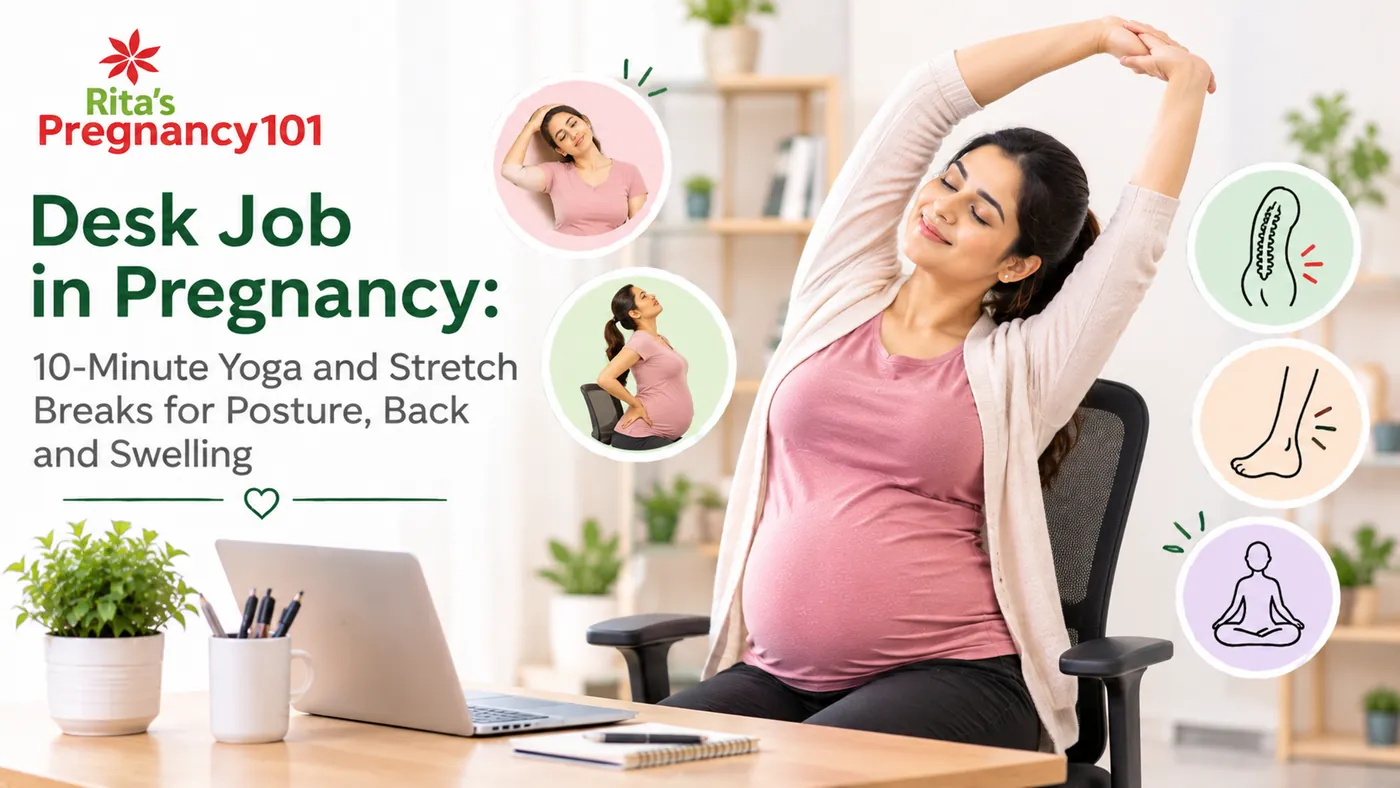
A desk job during pregnancy can make it difficult to stay comfortable when most of your working hours involve sitting. As your body changes, prolonged sitting may contribute to back discomfort, stiffness, and swollen feet or ankles. Taking short movement breaks, adjusting your workstation, and practising pregnancy-safe stretches can help you stay more comfortable. A simple 10-minute routine with gentle yoga during pregnancy, seated stretches, and ankle movements can fit into your workday, provided your healthcare provider has cleared you for exercise.
How Does a Desk Job During Pregnancy Affect Your Body?
A desk job during pregnancy does not automatically mean you need to stop working or avoid sitting. However, spending long periods in the same position can make common pregnancy discomforts more noticeable.
As pregnancy progresses, your growing abdomen changes your posture and shifts your centre of gravity. Hormonal changes also affect the ligaments and joints, which can contribute to lower-back and pelvic discomfort.
Some common challenges include:
- Lower-back discomfort: Changes in posture and additional strain on the back muscles can make prolonged sitting uncomfortable.
- Neck and shoulder stiffness: Looking at a screen for hours or leaning forward can create tension around the neck and shoulders.
- Swollen feet and ankles: Fluid can collect in the lower parts of the body, particularly later in pregnancy.
- Hip and leg stiffness: Staying in one position for long periods may make your hips and legs feel less comfortable.
- Reduced movement throughout the day: A busy work schedule can make it easy to miss opportunities to walk or stretch.
The goal is not to avoid sitting completely. Instead, change positions regularly, maintain comfortable posture, and include gentle movement throughout your working hours.
Pregnancy Stretches at Desk: Simple Movements to Try During Work
Pregnancy stretches at desk can help you break up long periods of sitting without needing a yoga mat or changing clothes. These simple movements can be performed near your workstation, provided they feel comfortable and your healthcare provider has not restricted your activity.
1. Seated Neck Stretch
Sitting at a computer for extended periods can create tension around your neck and shoulders.
- Sit upright with your feet supported.
- Gently tilt your right ear towards your right shoulder.
- Hold for a few comfortable breaths without pulling your head.
- Return to the centre and repeat on the other side.
Avoid forcing your neck or making sudden movements.
2. Shoulder Rolls
Shoulder rolls can help ease stiffness from working at a computer.
- Sit comfortably with your back supported.
- Slowly lift your shoulders towards your ears.
- Move them gently backwards and downwards.
- Repeat several times, then reverse the direction.
Keep your breathing relaxed throughout the movement.
3. Seated Side Stretch
A gentle side stretch encourages upper-body mobility.
- Sit with both feet flat on the floor.
- Place your left hand on the chair for support.
- Raise your right arm and lean slightly towards the left.
- Return to the centre and repeat on the opposite side.
Avoid deep bending or compressing your abdomen.
4. Seated Spinal Mobility
This movement can help reduce the stiffness that comes from maintaining one posture.
- Sit towards the front of a stable chair.
- Place your hands comfortably on your thighs.
- Gently lengthen your spine as you inhale.
- Exhale and make a small, comfortable movement to round your upper back.
- Repeat slowly without forcing the movement.
These stretches should feel gentle rather than intense. Stop if you experience pain, dizziness, or discomfort.
Which Desk Exercises During Pregnancy Can Support Posture and Reduce Stiffness?
Desk exercises during pregnancy can help you include small movement breaks between meetings, calls, and computer tasks. They are not a replacement for regular physical activity, but they can make it easier to avoid remaining in one position throughout the day.
1. Seated Marching
- Sit upright on a stable chair.
- Keep your feet flat on the floor.
- Lift one foot slightly while keeping the knee bent.
- Lower it gently and repeat with the other foot.
- Continue at a comfortable pace.
This movement encourages gentle leg activity without requiring you to stand.
2. Seated Heel and Toe Raises
- Sit with your feet supported.
- Keep your heels on the floor and lift your toes.
- Lower your toes and raise your heels.
- Repeat slowly.
This can be a useful movement break when you have been sitting for a while.
3. Standing Weight Shifts
- Stand beside a stable desk or chair.
- Keep your feet comfortably apart.
- Gently shift your weight from one foot to the other.
- Maintain a relaxed posture and hold the desk for support if needed.
Avoid standing for too long or continuing if you feel unsteady.
4. Short Walking Breaks
Walk around your office or workspace for a few minutes when possible. A short walk can help you change position and add movement to your day.
You can schedule these breaks between tasks rather than waiting until your back or legs feel uncomfortable.
Pregnancy Yoga for Working Women: A Simple 10-Minute Desk Break Routine
Pregnancy yoga for working women can provide a practical way to combine gentle stretching, breathing, and movement during a busy workday. You do not need to complete a full yoga session every time you take a break. A short, modified routine can help you move away from your desk and pay attention to areas that feel stiff.
Here is a simple 10-minute routine you can try if prenatal exercise is suitable for your pregnancy.
Minute 1–2: Relaxed Breathing and Posture Reset
- Sit comfortably with your back supported.
- Keep your feet flat on the floor.
- Relax your shoulders and jaw.
- Breathe naturally without holding your breath.
- Notice whether you are leaning forward or rounding your shoulders.
Minute 3–4: Neck and Shoulder Stretches
- Gently tilt your head from side to side.
- Slowly roll your shoulders backwards.
- Keep your movements controlled and comfortable.
Minute 5–6: Seated Side Stretch and Spinal Mobility
- Raise one arm and perform a gentle side stretch.
- Return to the centre and switch sides.
- Add a few comfortable seated spinal movements.
Minute 7–8: Ankle and Foot Movements
- Straighten one leg slightly if comfortable.
- Point your toes away from you and then bring them towards you.
- Repeat several times.
- Rotate your ankles gently in both directions.
- Switch feet.
Minute 9–10: Short Walk and Relaxation
- Stand slowly, using your chair for support if needed.
- Walk around your workspace at a comfortable pace.
- Return to your chair or a supported standing position.
- Take a few relaxed breaths before continuing work.
Sitting for Long Hours During Pregnancy: How to Improve Your Workstation?
Sitting for long hours during pregnancy can make it harder to maintain a comfortable posture, especially as your body changes. A few simple workstation adjustments may help reduce unnecessary strain on your back, neck, and legs.
1. Choose a Chair With Good Back Support
Use an adjustable chair that supports your lower back. If your chair does not provide enough support, place a small cushion or rolled towel behind your lower back.
2. Keep Your Feet Supported
Place both feet flat on the floor or use a footrest if your feet do not reach comfortably. Avoid letting your legs hang unsupported for long periods.
3. Position Your Screen at a Comfortable Height
Keep your computer screen at a height that allows you to look straight ahead rather than constantly bending your neck. Position your keyboard and mouse so your shoulders remain relaxed.
4. Avoid Crossing Your Legs for Long Periods
Keep your feet supported and change positions regularly. If your ankles or feet become swollen, consider elevating your legs during a break.
5. Change Positions Throughout the Day
Avoid remaining seated continuously for long periods. Stand, walk briefly, or perform gentle ankle movements when practical. If standing also becomes uncomfortable, alternate between sitting and moving.
6. Ask for Workplace Adjustments When Needed
Depending on your comfort and job requirements, you may benefit from:
- Additional short rest or movement breaks.
- An adjustable chair or lumbar support.
- A footrest to support your legs.
- Flexible working hours for antenatal appointments.
- A workstation that allows comfortable position changes.
The ACOG guidance on employment during pregnancy discusses workplace accommodations that may help pregnant employees remain comfortable and continue working safely.
How to Manage Swelling and Back Discomfort During a Desk Job in Pregnancy?
A desk job during pregnancy may make everyday discomforts more noticeable, particularly when you remain seated for much of the day. Gentle movement, suitable posture, and comfortable rest positions can help you manage some of these symptoms.
Tips for Swollen Feet and Ankles
Gradual swelling in the feet and ankles is common during pregnancy. The NHS explains that fluid retention and pressure from the growing uterus can affect circulation in the legs.
You can try:
- Taking regular short walks.
- Moving your ankles up and down while seated.
- Rotating your feet gently in both directions.
- Avoiding tight footwear or socks that pinch.
- Raising your feet during comfortable rest breaks.
- Staying hydrated throughout the day.
These measures may help with ordinary pregnancy-related swelling, but sudden or significant swelling should never be treated as just a result of sitting.
Tips for Lower-Back Comfort
Pregnancy-related changes can put additional strain on the lower back and pelvis. To support your back during working hours:
- Sit with your lower back supported.
- Keep your feet flat or supported.
- Avoid leaning forward towards your screen.
- Change positions regularly.
- Include gentle stretches and short walks.
- Avoid twisting your spine suddenly when reaching for objects.
If back pain is persistent or severe, speak with your doctor or ask whether an obstetric physiotherapist could help.
Read more about back pain during pregnancy and swollen ankles, feet and fingers during pregnancy.
When Should You Stop Desk Exercises and Seek Medical Advice?
Gentle desk exercises are suitable for many uncomplicated pregnancies, but they are not appropriate for everyone. If you have been diagnosed with a pregnancy complication or advised to restrict physical activity, follow your healthcare provider's recommendations.
Stop exercising and contact your maternity care provider if you experience:
- Vaginal bleeding.
- Fluid leaking from the vagina.
- Regular painful contractions.
- Chest pain.
- Dizziness or faintness.
- Unusual shortness of breath.
- Muscle weakness affecting your balance.
- Calf pain or swelling.
Pay particular attention to sudden swelling. A sudden increase in swelling of your face, hands, or feet, especially when accompanied by a severe headache, vision changes, pain below the ribs, or feeling very unwell, may indicate pre-eclampsia. Contact your maternity team immediately rather than trying to manage it with stretches or leg elevation.
New or one-sided calf swelling, redness, warmth, or pain also needs prompt medical assessment because it may indicate a blood clot. Get in touch with Pregnancy101 for more details.
Frequently Asked Questions
1. Is a desk job during pregnancy safe?
A desk job during pregnancy is generally manageable for many women with uncomplicated pregnancies. However, sitting in one position for extended periods can contribute to stiffness and discomfort. Maintain comfortable posture, take regular movement breaks, and discuss workplace adjustments with your employer or healthcare provider if needed.
2. Which pregnancy stretches at desk can I do during working hours?
Pregnancy stretches at desk may include gentle neck stretches, shoulder rolls, seated side stretches, and ankle movements. These can help you change position and reduce stiffness without needing a yoga mat. Keep movements slow and comfortable, and avoid stretches that cause pain or pressure.
3. What are the best desk exercises during pregnancy for back pain?
Desk exercises during pregnancy may include seated marching, shoulder rolls, gentle spinal mobility, and short walking breaks. These movements can help you stay active throughout the day. For persistent or severe back pain, consult your healthcare provider rather than relying only on workplace exercises.
4. Can pregnancy yoga for working women help with posture?
Pregnancy yoga for working women may help support flexibility, body awareness, and comfortable movement. Modified stretches and breathing exercises can complement good workstation habits. However, yoga does not guarantee the prevention of back pain, and poses should be adapted to your trimester and medical needs.
5. How often should I take breaks from sitting for long hours during pregnancy?
There is no single medically established break interval for every pregnant employee. A practical approach is to change positions and include brief movement breaks regularly rather than remaining seated continuously. Your comfort, pregnancy stage, and healthcare provider's advice should guide your routine.
6. Can desk exercises help reduce swollen feet during pregnancy?
Gentle ankle movements, foot rotations, short walks, and comfortable leg elevation may help with ordinary pregnancy-related swelling. However, sudden swelling of the face, hands, or feet, especially with headache or vision changes, requires immediate medical assessment because it may be a sign of pre-eclampsia.
7. Is a 10-minute yoga routine enough exercise during pregnancy?
A 10-minute yoga or movement break is a useful way to add activity to your workday, but it may not meet your total weekly exercise needs on its own. For many uncomplicated pregnancies, guidelines recommend around 150 minutes of moderate-intensity activity each week. Your healthcare provider can help you choose an appropriate routine.
Reading is good. Practicing is better.
Join 5,000+ moms in the P101 Onwards Care programs, yoga, meditation, information classes and a Saturday Q&A, from ₹1,000/month.
Explore Courses