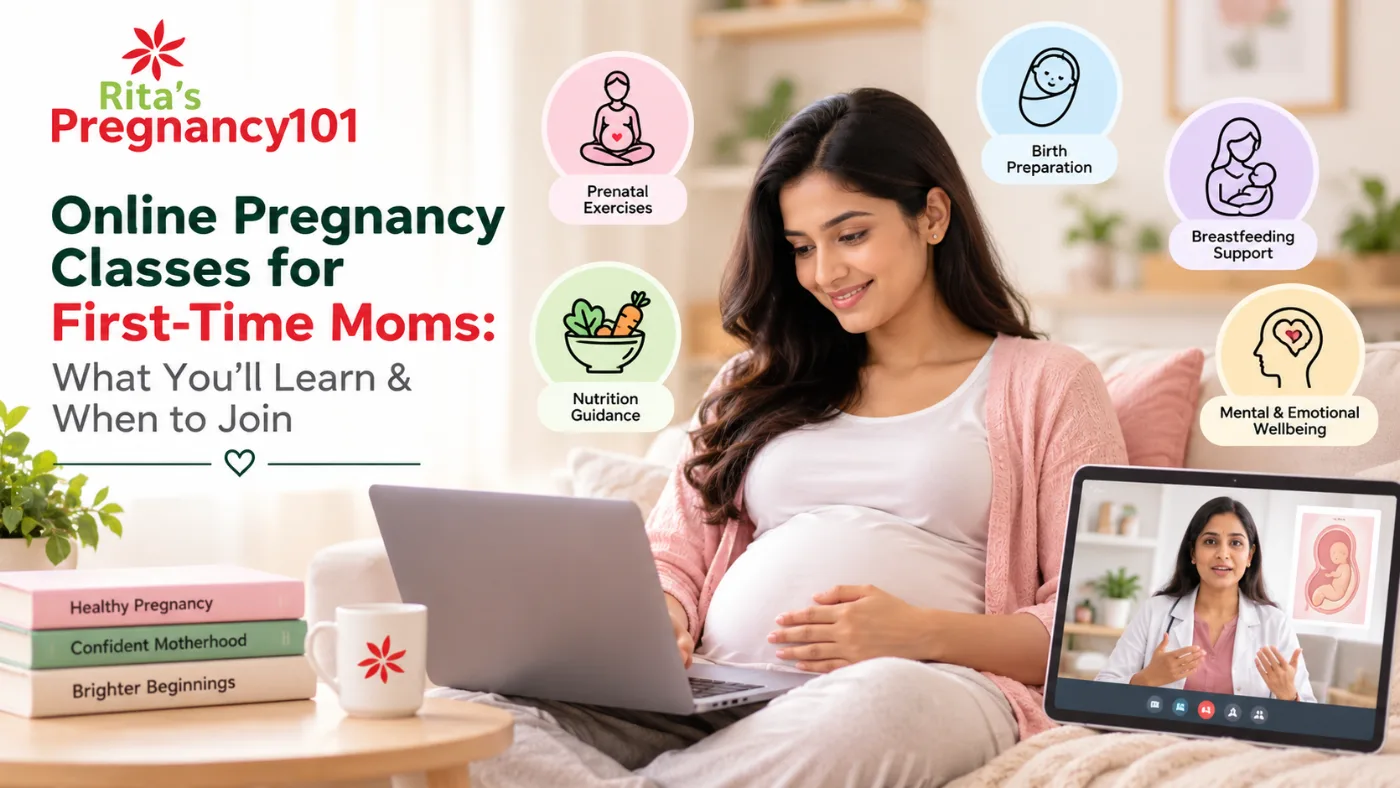
Pregnancy can feel exciting and overwhelming at the same time, especially when you are preparing for your first baby. There are appointments to attend, changes happening to your body, decisions about birth and plenty of new information to understand.
This is where online pregnancy classes for first-time moms can be helpful. Instead of trying to learn everything from scattered sources, structured online classes can give you a clearer understanding of pregnancy, birth preparation, movement, breathing, newborn care and the transition into parenthood.
Online learning can also be convenient when travelling to in-person classes is difficult or when you prefer learning from home. Antenatal education is commonly available online, and classes can cover topics such as pregnancy, labour, birth, relaxation, exercise, newborn care and emotional wellbeing.
But when should you join? What should a good course actually teach? And are online classes enough to prepare you for birth?
Let's explore what first-time mothers should know by joining best online pregnancy yoga classes.
What Are Online Pregnancy Classes for First-Time Moms?
Online pregnancy classes for first-time moms are structured educational sessions designed to help women understand pregnancy, prepare for childbirth and learn about life with a newborn.
Depending on the course, you may learn about:
- Pregnancy changes and common symptoms
- Prenatal nutrition and healthy habits
- Safe movement and exercise
- Breathing and relaxation
- Labour and birth
- Birth positions and comfort measures
- Preparing a birth plan
- Newborn care
- Breastfeeding basics
- Postpartum recovery
- Emotional wellbeing
- Partner support
- Preparing for parenthood
The exact curriculum differs between providers, so it is worth checking what is actually included before enrolling.
A useful course should complement—not replace—your regular prenatal appointments and medical care.
Why Should First-Time Moms Consider Online Pregnancy Classes?
Your first pregnancy comes with many questions.
You may wonder:
- How will I know when labour begins?
- What happens during each stage of labour?
- How can I prepare my body for birth?
- What should I pack for the hospital?
- What should my partner do during labour?
- How should I hold or feed my newborn?
- What should I expect during postpartum recovery?
- Which pregnancy exercises are safe for me?
A structured class can help organise these questions.
NHS guidance describes antenatal classes as a source of practical information about labour, birth and early parenthood, and notes that online courses are available.
For a first-time mother, this structured approach can make pregnancy education easier to follow than relying entirely on individual social-media posts or random online videos.
Classes for Pregnant Women Online: What Topics Should They Cover?
When comparing classes for pregnant women online, look beyond the number of videos or sessions included.
An Online Pregnancy Class in Bengaluru may cover several areas as stated below.
Pregnancy education
You should understand common physical and emotional changes throughout pregnancy and when you should contact your healthcare provider.
Exercise and movement
Classes may teach pregnancy-appropriate movement, mobility and strengthening exercises.
Labour preparation
Understanding the stages of labour, possible interventions and comfort strategies can help you prepare for different possibilities.
Breathing and relaxation
Breathing techniques can be useful tools during pregnancy and labour.
Nutrition and healthy habits
Pregnancy education may also introduce basic nutrition and lifestyle principles.
Newborn care
First-time parents may benefit from learning about feeding, sleep, hygiene and basic newborn care.
Postpartum preparation
A good course should not stop at childbirth. Understanding postpartum recovery and emotional changes can help you prepare for the early weeks with your baby.
NHS antenatal classes commonly cover pregnancy health, exercise, labour, relaxation, delivery methods, newborn care and emotional wellbeing.
Virtual Pregnancy Classes: How Do They Work?
Virtual pregnancy classes can also be fun. It allows you to participate from home using an internet-connected device.
Depending on the provider, they may be:
- Live instructor-led sessions
- Recorded classes
- Self-paced courses
- Small-group virtual sessions
- A combination of live and recorded lessons
Each format has advantages.
Live virtual classes
These allow you to interact with an instructor and potentially ask questions during the session.
Recorded classes
These can be convenient if your schedule changes frequently.
Self-paced courses
These allow you to move through lessons according to your own schedule.
Hybrid programmes
Some programmes combine educational videos, live sessions, exercise classes and downloadable resources.
The best format depends on how you prefer to learn and how much interaction you want.
When Should First-Time Moms Join Online Pregnancy Classes?
There is no universal week when every mother must start. When to Start Pregnancy Yoga Online is a natural question which comes to every mom-to-be's mind.
The right timing depends on the type of class.
For general antenatal education, many traditional programmes begin during the third trimester. NHS guidance says antenatal classes usually start around 8–10 weeks before the baby's due date, although introductory classes may be available earlier.
However, you do not necessarily need to wait until the third trimester to start learning.
A practical approach is:
First trimester: Understand the basics
Focus on:
- Understanding pregnancy changes
- Starting appropriate prenatal care
- Learning basic nutrition principles
- Understanding safe activity
- Beginning pregnancy-specific breathing or relaxation practices
Second trimester: Build your knowledge
This can be a useful period to learn about:
- Prenatal exercise
- Birth options
- Labour basics
- Nutrition
- Pelvic floor awareness
- Breastfeeding
- Newborn preparation
Third trimester: Prepare for birth and parenthood
This is when many antenatal programmes become particularly relevant.
You can focus on:
- Labour and birth
- Breathing and relaxation
- Birth preferences
- Hospital preparation
- Newborn care
- Feeding
- Postpartum recovery
- Partner support
NHS antenatal-care guidance also includes discussions about preparing for birth and birth preferences during later pregnancy appointments.
Can You Join Online Pregnancy Classes Too Early?
Starting early is not necessarily a problem if the course is designed for your stage of pregnancy.
However, some information is more useful closer to birth.
For example, learning basic pregnancy movement in the first trimester may be useful, while detailed labour preparation may become more relevant later.
If you are joining a course early, check whether the content is structured progressively rather than giving you everything at once.
What Will First-Time Moms Learn About Labour?
One of the most valuable components of online pregnancy classes for first-time moms can be labour education.
A good childbirth-preparation module may explain:
Early labour
You may learn what early labour can feel like and when your healthcare provider recommends contacting your maternity unit.
Active labour
The class may explain how contractions become stronger and more regular and what happens as labour progresses.
Birth
You may learn about different birth positions, pushing and possible medical interventions.
Pain relief
Classes may discuss non-medication comfort measures as well as medical pain-relief options.
Unexpected changes
Birth does not always follow a predetermined plan.
You may begin with one set of preferences and later need medical intervention.
Understanding this possibility can help you approach your birth plan with flexibility.
NHS antenatal education includes labour, delivery methods, relaxation and pain-relief-related information among the topics that may be covered.
How Online Classes Can Fit Into a Busy Pregnancy Schedule?
One advantage of online learning is flexibility.
You can often fit sessions around:
- Work
- Doctor appointments
- Rest
- Family responsibilities
- Pregnancy symptoms
- Your energy levels
For example, you could create a simple weekly routine:
| Day | Pregnancy Learning |
|---|---|
| Monday | 20–30 minutes of pregnancy education |
| Tuesday | Prenatal yoga or mobility |
| Wednesday | Birth preparation lesson |
| Thursday | Rest or gentle breathing |
| Friday | Newborn-care lesson |
| Saturday | Partner discussion |
| Sunday | Review questions for your healthcare provider |
The goal is consistency rather than trying to complete an entire course in a few days.
How to Choose Online Pregnancy Classes for First-Time Moms?
Not all online courses are structured in the same way.
Before enrolling, check:
1. Who teaches the course?
Look for appropriately qualified instructors, particularly for medical, exercise and childbirth-related content.
2. Is the information evidence-informed?
Pregnancy advice should be consistent with established medical guidance.
3. Is the exercise pregnancy-specific?
For yoga or fitness classes, check whether modifications are provided for pregnancy.
4. Does the course cover more than birth?
Consider programmes that also address newborn care and postpartum recovery.
5. Are there different pregnancy stages?
A first-trimester mother may need different information from someone at 34 weeks.
6. Can you ask questions?
Live or interactive sessions may be useful if you prefer direct guidance.
7. Does it complement medical care?
An online course should educate you, not replace your obstetrician, midwife or other healthcare professional.
A Simple Learning Roadmap for First-Time Moms
You don't have to learn everything at once.
Early pregnancy
Learn about:
- Pregnancy basics
- Nutrition
- Safe movement
- Common pregnancy changes
Mid-pregnancy
Explore:
- Prenatal yoga
- Pelvic floor awareness
- Birth options
- Labour basics
- Baby development
- Feeding choices
Late pregnancy
Focus on:
- Labour preparation
- Breathing
- Relaxation
- Birth preferences
- Hospital preparation
- Newborn care
- Postpartum recovery
Final weeks
Review:
- When to contact your maternity team
- What to pack
- Birth preferences
- Feeding plans
- Newborn essentials
- Postpartum support
Remember that your regular prenatal appointments remain essential throughout pregnancy. Online classes are an educational supplement, not a replacement for antenatal care.
Final Thoughts
Online pregnancy classes for first-time moms can make pregnancy preparation more structured and manageable.
Instead of trying to absorb everything at the last minute, you can gradually learn about pregnancy, movement, labour, birth, newborn care and postpartum recovery.
Whether you choose prenatal yoga classes online, classes for pregnant women online, online antenatal yoga classes, or broader virtual pregnancy classes, look for programmes that are pregnancy-specific, appropriately taught and designed to complement your regular prenatal care.
Start learning early enough with Rita’s Pregnancy 101 to give yourself time to absorb the information, but don't feel pressured to master everything at once.
Your first pregnancy is a learning process. The goal of pregnancy education is not to predict exactly how your birth will happen—it is to help you understand your options, ask better questions and approach the transition to motherhood with greater preparation.
Frequently Asked Questions
1. When should I start online pregnancy classes for first-time moms?
Many traditional antenatal classes begin around 8–10 weeks before the due date, but you can start pregnancy education earlier depending on the course.
2. Are prenatal yoga classes online safe during pregnancy?
Prenatal yoga classes online can be appropriate when they are specifically designed for pregnancy and adapted to your stage and individual needs. Check with your healthcare provider before starting a new exercise programme.
3. What do classes for pregnant women online usually teach?
Classes for pregnant women online may cover pregnancy health, exercise, labour, birth, relaxation, newborn care, feeding, postpartum recovery and emotional wellbeing. The exact content varies between providers.
4. Are online antenatal yoga classes different from pregnancy classes?
Yes. Online antenatal yoga classes generally focus more on pregnancy-specific movement, breathing, relaxation and physical preparation, while broader pregnancy classes may also cover labour, birth and newborn care.
5. Can virtual pregnancy classes replace prenatal appointments?
No. Virtual pregnancy classes provide education and preparation but should not replace regular prenatal care, medical assessments, screening or advice from your maternity healthcare team.
6. Can my partner join online pregnancy classes?
Many antenatal programmes allow partners or birth companions to participate. Including your partner can help you discuss birth preferences, labour support and newborn care together.
7. What should I look for when choosing online pregnancy classes?
Look for qualified instructors, pregnancy-specific content, evidence-informed information, appropriate exercise modifications, coverage of labour and postpartum topics, and a clear statement that the course complements—not replaces—professional prenatal care.
Reading is good. Practicing is better.
Join 5,000+ moms in the P101 Onwards Care programs, yoga, meditation, information classes and a Saturday live Q&A, from ₹1,000/month.
Explore Courses