
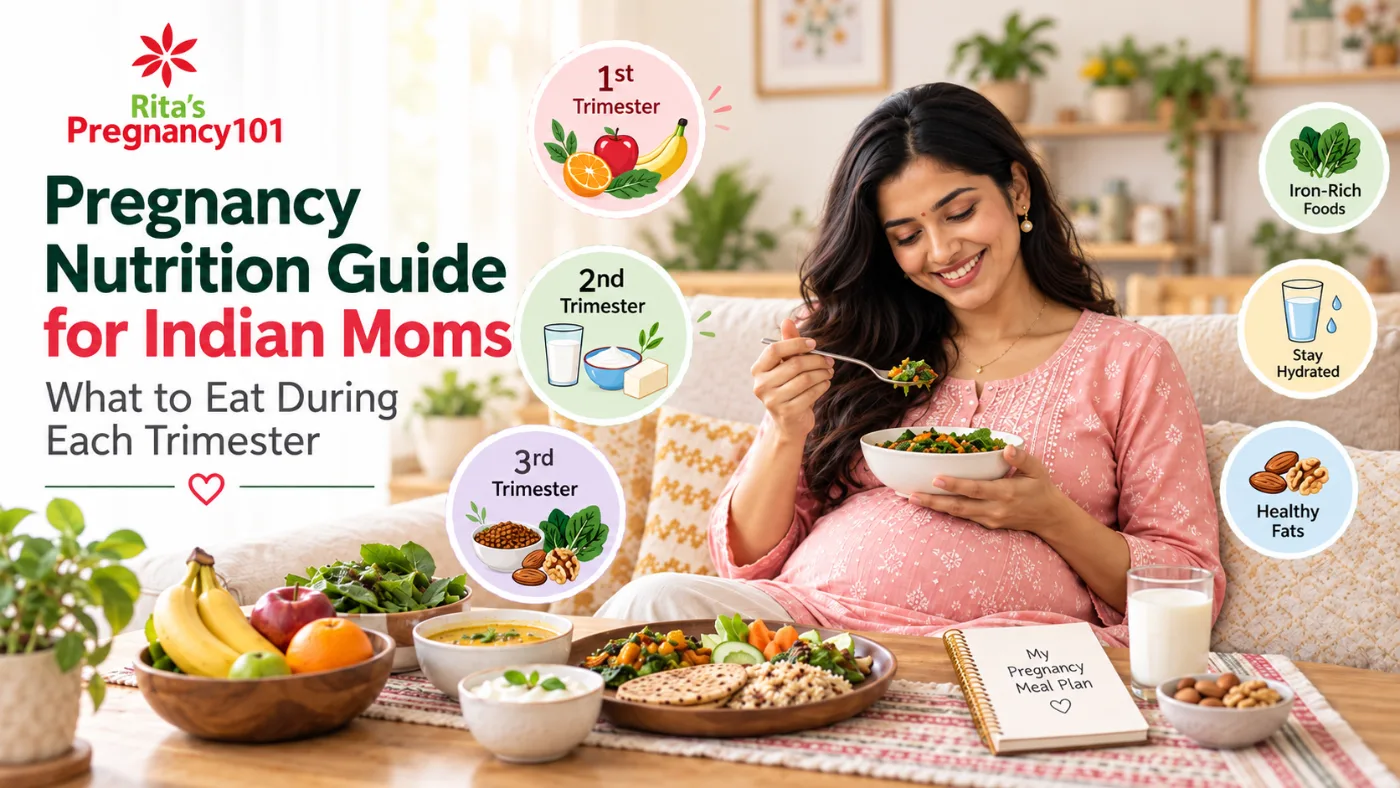
Pregnancy changes what your body needs from food. You may notice stronger hunger, nausea, food aversions, cravings, constipation, or simply more questions about what belongs on your plate. A practical pregnancy nutrition guide can make those decisions easier without turning every meal into a complicated calculation.
For Indian moms, healthy pregnancy nutrition does not mean giving up familiar foods or following an expensive “superfood” diet. Dal, roti, rice, vegetables, fruits, curd, paneer, nuts, seeds, eggs, fish, and other traditional foods can all fit into a balanced pregnancy diet when chosen and prepared appropriately.
The important thing is variety. A healthy pregnancy nutrition guide should help you combine protein, whole grains, vegetables, fruits, healthy fats, and important vitamins and minerals across the day rather than focusing on one particular food.
ICMR-National Institute of Nutrition's Dietary Guidelines for Indians 2024 also presents pregnancy meals around a combination of cereals or whole grains, pulses or other protein sources, vegetables, green leafy vegetables, fruits, dairy, nuts and seeds, while emphasising variety and appropriate supplementation.
Why Is Nutrition Important During Pregnancy?
Good nutrition supports both maternal health and your baby's growth and development. During pregnancy, the body has increased demands for nutrients involved in blood production, bone development, tissue growth, energy metabolism and fetal development.
The goal is not simply to eat more food. It is to make the food you eat more nutrient-dense.
A useful pregnancy nutrition guide should therefore focus on:
- Protein-rich foods for growth and tissue development
- Iron-rich foods to support healthy red blood cell production
- Folate and folic acid for early fetal development
- Calcium and vitamin D for bones and teeth
- Iodine for thyroid function and fetal development
- Choline for fetal growth and development
- Omega-3 fatty acids, including DHA, as part of a balanced diet
- Fibre for digestive health
- Fruits and vegetables for vitamins, minerals and fibre
- Adequate fluids for hydration
The WHO recommends a varied pregnancy diet containing adequate energy, protein, vitamins and minerals, with foods such as vegetables, fruit, beans, nuts, fish, meat and pasteurised dairy where appropriate.
The American College of Obstetricians and Gynecologists also highlights nutrients including folic acid, iron, calcium, vitamin D, choline, omega-3 fatty acids and several B vitamins as important during pregnancy.
Pregnancy Nutrition Guide: What Should Your Plate Look Like?
Instead of worrying about making every meal perfect, think about building a balanced plate over the course of the day.
A practical Indian pregnancy plate can include:
Protein: Dal, rajma, chole, paneer, curd, eggs, tofu, soy, chicken or well-cooked low-mercury fish.
Whole grains and carbohydrates: Roti, whole-wheat atta, oats, brown rice, millets, dalia, poha or other minimally processed grains.
Vegetables: Palak, methi, broccoli, carrots, beans, lauki, bhindi, cauliflower and other seasonal vegetables.
Fruits: Guava, oranges, apples, bananas, pomegranate, mangoes and other properly washed fruits.
Healthy fats: Walnuts, almonds, seeds, nut butters and suitable cooking oils in appropriate quantities.
Dairy or fortified alternatives: Milk, curd, paneer or appropriately fortified alternatives.
You do not need to follow an identical menu every day. The broader principle of this pregnancy nutrition guide is diversity: different foods provide different nutrients, so rotating your choices can make it easier to meet your nutritional needs.
For another India-focused resource, see Pregnancy101's complete pregnancy diet plan for India.
Pregnancy Diet Chart: A Simple Indian Daily Meal Pattern
A pregnancy diet chart can be useful when you are unsure how to spread meals and snacks throughout the day. It should be treated as a flexible framework rather than a prescription because appetite, nausea, activity level and medical requirements differ from one mother to another.
| Time | Example Indian Meal Options |
|---|---|
| Early morning | Milk or another suitable nutritious drink + a few nuts |
| Breakfast | Vegetable poha, upma, oats, idli, dosa or moong dal chilla with a protein-rich side |
| Mid-morning | Seasonal fruit + curd or nuts |
| Lunch | Roti or rice + dal/rajma/chole + vegetable + curd + salad |
| Evening | Roasted chana, makhana, sprouts, fruit, nuts or another balanced snack |
| Dinner | Roti/rice + dal/paneer/egg/fish/chicken + cooked vegetables |
| Bedtime | Milk or another suitable snack if needed |
ICMR-NIN's 2024 dietary guidance includes a pregnancy meal pattern built around milk, whole grains, vegetables, pulses, nuts, dairy, fruits and green leafy vegetables. It also recommends small, frequent meals when nausea and vomiting make larger meals difficult.
How to Use a Pregnancy Diet Chart Without Becoming Too Rigid?
A pregnancy diet chart should guide you, not make you anxious.
If you cannot follow the exact breakfast shown on a particular day, choose another meal with a similar nutritional profile. For example:
- Poha can be swapped with vegetable upma.
- Dal can be replaced with rajma, chole or another suitable protein source.
- Paneer can be replaced with tofu or another appropriate protein source.
- One seasonal fruit can be replaced with another.
- Roti can be replaced with rice, millet or another suitable grain.
The objective is to maintain overall nutritional variety rather than eat the same foods every day.
Essential Nutrients During Pregnancy: What Indian Moms Need to Focus On?
Understanding the essential nutrients during pregnancy makes meal planning much easier because you can focus on what different foods contribute.
1. Folate and Folic Acid
Folate is found naturally in foods such as leafy green vegetables, beans, peas and other legumes. Folic acid is the supplemental form used in pregnancy.
Folic acid is particularly important during early pregnancy because adequate intake helps reduce the risk of neural tube defects. Standard guidance commonly recommends 400 mcg of folic acid daily through the first 12 weeks, while some women require a higher prescribed dose based on individual risk factors.
Indian food sources include:
- Palak and other leafy vegetables
- Methi
- Lentils and dals
- Chickpeas
- Beans
- Oranges
- Fortified grains and cereals
2. Iron
Iron helps produce haemoglobin, which carries oxygen through the blood. Pregnancy increases the body's demand for iron, and iron deficiency can lead to anaemia.
Include foods such as:
- Lentils and dals
- Rajma and chickpeas
- Green leafy vegetables
- Fortified cereals
- Meat and poultry, if you eat them
- Eggs
- Nuts and seeds
Pairing plant-based iron sources with vitamin C-rich foods such as lemon, amla, guava, oranges or tomatoes can help improve iron absorption.
Your doctor may recommend an iron supplement if blood tests indicate that you need one.
3. Calcium
Calcium supports your baby's developing bones and teeth and is also important for maternal bone health.
Indian calcium-rich choices include:
- Milk
- Curd
- Paneer
- Ragi
- Tofu made with calcium
- Sesame seeds
- Some leafy vegetables
If you take an iron supplement, follow your healthcare professional's instructions about timing because calcium can interfere with iron absorption when taken together.
4. Vitamin D
Vitamin D supports bone health and helps the body use calcium. Food alone may not always provide enough, so supplementation can be recommended depending on your circumstances.
Do not self-prescribe high-dose vitamin D during pregnancy. Discuss your requirement with your healthcare provider.
5. Protein
Protein supports the growth and repair of tissues and is especially important as your baby grows.
Good Indian options include:
- Dal
- Rajma
- Chole
- Soy
- Tofu
- Paneer
- Curd
- Eggs
- Chicken
- Fish
Try to include a protein source in most meals rather than relying on one large protein-heavy meal.
6. Iodine and Choline
Iodine supports thyroid function, while choline contributes to fetal growth and development. Sources can include dairy products, eggs, fish, legumes and other nutrient-rich foods.
If you follow a vegetarian or vegan diet, speak with your healthcare provider or dietitian about how to meet nutrients such as vitamin B12, iodine, iron, calcium and omega-3s.
7. Omega-3 Fatty Acids
Omega-3 fatty acids are important components of a balanced pregnancy diet. DHA is particularly relevant to fetal brain and eye development.
Food sources can include:
- Walnuts
- Chia seeds
- Flaxseeds
- Suitable low-mercury fish
If you do not eat fish, ask your healthcare provider whether an omega-3 supplement is appropriate for you.
Trimester Wise Pregnancy Diet Plan: What to Eat in Each Stage
A trimester wise pregnancy diet plan should change slightly as your body and your baby's needs change. However, there is no single menu that works for every pregnant woman.
The key is to maintain a balanced dietary pattern while adapting meal size, frequency and food choices to symptoms and nutritional needs.
First Trimester Pregnancy Diet
The first trimester can bring nausea, vomiting, fatigue and strong food aversions. At this stage, forcing yourself to eat large meals may make nausea worse.
Try:
- Smaller meals more frequently
- Plain or lightly flavoured foods when nausea is strong
- Bananas, toast, rice, khichdi or other foods that you tolerate well
- Dal and other protein sources in manageable portions
- Leafy vegetables and legumes for folate
- Plenty of fluids
- Your prescribed prenatal supplements
If vomiting is persistent or you cannot keep food or fluids down, contact your healthcare provider.
Folic acid is especially important during early pregnancy. If you have not started it before conception, speak with your healthcare provider as soon as possible.
For additional first-trimester guidance, Pregnancy101 also discusses when to start pregnancy yoga online and what to do during the first three months.
Second Trimester Pregnancy Diet
Many women find that nausea improves during the second trimester, making it easier to build more varied meals.
Focus on:
- Protein at regular meals
- Iron-rich foods
- Calcium-rich foods
- Whole grains
- Fruits and vegetables
- Healthy fats
- Adequate fluids
This is also a good time to establish a practical meal routine that you can continue into the third trimester.
Pregnancy101's second-trimester meal plan ideas provide additional Indian meal inspiration.
Third Trimester Pregnancy Diet
As your baby grows, you may feel full more quickly because the uterus takes up more space. Large meals can also worsen heartburn for some women.
Instead of trying to eat a very large dinner, consider:
- Smaller and more frequent meals
- Protein-rich snacks
- Fibre-rich foods
- Adequate fluids
- Iron-rich foods
- Calcium-rich foods
- Whole grains
- Fruits and vegetables
If heartburn is bothering you, avoid lying down immediately after eating and discuss persistent symptoms with your healthcare provider.
Pregnancy101's 7-day third-trimester meal plan provides a more detailed meal-planning resource.
Pregnancy Food and Nutrition Tips for Indian Moms
Following practical pregnancy food and nutrition tips can make healthy eating easier without making pregnancy feel restrictive.
1. Think Variety, Not Perfection
You do not need to consume every nutrient at every meal. Aim for variety across the day and week.
2. Keep Healthy Snacks Ready
Keep options such as roasted chana, makhana, fruit, nuts, curd or homemade snacks available when hunger strikes.
3. Wash Fruits and Vegetables Properly
Fresh produce should be washed carefully before eating. Food safety is an important part of pregnancy nutrition.
4. Choose Properly Cooked Foods
Avoid raw or undercooked meat, eggs and seafood and choose pasteurised dairy products where appropriate.
5. Be Careful With Fish Choices
Fish can provide useful nutrients, including omega-3 fatty acids, but some fish contain high levels of mercury. Follow local medical guidance on safe fish choices and quantities.
6. Limit Highly Processed Foods
Chips, sugary drinks, heavily processed snacks and frequent deep-fried foods can take up space in the diet without providing the range of nutrients needed during pregnancy.
7. Stay Hydrated
Keep water nearby and drink regularly throughout the day. Hydration is particularly important if you are experiencing vomiting, constipation or increased thirst.
8. Don't Follow the “Eat for Two” Rule
Pregnancy does not mean you need to double your food intake. The focus should be on nutritional quality and appropriate portions.
9. Be Careful With Food Myths
Indian families often have strong pregnancy food traditions. Some are harmless, while others may unnecessarily restrict nutritious foods.
For example, Pregnancy101 has a detailed guide addressing common beliefs around ghee, papaya, sesame and other Indian pregnancy food myths.
10. Adapt Your Diet to Your Medical Needs
Gestational diabetes, anaemia, thyroid conditions, food allergies, severe nausea and other pregnancy-related concerns may require specific dietary changes.
A general pregnancy nutrition guide cannot replace individual medical advice in these situations.
Pregnancy Vitamins and Supplements: What Should You Take?
Pregnancy Vitamins and Supplements should be treated as part of your overall nutrition plan, not as a replacement for food.
A balanced diet provides many essential nutrients, but certain supplements are commonly recommended during pregnancy.
Folic Acid
Folic acid is routinely recommended around conception and during the first 12 weeks of pregnancy. The commonly recommended dose is 400 mcg daily, although women with specific risk factors may be prescribed a higher dose.
Vitamin D
Vitamin D supplementation may be recommended during pregnancy depending on your circumstances and local guidance. Your healthcare provider can advise you on the appropriate dose.
Iron
Not every pregnant woman needs the same amount of supplemental iron. Your healthcare provider may recommend an iron supplement if your blood tests show anaemia or low iron levels.
Calcium
Calcium intake can often be supported through foods such as milk, curd, paneer, ragi and suitable fortified alternatives. Your doctor may recommend calcium supplementation depending on your individual needs.
Prenatal Multivitamins
A prenatal multivitamin may be recommended to help cover nutritional gaps. However, more supplements are not automatically better.
Avoid taking multiple products containing the same vitamins or minerals unless your healthcare provider has advised you to do so.
Be Careful With Vitamin A
High amounts of preformed vitamin A, particularly retinol, can be harmful during pregnancy. NHS guidance specifically advises avoiding supplements containing vitamin A/retinol and cod liver oil during pregnancy.
Always check supplement labels and discuss any supplement, herbal product or traditional remedy with your doctor before taking it.
What Foods Should You Avoid or Limit During Pregnancy?
A good pregnancy nutrition guide should also explain food safety.
Depending on local guidance and your individual circumstances, pregnancy commonly involves avoiding or limiting:
- Raw or undercooked meat
- Raw or undercooked eggs
- Raw seafood and high-risk seafood
- Unpasteurised milk and dairy products
- High-mercury fish
- Alcohol
- Excess caffeine
- Unhygienically prepared food
- Supplements containing high amounts of vitamin A/retinol
- Liver and liver products because of their high vitamin A content
Food safety matters because pregnancy can increase the consequences of certain foodborne infections.
If you are unsure about a particular food, preparation method or supplement, ask your healthcare provider rather than relying on a family myth or social-media recommendation.
How Can Pregnancy101 Support Your Pregnancy Journey?
Nutrition is only one part of a healthy pregnancy. Movement, relaxation, education, preparation for labour and emotional well-being also matter.
Pregnancy101 provides pregnancy-focused resources and guided support for Indian mothers, including prenatal yoga, pregnancy education and nutrition-related guidance.
If you're looking for pregnancy-specific movement alongside healthy eating, explore Pregnancy101's prenatal yoga classes.
Final Thoughts
A good pregnancy nutrition guide is not about following a perfect menu every day. It is about building consistent eating habits that give you and your baby a broad range of nutrients.
For Indian moms, that can mean making the most of familiar foods: dal, vegetables, fruits, whole grains, curd, paneer, nuts, seeds, eggs, fish and other suitable protein sources.
Your nutritional focus may change from trimester to trimester. Early pregnancy may require more attention to managing nausea and getting adequate folate and fluids. The second trimester can be a good opportunity to establish balanced meal patterns, while the third trimester may call for smaller, nutrient-dense meals as your baby grows.
Most importantly, your pregnancy nutrition guide should be flexible enough to fit your health needs, culture, food preferences and doctor's recommendations.
Pregnancy is not the time to follow every food rule you hear. Choose reliable information, ask questions when you're unsure, and work with your healthcare team when you need personalised advice.
Frequently Asked Questions
1. What should I eat during pregnancy in India?
A balanced pregnancy nutrition guide should include vegetables, fruits, whole grains, pulses, protein-rich foods, dairy or suitable fortified alternatives, nuts and seeds. Your meals can include familiar Indian foods such as dal, roti, rice, sabzi, curd, paneer, poha, upma and khichdi while adapting portions and ingredients to your needs.
2. Is a pregnancy diet chart necessary?
A pregnancy diet chart can help organise meals and snacks, particularly when pregnancy symptoms make eating irregular. It should be flexible rather than followed as a rigid prescription. ICMR-NIN's Indian dietary guidance also emphasises variety and appropriate meal planning during pregnancy.
3. What are the essential nutrients during pregnancy?
The essential nutrients during pregnancy include folate/folic acid, iron, calcium, vitamin D, iodine, choline, protein and omega-3 fatty acids, among others. A varied diet helps provide these nutrients, while your healthcare provider can recommend supplements where required.
4. Should I follow a trimester wise pregnancy diet plan?
A trimester wise pregnancy diet plan can be helpful because appetite, symptoms and nutritional priorities can change as pregnancy progresses. However, there is no single plan that suits every mother. Your meal pattern should be adapted to your trimester, health status, dietary preferences and medical advice.
5. What are some simple pregnancy food and nutrition tips?
Useful pregnancy food and nutrition tips include eating a variety of nutrient-dense foods, including protein regularly, staying hydrated, choosing properly cooked and hygienically prepared food, washing produce carefully, limiting highly processed foods and taking prescribed supplements consistently.
6. Do I need pregnancy vitamins and supplements if I eat a healthy diet?
Even with a healthy diet, some pregnancy Vitamins and Supplements may be recommended. Folic acid is routinely recommended during early pregnancy, while vitamin D, iron, calcium or other supplements may be advised depending on individual needs. Do not start or combine supplements without discussing them with your healthcare provider.
7. Can I follow this pregnancy nutrition guide if I am vegetarian?
Yes, a vegetarian pregnancy nutrition guide can include foods such as dal, rajma, chole, soy, tofu, paneer, curd, nuts, seeds, whole grains, fruits and vegetables. However, nutrients such as iron, vitamin B12, iodine, calcium, vitamin D and omega-3 fatty acids may require particular attention. If you follow a vegetarian or vegan diet, discuss your nutritional needs and supplements with your doctor or a qualified dietitian.
Reading is good. Practicing is better.
Join 5,000+ moms in the P101 Onwards Care programs, yoga, meditation, information classes and a Saturday live Q&A, from ₹1,000/month.
Explore Courses