
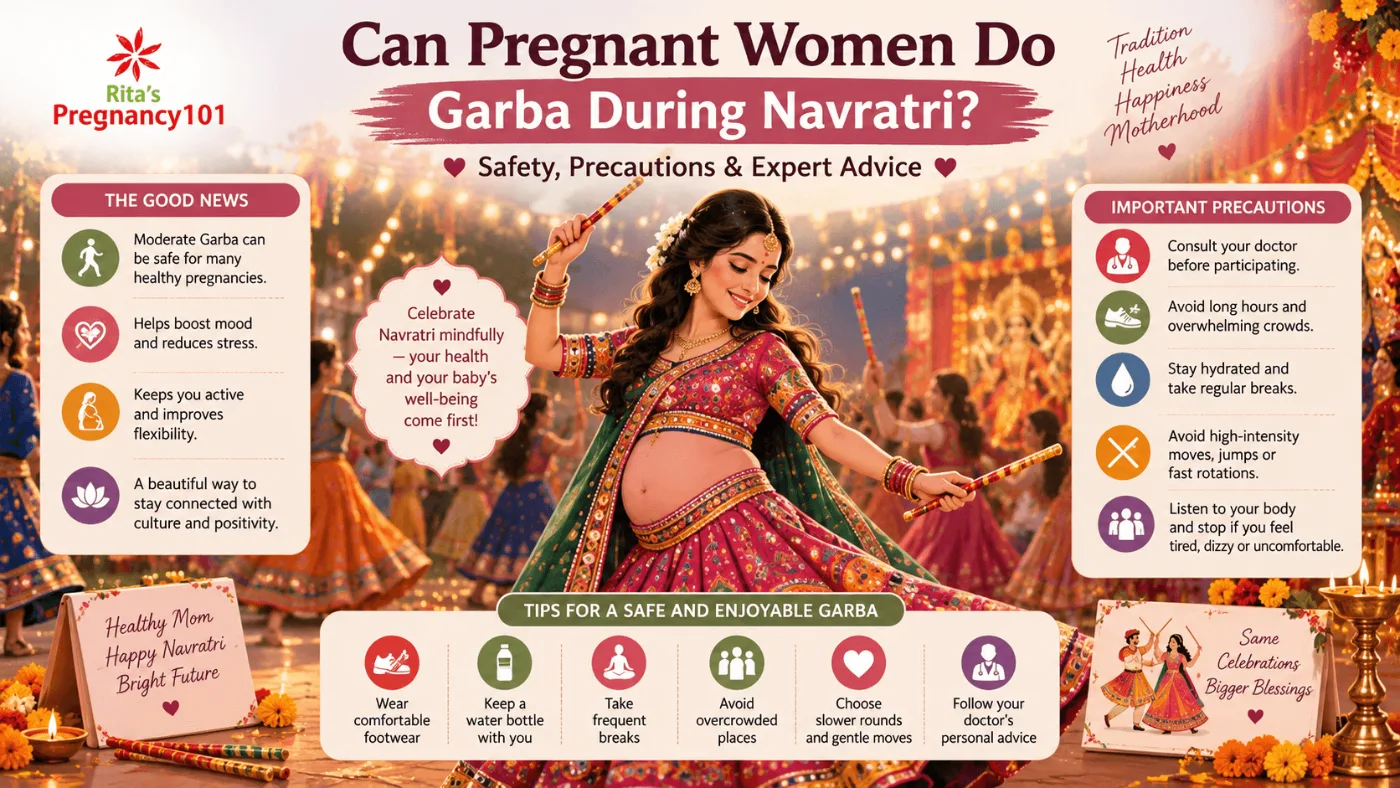
Navratri is one of India's most joyous festivals — nine nights of dandiya sticks, swirling chaniya cholis, dhol beats, and the entire community dancing together in circles. For expecting mothers, though, the excitement often comes with a big question mark: is it safe to join in the Garba, or should I sit this one out?
The honest answer is: it depends. Pregnancy isn't a one-size-fits-all experience. Some women feel energetic enough to dance a few rounds well into their third trimester, while others may need to modify or skip it entirely due to their health, trimester, or how their pregnancy is progressing. If you're staying active in general during this time, it may also help to read up on why remaining active during pregnancy is encouraged rather than avoided.
This guide walks you through everything you need to know — from safety tips and trimester-wise precautions to warning signs and venue checklists — so you can make an informed, confident decision. As always, this is general guidance; your gynaecologist knows your specific pregnancy best, so check in with them before you tie on those ghungroos.
Is Garba Safe During Pregnancy?
For most healthy, low-risk pregnancies, mild to moderate participation in Garba is generally considered safe — especially if you're already used to regular movement and exercise. Dancing is, after all, a form of physical activity, and gentle rhythmic movement can even help with mood, circulation, and stress relief.
That said, whether Garba is right for you depends on a few individual factors:
Your pregnancy stage — first trimester fatigue and nausea, second trimester energy, and third trimester balance changes all affect how much activity feels comfortable.
Your overall health and fitness level — if you have a high-risk pregnancy, gestational diabetes, high blood pressure, placenta previa, or a history of preterm labor, your doctor's guidance takes priority over any general advice.
Intensity and duration matter more than the dance itself — a slow, joyful sway with friends for 15–20 minutes is very different from an hour of fast-paced, competitive dandiya.
If you haven't been exercising regularly so far, Navratri night isn't the time to suddenly push your body into an unfamiliar level of exertion. If you're unsure how much activity is appropriate for your stage, it may help to review general guidance on pregnancy exercise before you head out.
10 Safety Tips for Pregnant Women Doing Garba
If your doctor has given you the go-ahead, here are ten practical ways to enjoy Garba safely.
1. Keep Your Movements Gentle
Opt for simple, swaying steps rather than the more athletic Garba variations. Gentle movement keeps your joints and ligaments — which are naturally looser during pregnancy due to the hormone relaxin — safer from strain.
2. Avoid Jumping and Sudden Movements
Jumping, hopping, or abrupt direction changes put extra pressure on your pelvic floor and joints. Stick to smooth, grounded steps instead.
3. Avoid Fast Spins and Excessive Twisting
Quick spins can affect your balance, which is already shifting as your center of gravity changes. Twisting motions at the waist should also be minimized, especially in the second and third trimesters.
4. Take Regular Breaks
Don't try to dance through an entire session non-stop. Plan for short breaks every 10–15 minutes to sit, breathe, and check in with how you're feeling.
5. Stay Hydrated
Dancing in a crowd, often in warm weather, increases fluid loss. Sip water regularly rather than waiting until you feel thirsty. This ties into a broader habit worth building throughout pregnancy — you can read more on staying connected with your baby through hydration.
6. Wear Comfortable Clothes and Supportive Footwear
Choose breathable, loose-fitting traditional wear that doesn't restrict your bump or breathing. Skip heels — flat, cushioned, non-slip footwear gives you far better stability.
7. Avoid Overcrowded Garba Areas
Dense crowds increase the risk of being jostled, bumped, or losing balance. Choose venues or timings that are relatively less packed, or stand toward the edges of the circle.
8. Avoid Excessive Heat
Overheating isn't good for you or your baby. Choose well-ventilated or air-conditioned venues, avoid peak heat hours, and step outside for fresh air if a space feels stuffy or too warm.
9. Do Not Dance Until Exhaustion
Garba should leave you pleasantly tired, not drained. If you're gasping for breath, feeling your heart race uncomfortably, or your legs are shaking, that's your cue to stop — not push through.
10. Listen to Your Body
This is the golden rule. No blog post or general guideline knows your body better than you do in the moment. Cramping, unusual pain, dizziness, or simply feeling "off" means it's time to sit down and rest.
Garba During Different Trimesters
Your comfort level and safety considerations shift as pregnancy progresses. Here's a trimester-wise breakdown.
Garba During the First Trimester
The first trimester often comes with fatigue, nausea, and general unpredictability in energy levels.
Fatigue and nausea can hit unexpectedly, so don't push yourself to "perform."
Keep any activity light and comfortable — a few gentle steps rather than a full session.
Avoid overexertion, especially since this is a delicate period of early development.
If nausea has been a challenge for you, our guide on early pregnancy and first trimester symptoms may offer additional context on what's normal.
Garba During the Second Trimester
Many women feel their best during the second trimester — often called the "golden period" of pregnancy — but your body is still changing.
Your balance and body shape are shifting as your bump grows, so movements that once felt automatic may need adjusting.
Keep activity moderate rather than high-intensity.
Build in regular breaks, even if you're feeling energetic — momentum can make it easy to overdo it.
Garba During the Third Trimester
By the third trimester, comfort and stability should take priority over how much you dance.
Focus on comfort and balance over any particular step or style.
Consider lower-intensity participation — swaying with the music from the side, or dancing for shorter stretches, is a great compromise.
Follow your healthcare provider's advice closely, especially if you're experiencing swelling, back pain, or reduced mobility. Reviewing safe yoga poses for the third trimester can also give you a sense of what gentle, doctor-approved movement looks like at this stage.
When Should Pregnant Women Avoid Garba?
While mild dancing is fine for most healthy pregnancies, certain symptoms mean you should stop immediately and seek medical attention rather than continuing to dance through them:
Vaginal bleeding
Fluid leakage (possible water breaking)
Severe abdominal or pelvic pain
Dizziness or fainting
Chest pain
Unusual difficulty breathing
Any other symptom that feels concerning or out of the ordinary
If you experience any of these — during Garba or otherwise — don't wait it out. For a fuller list of symptoms that need prompt medical attention throughout pregnancy, see our detailed guide on pregnancy warning signs.
How to Choose a Safe Garba Venue During Pregnancy
The venue matters just as much as how you dance. Before committing to a Garba night, check for:
Seating or rest areas so you can sit down whenever needed
Good ventilation to avoid overheating in a packed space
Comfortable temperature — indoor, air-conditioned venues are often a safer bet than open grounds in peak heat
Non-slippery flooring to reduce fall risk
Clean and accessible washrooms nearby
Manageable crowd size — smaller, community, or family-friendly events are often more comfortable than massive commercial Garba nights
Easy access and exit so you're never far from your car or a way to leave quickly if needed
What Should Pregnant Women Carry to Garba?
A little preparation goes a long way toward making the evening stress-free:
Water — carry your own bottle rather than relying on the venue
Comfortable footwear — flats or cushioned sandals, not heels
Appropriate snacks — something light to prevent blood sugar dips, especially if you'll be out for a few hours
Phone and emergency contact — keep your doctor's number and a family member's contact easily accessible
Any doctor-recommended items — this could include a small first-aid kit, prescribed medication, or a support belt if you use one
Can Pregnant Women Fast During Navratri?
Fasting is a common Navratri practice, but pregnancy changes the equation considerably.
Why fasting needs individual consideration: Your body's nutritional needs increase during pregnancy to support your baby's growth, and prolonged fasting can affect blood sugar levels, energy, and hydration.
Adequate nutrition and hydration matter more than ever: Skipping meals for extended periods isn't advisable, particularly in the first trimester (when nausea already makes eating tricky) or third trimester (when energy demands are highest).
Consult your healthcare provider before fasting: Every pregnancy carries different nutritional requirements — your doctor can tell you whether a modified fast is appropriate for you.
Healthier alternatives to prolonged fasting: Consider a "satvik" or partial fast with fruits, milk, nuts, and light meals spread through the day, rather than going without food for long stretches. Our guide on the pregnancy diet plan for Indian moms has more ideas on eating light yet nutritious during festive fasting periods.
How Can Pregnant Women Enjoy Navratri Without Doing Garba?
If dancing isn't for you this year — whether due to doctor's advice, energy levels, or simply personal comfort — there are still plenty of ways to soak in the festive spirit:
Enjoy the music and celebrations from a comfortable seat, clapping along to the dhol and garba raas
Sit and watch the Garba — being part of the atmosphere doesn't require being on your feet the whole time
Participate in gentle movements like swaying your arms or doing a few slow steps without joining the full circle
Spend time with family and friends — Navratri is as much about connection and community as it is about dancing
Final Takeaway
Navratri and Garba are meant to be celebrated with joy, not anxiety. For most healthy pregnancies, gentle participation is entirely possible — the key is prioritizing comfort, safety, hydration, and appropriate activity levels over intensity or duration. Listen to your body, keep your doctor in the loop, and don't hesitate to sit out a round (or the whole night) if that's what feels right. Whether you're dancing a few gentle steps or simply enjoying the music from the sidelines, you can absolutely be part of the festivities this Navratri.
If you're looking for more trimester-specific guidance on staying active safely throughout your pregnancy, explore our prenatal yoga classes or browse more festival and seasonal pregnancy care tips on our blog.
Frequently Asked Questions
1. Can pregnant women do Garba during Navratri?
Yes, in most healthy, low-risk pregnancies, mild to moderate Garba is generally considered safe with your doctor's approval — gentle movements, breaks, and hydration are key.
2. Is Garba safe during the first trimester?
Light, gentle movement is usually fine if you're not dealing with nausea, fatigue, or bleeding, but it's best to keep sessions short and low-intensity during this delicate stage.
3. Can I do Garba during the third trimester?
Yes, with modifications — focus on gentle swaying rather than vigorous dancing, prioritize balance and comfort, and follow your doctor's specific advice for your pregnancy.
4. Can pregnant women do fast Garba?
It's best to avoid fast-paced Garba involving jumps, quick spins, or high-energy footwork, as these increase the risk of losing balance or overexertion.
5. How long can a pregnant woman dance?
There's no universal number, but many experts suggest keeping continuous dancing to 10–15 minute stretches with breaks in between, adjusted to how you feel.
6. Should pregnant women avoid crowded Garba events?
Very crowded events increase the risk of being jostled or losing balance, so smaller or less congested venues are generally a safer choice.
7. When should I stop dancing during pregnancy?
Stop immediately if you feel dizzy, breathless, experience pain, notice bleeding or fluid leakage, or simply feel unusually fatigued.
8. Can pregnant women fast during Navratri?
It depends on your individual health and your doctor's advice — many choose a modified, nutrition-conscious fast rather than a strict, prolonged one.
Reading is good. Practicing is better.
Join 5,000+ moms in the P101 Onwards Care programs, yoga, meditation, information classes and a Saturday Q&A, from ₹1,000/month.
Explore Courses