
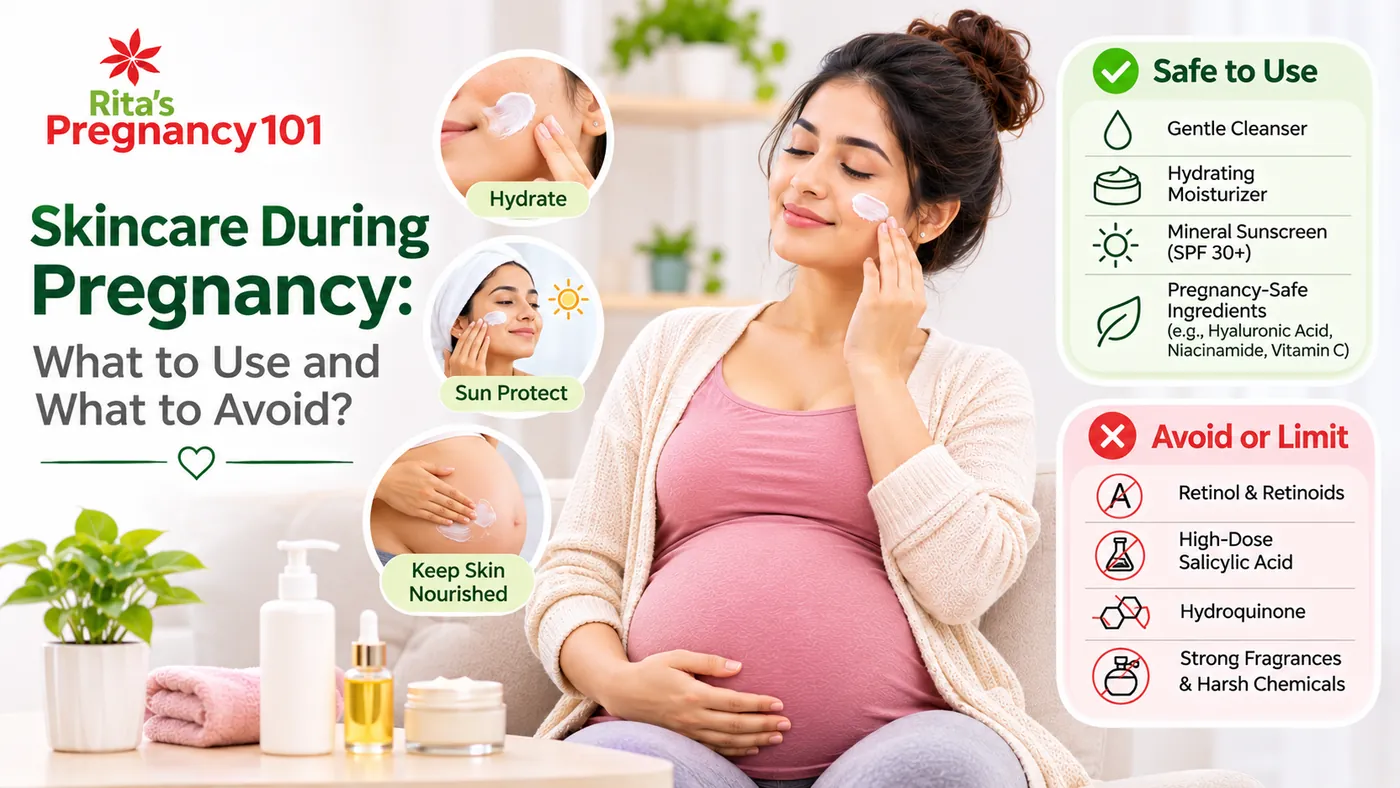
Skincare during pregnancy may need a few adjustments as hormonal changes can affect your skin’s oil production, sensitivity, pigmentation and moisture levels. A simple routine with a gentle cleanser, moisturiser and sunscreen is a good starting point. However, certain ingredients, especially retinoids and hydroquinone, should be avoided, while medicated products should be checked with your healthcare provider.
Pregnancy can bring several skin changes. Some women notice a natural glow, while others experience acne, dryness, melasma, dark patches or increased sensitivity. Your usual skincare products may no longer suit your skin, and some active ingredients may not be appropriate during pregnancy.
The goal is not to stop caring for your skin. Instead, focus on gentle products, read ingredient labels carefully and consult your obstetrician or dermatologist before introducing treatments and most importantly join prenatal yoga classes.
Why Does Your Skin Change During Pregnancy?
Hormonal fluctuations, increased blood circulation and changes in your body's natural oil production can affect your skin throughout pregnancy. These changes vary from person to person and may also differ between trimesters.
Some common pregnancy-related skin changes include:
- Acne and breakouts: Hormonal changes may increase oil production, leading to clogged pores and pimples.
- Melasma: Brown or greyish patches may appear on the cheeks, forehead, upper lip or other areas of the face.
- Dryness and sensitivity: Your skin may become more sensitive to fragrances, harsh cleansers and certain active ingredients.
- Darkening of the skin: Areas such as the nipples, underarms, inner thighs and the line running down the abdomen may become darker.
- Stretch marks: As the body grows, the skin stretches, and marks may develop on the abdomen, breasts, hips or thighs and if the stretch marks remain active post pregnancy then this is where postnatal yoga classes can help you.
Not every skin change requires treatment. However, persistent irritation, painful acne, a new rash or severe itching should be discussed with your healthcare provider.
Pregnancy Skincare Routine: A Simple Morning and Night Plan
A consistent pregnancy skincare routine does not need several serums or complicated treatments. A few suitable products can help maintain skin comfort and protect it from environmental damage. For healthy skin try to follow our pregnancy nutrition guide for indian moms.
Morning skincare routine
1. Start with a gentle cleanser
Wash your face with a mild, fragrance-free cleanser. Avoid harsh soaps, rough scrubs and products that leave your skin feeling tight or dry.
2. Apply a suitable moisturiser
Choose a moisturiser that matches your skin type. Ingredients such as glycerin, ceramides and hyaluronic acid can help support skin hydration.
3. Use sunscreen every day
Apply a broad-spectrum sunscreen with SPF 30 or higher. A mineral sunscreen containing zinc oxide or titanium dioxide is a suitable option, particularly if your skin has become sensitive. Reapply as directed, especially when spending time outdoors.
4. Add a treatment only if needed
If you are experiencing pigmentation or acne, speak with your dermatologist about an appropriate treatment. Avoid adding several active ingredients at once.
Night skincare routine
1. Cleanse your face gently
Remove sunscreen, makeup, sweat and everyday impurities with a gentle cleanser.
2. Apply a suitable treatment if recommended
Your dermatologist may suggest an ingredient such as azelaic acid or a carefully selected exfoliating product, depending on your skin concern and pregnancy history.
3. Moisturise before sleeping
Apply a moisturiser to help maintain your skin barrier and reduce dryness. If your skin feels irritated, keep your routine minimal until it settles.
Weekly skincare habits
- Avoid aggressive exfoliation and frequent chemical peels.
- Do not introduce multiple new products at the same time.
- Patch-test new products, particularly if your skin has become sensitive.
- Avoid picking acne or scratching irritated areas.
- Check the ingredient list before purchasing a new product.
Which Skincare Ingredients Are Safe During Pregnancy?
Choosing safe ingredients for skin during pregnancy means looking at the product's active ingredients, concentration, formulation and intended use. Many everyday moisturising and cleansing ingredients can remain part of your routine. Some acne treatments may also be options when used appropriately and after professional guidance.
Here are some commonly used ingredients to discuss with your healthcare provider:
1. Hyaluronic Acid
Hyaluronic acid is a hydrating ingredient that helps the skin retain moisture. It is commonly found in serums and moisturisers and can be useful when pregnancy-related changes leave your skin feeling dry or tight.
2. Niacinamide
Niacinamide, also known as vitamin B3, is used in skincare products to support the skin barrier and improve the appearance of uneven skin tone. It may be a useful option for people experiencing mild pigmentation or redness.
3. Vitamin C
Vitamin C is an antioxidant commonly included in morning skincare routines. It can help improve the appearance of uneven skin tone and protect the skin from environmental oxidative stress.
Choose a formulation that your skin tolerates, and introduce it gradually if you have become sensitive.
4. Azelaic Acid
Azelaic acid is used in some products for acne and pigmentation. It is considered a pregnancy-compatible option by several professional sources, but the right strength and formulation should be discussed with your dermatologist.
5. Glycolic Acid
Glycolic acid is an alpha-hydroxy acid (AHA) used to exfoliate the skin. Certain topical products may be considered during pregnancy, but stronger peels and intensive treatments should not be started without medical advice.
6. Glycerin and Ceramides
Glycerin attracts moisture, while ceramides help support the skin's protective barrier. Both are commonly used in moisturisers and can be helpful for dry or sensitive skin.
7. Zinc Oxide and Titanium Dioxide
These mineral sunscreen ingredients help protect the skin from UVA and UVB radiation. A broad-spectrum sunscreen with SPF 30 or higher is particularly important if you are experiencing melasma or increased pigmentation.
Remember: An ingredient being commonly considered suitable does not mean every product containing it is appropriate for every pregnancy. Concentration, application area, frequency and your medical history matter.
Skincare Ingredients to Avoid During Pregnancy
Some skincare ingredients are best avoided because of known pregnancy risks or insufficient safety information. Always check the active ingredients rather than relying only on product labels such as natural, organic or pregnancy-friendly.
1. Retinoids and Retinol
Retinoids are vitamin A derivatives commonly used in anti-ageing and acne treatments. They include:
- Retinol
- Retinal or retinaldehyde
- Tretinoin
- Adapalene
- Tazarotene
- Isotretinoin
Oral isotretinoin is strongly associated with serious birth defects. Topical retinoids are also generally recommended to be avoided during pregnancy. Stop using retinoid skincare products and ask your healthcare provider about suitable alternatives.
2. Hydroquinone
Hydroquinone is a skin-lightening ingredient used to treat pigmentation and dark spots. Because it can be absorbed through the skin to a greater extent than many other topical ingredients, it is generally recommended to avoid it during pregnancy.
If melasma develops, discuss alternatives such as sun protection and dermatologist-guided treatment.
3. High-Strength Salicylic Acid
Salicylic acid is commonly used in acne products and exfoliating treatments. Professional guidance distinguishes between limited topical use and stronger or extensive applications.
Avoid high-strength salicylic acid peels and large-area use unless specifically advised by your healthcare provider. Ask before using medicated products, even if they are available over the counter.
4. Certain Prescription Acne Treatments
Some acne medications are unsuitable during pregnancy. These include oral isotretinoin, spironolactone and certain oral antibiotics, such as doxycycline and minocycline.
Do not start, stop or replace a prescription medication without discussing it with the prescribing clinician. If you discover that a product you have been using is unsuitable, contact your healthcare provider for advice.
5. Skin-Lightening and Unverified Products
Avoid unlabelled, counterfeit or unverified skin-lightening products. Some may contain ingredients that are not clearly listed on the packaging, including potent prescription medicines or other substances that are unsuitable during pregnancy.
Buy products from reliable sources and check the full ingredient list.
6. Strong Chemical Peels and Intensive Treatments
Professional-strength chemical peels and intensive skin treatments may involve high concentrations of active ingredients or additional medications. Their suitability during pregnancy depends on the procedure and products involved.
Postpone elective treatments unless your dermatologist and obstetrician have assessed them and confirmed that they are appropriate.
Safe Skincare Products During Pregnancy: What Should You Look For?
When choosing safe skincare products during pregnancy, focus on the complete formulation rather than the brand name or marketing claims.
Look for products that:
- Have a clearly displayed ingredient list.
- Are suitable for your skin type.
- Use gentle cleansing and moisturising ingredients.
- Offer broad-spectrum sun protection with SPF 30 or higher.
- Are fragrance-free if your skin is sensitive.
- Come from a reliable manufacturer and authorised seller.
You may want to keep the following product categories in your routine:
| Product category | What to look for |
|---|---|
| Face cleanser | Gentle, non-stripping and fragrance-free |
| Moisturiser | Glycerin, ceramides or hyaluronic acid |
| Sunscreen | Broad-spectrum SPF 30+, including mineral options |
| Acne treatment | Dermatologist-approved options such as azelaic acid |
| Body moisturiser | Simple moisturising formulations suitable for sensitive skin |
| Lip balm | Basic moisturising ingredients without unnecessary active treatments |
No product is automatically safe simply because it is labelled natural, herbal, organic or pregnancy-safe. Essential oils and botanical extracts can also cause irritation, and their suitability varies.
Skincare Mistakes to Avoid During Pregnancy
Even a simple routine can become unsuitable if products are used incorrectly. Keep these common mistakes in mind:
- Using your pre-pregnancy routine without checking ingredients: Some products may contain retinoids or other ingredients that should be avoided.
- Trusting marketing claims: Words such as natural, organic and chemical-free do not establish pregnancy safety.
- Trying multiple new products together: This can make it difficult to identify the cause of irritation or breakouts.
- Skipping sunscreen: Sun exposure can worsen pigmentation, including melasma.
- Using strong exfoliants frequently: Over-exfoliation can irritate an already sensitive skin barrier.
- Self-prescribing acne treatments: Some prescription and over-the-counter treatments may not be suitable during pregnancy.
- Ignoring persistent skin symptoms: Severe itching, painful rashes or unusual changes should be assessed rather than treated only with cosmetic products.
Conclusion
With Rita’s Pregnancy101, a thoughtful skincare during pregnancy routine can help you manage dryness, acne, sensitivity and pigmentation without relying on unnecessary treatments. Choose gentle cleansers, moisturisers and sunscreen, check ingredient labels, and avoid retinoids and hydroquinone. For acne treatments, prescription products and stronger exfoliants, seek advice from your dermatologist or obstetrician before use.
Your skin may change throughout pregnancy, so your routine can change too. Focus on comfort, sun protection and products that are appropriate for your individual needs rather than trying to maintain a complicated pre-pregnancy routine.
Frequently Asked Questions
1. What skincare routine should I follow during pregnancy?
A simple skincare during pregnancy routine should focus on gentle cleansing, regular moisturising and daily sun protection. Choose products with suitable ingredients such as hyaluronic acid, niacinamide, glycerin and ceramides. Avoid retinoids and hydroquinone, and consult your dermatologist before introducing medicated treatments or strong active ingredients.
2. Which skincare ingredients should I avoid during pregnancy?
The main skincare ingredients to avoid during pregnancy include retinoids such as retinol, tretinoin, adapalene and tazarotene, as well as hydroquinone. Avoid oral isotretinoin and other unsuitable prescription acne medicines. Check with your healthcare provider before using high-strength exfoliants or medicated skincare products.
3. What is the best pregnancy skincare routine for expecting mothers?
A simple pregnancy skincare routine includes a gentle cleanser, a moisturiser and broad-spectrum sunscreen with SPF 30 or higher. You can add a suitable treatment for acne or pigmentation after consulting your dermatologist. Keep your routine gentle and avoid products containing ingredients that are unsuitable during pregnancy.
4. Are safe skincare products during pregnancy always labelled pregnancy-safe?
No. A product labelled pregnancy-safe is not automatically suitable for everyone. When choosing safe skincare products during pregnancy, check the ingredient list, concentration and intended use. Avoid relying only on marketing claims such as natural, organic or chemical-free.
5. Can I use vitamin C and niacinamide in my pregnancy skincare routine?
Vitamin C and niacinamide are commonly used in a pregnancy skincare routine. Vitamin C may help improve the appearance of uneven skin tone, while niacinamide supports the skin barrier. Introduce new products gradually and discontinue them if irritation develops.
6. Can I use salicylic acid or retinol for acne during pregnancy?
Retinol and other topical retinoids are skincare ingredients to avoid during pregnancy. Salicylic acid requires more careful consideration: limited topical use may be acceptable in some circumstances, but high-strength peels and extensive applications should be avoided unless specifically advised by your healthcare provider. Ask your dermatologist about suitable acne alternatives.
7. How can I choose safe skincare products during pregnancy for acne and pigmentation?
To choose safe skincare products during pregnancy, look for gentle cleansers, non-comedogenic moisturisers and broad-spectrum sunscreen. Ingredients such as azelaic acid may be considered for acne or pigmentation with medical guidance. Avoid retinoids and hydroquinone, and ask your dermatologist to review products before adding them to your routine.
Reading is good. Practicing is better.
Join 5,000+ moms in the P101 Onwards Care programs, yoga, meditation, information classes and a Saturday Q&A, from ₹1,000/month.
Explore Courses