
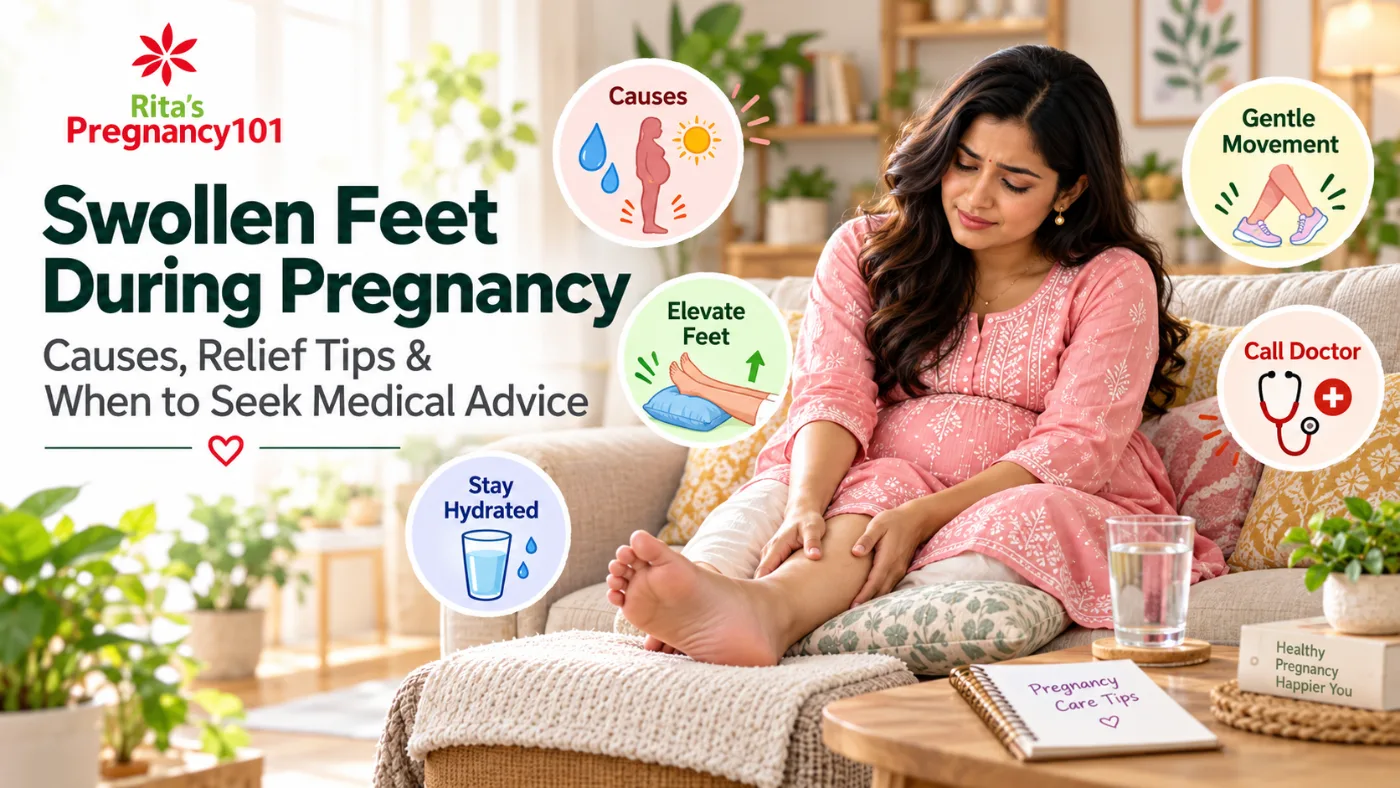
Noticing that your shoes feel tighter, your ankles look puffy, or your feet feel heavier by the end of the day? Swollen feet during pregnancy are a common experience, particularly as pregnancy progresses.
Pregnancy changes the way your body handles fluids and circulation. Your body retains more water than usual, while the growing uterus can put pressure on the veins that carry blood from your legs back toward your heart. As a result, fluid can collect around your feet and ankles.
For most women, gradual swelling in both feet and ankles is uncomfortable but not harmful. However, swelling that appears suddenly or becomes significantly worse can sometimes be associated with pregnancy complications and should not be ignored.
This guide explains the causes of swollen feet in pregnancy, practical ways to manage them, what edema during pregnancy means, and when swelling needs medical attention.
Are Swollen Feet During Pregnancy Normal?
Yes, some degree of swelling is common during pregnancy.
The swelling is often most noticeable in the feet and ankles because these are among the lowest parts of your body. It may become more noticeable:
- Toward the end of the day
- After standing for a long time
- During hot weather
- As pregnancy progresses
- After prolonged sitting
- During the later months of pregnancy
Gradual swelling is generally considered a normal pregnancy symptom. The NHS notes that swelling that develops gradually is usually not harmful, although it can be uncomfortable.
However, the pattern matters.
A sudden increase in swelling, especially swelling involving the face or hands, can be a warning sign that needs medical assessment.
What Causes Swollen Feet in Pregnancy?
Understanding the causes of swollen feet in pregnancy can help you distinguish ordinary pregnancy changes from symptoms that need medical attention.
1. Your body retains more fluid
During pregnancy, your body naturally holds more water. Some of this additional fluid can move into the tissues of your feet and ankles, resulting in swelling.
2. Your growing uterus puts pressure on veins
As the uterus grows, it can place pressure on blood vessels in the pelvis. This can make it more difficult for blood to return from the lower body, contributing to fluid accumulation in the legs and feet.
3. Hormonal changes
Pregnancy-related hormonal changes can also contribute to fluid retention and changes in circulation.
4. Standing for long periods
If you spend several hours standing, gravity encourages fluid to collect in your lower legs and feet. You may notice that your feet look more swollen at the end of a busy day.
5. Sitting in one position for too long
Long periods of sitting without changing position can also make your legs and feet feel heavier or more swollen.
6. Hot weather
Heat can make normal pregnancy swelling more noticeable. This is particularly common during warm weather or after spending a lot of time outdoors.
These factors can occur together, which is why mild swelling can become more noticeable as pregnancy progresses.
What Is Edema During Pregnancy?
Edema during pregnancy refers to swelling caused by excess fluid collecting in the body's tissues.
Edema can occur in different parts of the body, but the feet, ankles, and legs are common areas where it becomes noticeable.
You might notice:
- Puffy feet
- Swollen ankles
- Tight-fitting shoes
- A feeling of heaviness in your legs
- Skin that appears stretched around the swollen area
- Temporary sock marks around your ankles
Pregnancy-related edema is often gradual and affects both sides.
However, edema itself is a description of swelling rather than a diagnosis. Different medical conditions can also cause edema, so significant or unusual swelling should be discussed with your healthcare provider.
Swollen Ankles During Pregnancy: Why Does It Happen?
Swollen ankles during pregnancy often occur for the same reasons as swollen feet.
Extra fluid tends to move toward the lower parts of the body throughout the day. At the same time, the growing uterus can affect circulation from the lower body.
You may notice that your ankles:
- Look wider than usual
- Feel tight inside your footwear
- Leave deeper sock marks
- Feel heavy after walking
- Look more swollen in the evening
- Improve after resting with your feet elevated
It can also be normal for swelling to fluctuate throughout the day.
For example, your ankles may look relatively normal in the morning and become noticeably puffier by evening.
How to Reduce Swelling During Pregnancy?
If your swelling is gradual and your healthcare provider has not given you activity restrictions, several simple habits may improve comfort.
Here are practical ways how to reduce swelling during pregnancy can be approached safely.
1. Elevate Your Feet
When you are resting, place your feet on a cushion, footrest, or pillow.
Raising your feet can make resting more comfortable and may help reduce the accumulation of fluid in your lower legs.
You don't need to keep your feet elevated all day. Try incorporating short periods of elevation into your normal routine.
2. Avoid Standing for Long Periods
If your work or household routine requires prolonged standing, take regular sitting breaks.
Even a few minutes of rest can make your feet feel more comfortable.
Try alternating between standing, sitting, and gentle movement rather than remaining in one position for hours.
3. Avoid Sitting in One Position for Too Long
The same principle applies when working at a desk.
Every so often:
- Change your sitting position
- Move your ankles
- Flex and point your feet
- Take a short walk if comfortable
- Stretch your legs gently
The NHS recommends regular movement and simple foot exercises to help circulation and reduce swelling.
4. Wear Comfortable Shoes
Choose footwear that gives your feet enough room.
Avoid shoes with:
- Tight straps
- Narrow toe areas
- Tight elastic around the ankle
- Uncomfortable heels
Your shoe size may feel different as pregnancy progresses, so comfort is more important than trying to fit into your usual footwear.
5. Stay Active When Appropriate
For many pregnant women, gentle movement can be part of a healthy pregnancy routine.
Walking, pregnancy-specific exercises, and other activities approved by your healthcare provider can help you avoid spending long periods in one position.
If you are already experiencing significant symptoms or have been advised to restrict physical activity, follow your healthcare provider's instructions instead. Other than this Ice helps soothe the swelling as per one of P101 Tips.
Pregnancy Swollen Feet Relief: Simple Foot Exercises
Looking for pregnancy swollen feet relief that you can do while sitting at home or working at your desk?
Simple ankle and foot movements can be useful.
The NHS recommends foot exercises such as bending and stretching the feet and rotating the ankles.
Foot flexes
Sit comfortably with your feet supported.
- Stretch one foot forward.
- Point your toes away from you.
- Bring your toes back toward you.
- Repeat around 30 times.
- Repeat with the other foot.
Ankle circles
Lift one foot slightly off the floor.
Slowly rotate your ankle:
- 8 times clockwise
- 8 times in the opposite direction
Repeat with your other foot.
Gentle walking breaks
If your healthcare provider has cleared you for walking, take short movement breaks throughout the day rather than staying seated for several hours.
These exercises are simple, but they should not cause pain. Stop if a movement feels uncomfortable or produces unusual symptoms.
Can Elevating Your Feet Help With Pregnancy Swelling?
Yes, resting with your feet raised can be a simple way to improve comfort when your feet and ankles feel swollen.
After a long day, sit comfortably and place your feet on a cushion or footrest.
You can combine elevation with gentle ankle movements.
For example:
5-minute evening routine
- 2 minutes with your feet elevated
- 1 minute of ankle circles
- 1 minute of foot flexes
- 1 minute of relaxed breathing
This is not a treatment for an underlying medical condition, but it can be a practical comfort measure for ordinary pregnancy swelling.
Does Drinking Less Water Reduce Swollen Feet During Pregnancy?
No. You should not deliberately restrict fluids simply because your feet are swollen.
Pregnancy increases your body's fluid requirements, and reducing water intake on your own is not an appropriate way to manage normal swelling.
Mayo Clinic specifically advises against cutting back on fluids because of pregnancy-related swelling.
Instead, follow your healthcare provider's advice about hydration.
If you have been given specific fluid restrictions for a medical reason, follow those personalised instructions.
Can Prenatal Yoga Help With Swollen Feet During Pregnancy?
Gentle, pregnancy-specific movement can be incorporated into a pregnancy wellness routine when your healthcare provider has cleared you for exercise.
Prenatal yoga may include gentle movements, mobility exercises, breathing, and relaxation. Pregnancy101's prenatal yoga resources also include movement designed around common pregnancy discomforts, including swelling.
However, pregnancy is not the time to follow a generic advanced yoga routine without modifications.
If you want to include yoga, choose a pregnancy-specific program where movements are adapted according to your trimester and individual needs.
You can explore Pregnancy101's online prenatal yoga classes for trimester-specific guidance.
If your doctor has advised you to limit physical activity, follow that advice instead of starting a new exercise routine.
When Should You Worry About Swollen Feet During Pregnancy?
Most gradual swelling is not dangerous, but some patterns require medical attention.
Contact your doctor, midwife, or maternity care provider promptly if you experience a sudden increase in swelling, especially if it affects your face, hands, or feet.
Be particularly alert if swelling occurs with:
- A severe or persistent headache
- Blurred vision
- Flashing lights or other vision changes
- Severe pain below the ribs
- Sudden swelling of the face or hands
- Feeling very unwell
- Nausea or vomiting alongside other concerning symptoms
These can be warning signs of pre-eclampsia and should be assessed promptly.
Don't wait for the swelling to become extremely severe before asking for advice.
Swollen Feet During Pregnancy and Pre-Eclampsia
It is important to understand that ordinary swelling does not automatically mean you have pre-eclampsia.
Gradual swelling of the feet and ankles is common during pregnancy.
Pre-eclampsia, however, is a pregnancy complication associated with high blood pressure and other changes that require medical monitoring.
Some warning symptoms include:
- Sudden swelling
- Severe headache
- Vision problems
- Severe pain below the ribs
- Feeling very unwell
- Sudden swelling of the face or hands
Regular prenatal appointments are important because blood pressure and other pregnancy health indicators can be monitored even when you don't have obvious symptoms.
If you experience warning symptoms, contact your healthcare provider rather than trying to determine the cause of the swelling yourself.
What If Only One Foot or Leg Is Swollen?
Swelling that affects only one leg should be treated differently from the gradual swelling that commonly affects both feet.
A blood clot, including deep vein thrombosis (DVT), can cause swelling in one leg. Pregnancy increases the risk of blood clots.
Seek medical advice promptly if you develop unexplained one-sided swelling, particularly if it is accompanied by:
- Leg pain or tenderness
- Warmth
- Redness
- Significant or sudden swelling
If you experience sudden difficulty breathing, chest pain, or cough up blood, seek emergency medical care immediately.
These symptoms can indicate a blood clot that has travelled to the lungs and requires urgent treatment.
Swollen Feet During Pregnancy: What Not to Do
When you are uncomfortable, it can be tempting to try every remedy you hear about.
Instead, avoid making major changes without professional advice.
Don't severely restrict water
Swelling is not a reason to stop drinking fluids.
Don't take medicines or supplements without advice
Do not start a diuretic, painkiller, supplement, or other treatment specifically for swelling unless your healthcare provider recommends it.
Don't massage painful one-sided swelling
If one leg suddenly becomes swollen, painful, warm, or red, seek medical advice instead of assuming it is ordinary pregnancy swelling.
Don't ignore sudden changes
A sudden increase in swelling can require assessment, especially when accompanied by headache, vision changes, upper abdominal pain, or feeling unwell.
Don't push through painful exercise
Pregnancy exercise should feel appropriate for your body and pregnancy. If an activity causes pain or concerning symptoms, stop and seek advice.
Swollen Feet During Pregnancy in the Third Trimester
Swelling often becomes more noticeable later in pregnancy.
As your baby and uterus grow, pressure on the veins in your lower body can increase. Your body also continues to retain additional fluid.
During the third trimester, you may notice:
- Shoes feeling tighter
- More prominent ankle swelling
- Heavier-feeling legs
- More swelling toward evening
- Swelling after standing or walking for long periods
This can be normal, but don't assume every increase in swelling is harmless.
If swelling suddenly becomes much worse or is accompanied by other warning signs, contact your maternity care provider.
When Does Pregnancy Swelling Go Away?
Normal pregnancy-related swelling usually improves after delivery as your body gradually gets rid of the additional fluid retained during pregnancy.
Mayo Clinic notes that foot and ankle swelling generally resolves within a few weeks after childbirth.
However, swelling after delivery should still be taken seriously if it is sudden or accompanied by symptoms such as severe headache, vision changes, upper abdominal pain, or feeling very unwell.
Pregnancy-related complications can sometimes occur after delivery too, so don't ignore concerning symptoms simply because your baby has already been born.
A Simple Daily Routine for Managing Pregnancy Swollen Feet Relief Routine?
If you experience mild swelling, you can build a few small habits into your day.
Morning
- Wear comfortable footwear.
- Do a few gentle ankle movements.
- Avoid starting the day in tight shoes.
During work
- Change your position regularly.
- Avoid sitting continuously for several hours.
- Perform gentle foot flexes and ankle circles.
Afternoon
- Take a short movement break if appropriate.
- Drink fluids according to your healthcare provider's advice.
- Avoid prolonged standing where possible.
Evening
- Remove tight footwear.
- Rest with your feet elevated.
- Perform gentle ankle movements.
- Pay attention to any unusual changes in swelling.
Before bed
Take a few quiet minutes to relax your legs and feet.
If swelling is sudden, one-sided, painful, or associated with other concerning symptoms, skip the home routine and contact your healthcare provider.
Final Thoughts
Swollen feet during pregnancy are often a normal result of the body's increased fluid retention and the pressure created by the growing uterus.
For mild, gradual swelling, simple habits such as elevating your feet, changing positions regularly, wearing comfortable footwear, staying appropriately active, and doing gentle ankle exercises can help you stay more comfortable.
But swelling should never be judged by appearance alone.
A sudden increase in swelling, particularly when accompanied by a severe headache, vision changes, pain below the ribs, sudden facial or hand swelling, or feeling very unwell, needs prompt medical attention. Similarly, sudden painful swelling in one leg should be assessed because it can have a different cause.
When you're unsure, contacting Rita’s Pregnancy101 is always preferable to trying to diagnose pregnancy swelling yourself.
Frequently Asked Questions
1. Why do I have swollen feet during pregnancy?
Swollen feet during pregnancy are commonly caused by increased fluid retention, hormonal changes, and pressure from the growing uterus on veins in the lower body. Swelling can become more noticeable later in pregnancy and toward the end of the day.
2. How to reduce swelling during pregnancy naturally?
To understand how to reduce swelling during pregnancy, start with simple comfort measures such as taking regular movement breaks, avoiding prolonged standing, elevating your feet while resting, wearing comfortable footwear, and doing gentle foot and ankle exercises.
3. What are the causes of swollen feet in pregnancy?
The causes of swollen feet in pregnancy commonly include increased fluid retention, hormonal changes, pressure from the growing uterus, prolonged standing or sitting, and hot weather. Gradual swelling is generally common, but sudden swelling requires medical attention.
4. Why do I have swollen ankles during pregnancy?
Swollen ankles during pregnancy can happen because extra fluid collects in the lower parts of the body. The growing uterus can also affect blood flow from the legs, making swelling more noticeable as pregnancy progresses.
5. What does edema during pregnancy mean?
Edema during pregnancy means swelling caused by excess fluid collecting in body tissues. It commonly affects the feet, ankles, and legs. Pregnancy itself can contribute to edema, although swelling can also have other causes.
6. What can I do for pregnancy swollen feet relief?
For pregnancy swollen feet relief, try elevating your feet while resting, avoiding long periods of standing or sitting, wearing comfortable shoes, taking appropriate movement breaks, and performing gentle ankle exercises.
7. When should swollen feet during pregnancy be checked by a doctor?
Swollen feet during pregnancy should be checked promptly if the swelling appears suddenly or increases rapidly, particularly when accompanied by facial or hand swelling, severe headache, vision changes, severe pain below the ribs, or feeling very unwell. One-sided swelling with pain, warmth, or redness also needs medical assessment.
Reading is good. Practicing is better.
Join 5,000+ moms in the P101 Onwards Care programs, yoga, meditation, information classes and a Saturday live Q&A, from ₹1,000/month.
Explore Courses