
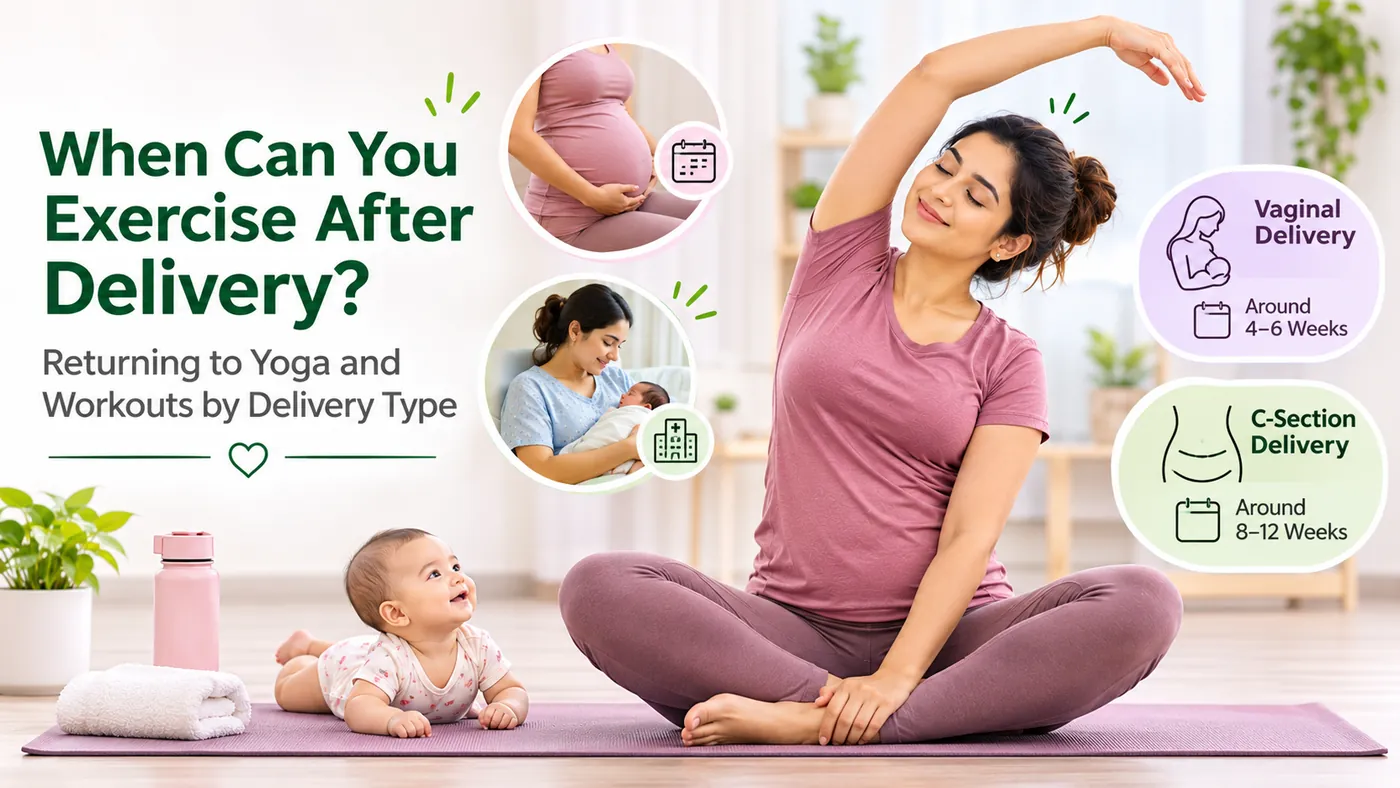
Exercise after delivery can usually begin with gentle movement once you feel ready and your healthcare provider considers it safe. However, the right time to resume yoga, walking, strength training or other workouts depends on whether you had a vaginal or C-section delivery, your recovery, and any complications. The safest approach is to start slowly and build up gradually.
Childbirth brings several physical changes. Your abdominal muscles have stretched, your pelvic floor has supported the weight of pregnancy, and your body needs time to recover. If you had a C-section, your abdominal incision also needs to heal. This means returning to exercise should be based on your recovery rather than a fixed deadline.
Let's understand when you can restart physical activity after different types of delivery, which exercises are suitable in the early postpartum period, and how to return to your regular fitness routine safely.
When Can You Start Exercising After Delivery?
There is no single timeline that applies to every new mother. After an uncomplicated vaginal delivery, gentle activities such as walking, breathing exercises and pelvic floor exercises may be started when you feel comfortable. After a C-section or a delivery involving complications, you may need a more gradual plan and individual advice from your doctor.
The important distinction is between gentle movement and structured workouts. You may be able to walk short distances early in recovery, but running, jumping, heavy lifting and intense abdominal exercises require more preparation.
According to the American College of Obstetricians and Gynecologists (ACOG), women who have had a healthy pregnancy and an uncomplicated vaginal delivery can often begin exercising a few days after birth, or when they feel ready. Those who have had a C-section or complications should ask their healthcare provider when it is appropriate to restart.
The NHS also recommends beginning with gentle activity after a straightforward birth and seeking advice before returning to strenuous exercise after a complicated delivery or C-section.
Exercise After Normal Delivery: When and How to Restart?
Exercise after normal delivery can often begin with gentle movement in the early postpartum days, provided you feel comfortable and have no medical restrictions. Short walks, relaxed breathing and pelvic floor exercises are suitable starting points for normal delivery yoga poses for many women . More demanding workouts should wait until your recovery has progressed and your healthcare provider has advised that you can increase activity.
A vaginal delivery can still involve perineal soreness, stitches, vaginal bleeding, pelvic floor weakness or other recovery concerns. If you had an assisted delivery, a significant tear or other complications, your exercise plan may need additional adjustments.
1. First Few Days: Focus on Gentle Movement
During the initial days after a straightforward vaginal delivery, prioritise rest and basic movement rather than fitness goals.
You may gradually try:
- Short, comfortable walks around your home.
- Gentle breathing exercises without straining.
- Ankle movements and light circulation exercises.
- Pelvic floor contractions, if comfortable and advised by your care team.
- Comfortable posture changes while sitting, standing and feeding your baby.
Do not push through pain, dizziness, heavy bleeding or unusual fatigue. If you have stitches or perineal discomfort, avoid movements that increase pressure or cause pain.
2. Early Postpartum Weeks: Build Your Foundation
As your energy and comfort improve, you can gradually increase your walking time and introduce gentle mobility exercises.
A suitable routine may include:
- Comfortable walking at an easy pace.
- Gentle shoulder rolls and neck movements.
- Relaxed diaphragmatic breathing.
- Pelvic floor exercises, including learning to relax the muscles fully.
- Gentle pelvic movements if they do not cause discomfort.
The goal is to rebuild comfort, mobility and awareness of your body. You do not need to rush into a full yoga session or a gym workout.
3. Around the 6-Week Check: Review Your Progress
Your postnatal check is a useful opportunity to discuss bleeding, healing, pelvic floor symptoms, abdominal discomfort and your plans to resume exercise.
If recovery is progressing well, your healthcare provider may suggest gradually adding low-impact activities such as beginner-level postnatal yoga, light resistance exercises or longer walks.
However, six weeks is not an automatic clearance for every workout. Your readiness depends on your recovery and the type of exercise you want to resume.
Exercise After C-Section Delivery: What Should You Know?
Exercise after C-section delivery needs additional care because a caesarean birth involves abdominal surgery. Gentle mobility and walking may be encouraged as soon as they are medically safe, but high-effort exercise, heavy lifting and movements that strain the abdominal area should be avoided during early healing. Your doctor should guide your return to structured workouts.
Even if you feel ready to exercise, the incision and deeper abdominal tissues need time to recover. Pain, pulling sensations or discomfort around the scar are reasons to modify or stop an activity.
1. Early Recovery: Prioritise Healing
During the first few weeks, follow your hospital discharge instructions and your doctor's advice.
Depending on your recovery, suitable activities may include:
- Short, gentle walks as tolerated.
- Comfortable ankle and leg movements.
- Relaxed breathing exercises.
- Gentle posture awareness while sitting and standing.
- Pelvic floor exercises when comfortable and recommended.
Avoid sit-ups, crunches, intense planks, jumping, running and heavy resistance training. Do not lift objects heavier than your baby unless your healthcare provider advises otherwise.
2. Around 6 Weeks: Review Wound Healing and Comfort
At your postnatal appointment, ask your doctor whether your incision is healing as expected and whether you can progress to more structured activity.
You may be able to gradually increase walking and introduce suitable low-impact exercises if your recovery is uncomplicated. However, some women need more time, particularly if they experienced infection, wound discomfort, significant blood loss or other complications.
3. Around 12 Weeks and Beyond: Progress Gradually
Some health services advise waiting around 3 to 4 months after a C-section before returning to high-effort activities such as running, jumping, heavy lifting and intense fitness training. This is not a universal deadline. Your readiness depends on wound healing, strength, symptoms and clinical advice.
Start at a beginner level and increase the duration and intensity gradually. If an exercise causes scar pain, abdominal pulling, pelvic pressure or unusual bleeding, stop and seek advice.
Remember: C-section recovery is different for every woman. Do not compare your progress with someone who had a vaginal delivery or a different surgical recovery.
Gentle Exercises After Childbirth: Where Should You Begin?
Gentle exercises after childbirth help you reintroduce movement without placing unnecessary demands on your recovering body. Start with activities that feel comfortable, such as short walks, breathing exercises, gentle mobility and pelvic floor work. The right combination depends on your delivery type, healing and any symptoms you are experiencing.
Here are some examples to discuss with your healthcare provider or postnatal exercise professional.
1. Diaphragmatic Breathing
Purpose: Supports relaxed breathing and awareness of the abdominal and pelvic floor muscles.
How to try it:
- Sit comfortably with your back supported or lie in a comfortable position.
- Place one hand on your chest and the other on your abdomen.
- Breathe in gently through your nose and allow your abdomen to expand naturally.
- Breathe out slowly without forcefully pulling your stomach inward.
- Repeat for a few comfortable breaths.
Avoid breath-holding or forceful abdominal contractions.
2. Ankle Pumps
Purpose: Encourages gentle lower-limb movement during periods of rest.
How to try it:
- Sit or lie down comfortably.
- Point your toes away from your body.
- Bring your toes gently back towards you.
- Repeat slowly without forcing the movement.
These movements do not replace medical advice or treatment for blood clots. Seek urgent medical attention for one-sided calf pain or swelling, chest pain or sudden breathlessness.
3. Short Walks
Purpose: Helps you gradually rebuild everyday mobility and stamina.
How to try it:
- Begin with a short walk indoors or on a flat surface.
- Maintain a comfortable pace.
- Stop if you experience pain, dizziness, increased bleeding or unusual breathlessness.
- Increase the duration only when your body is responding comfortably.
After a C-section, follow your surgical team's guidance and avoid pushing a pram or carrying additional loads if these activities cause discomfort.
4. Gentle Shoulder Rolls
<text>Purpose: Helps ease stiffness around the shoulders and upper back.</text>
How to try it:
- Sit with your back comfortably supported.
- Relax your arms by your sides.
- Slowly roll your shoulders backwards.
- Repeat a few times without forcing the movement.
This can be particularly useful when you spend long periods feeding or holding your baby.
5. Pelvic Floor Exercises
Purpose: Helps rebuild awareness and strength in the muscles that support the bladder, bowel and pelvic organs.
How to try it:
- Sit or lie in a comfortable position.
- Gently tighten the muscles around your vagina and anus as though preventing the passage of gas.
- Hold briefly without holding your breath.
- Fully relax the muscles before repeating.
- Follow guidance from a pelvic health physiotherapist if you are unsure about the technique.
Do not repeatedly practise by stopping your urine midstream. If you experience pelvic pain, difficulty relaxing these muscles, urine leakage or a vaginal heaviness or bulging sensation, seek assessment rather than simply increasing the number of contractions.
Returning to Fitness After Pregnancy: A Gradual Approach
Returning to fitness after pregnancy is a gradual process of rebuilding strength, stamina, mobility and confidence. Instead of immediately returning to your pre-pregnancy workout routine, begin with low-impact activities and progress only when your body is ready. Your delivery type, recovery and pelvic floor function should guide how quickly you increase exercise intensity.
A practical progression may look like this:
| Recovery stage | Possible activities | What to keep in mind |
|---|---|---|
| Early recovery | Gentle walking, breathing, comfortable mobility | Follow your doctor's advice and prioritise healing |
| Building a foundation | Longer walks, pelvic floor exercises, gentle postnatal movement | Increase activity only if symptoms do not worsen |
| After a postnatal review | Beginner-level yoga, low-impact exercise, light resistance work | Check wound healing and pelvic floor comfort |
| Later recovery | Gradually increased strength and aerobic training | Progress towards more demanding workouts with professional guidance |
These are broad stages, not a prescribed schedule. You may need to move more slowly or receive individual physiotherapy support.
How to Return to Yoga After Delivery?
Pregnancy101's postnatal yoga classes can be a gentle way to reconnect with movement, but postpartum yoga should be adapted to your recovery.
Consider these principles:
- Begin with breathing, relaxation and comfortable mobility.
- Choose a postnatal class designed for your stage of recovery.
- Avoid intense core work and deep stretches in the early stages.
- Do not force forward bends, twists or positions that pull on a C-section scar.
- Modify or stop poses that cause pelvic pressure, pain or abdominal doming.
- Increase the duration and complexity of your practice gradually.
A qualified prenatal and postnatal yoga instructor can help adapt movements to your needs. However, yoga instruction should complement—not replace—medical advice or pelvic health physiotherapy.
When Can You Return to Running, Gym Workouts and Heavy Exercise?
High-impact activities place greater demands on the pelvic floor, abdominal muscles and joints. Running, jumping, heavy weightlifting and intense abdominal workouts should not be the first activities you restart.
Before progressing, consider whether:
- Your bleeding has settled and any surgical or perineal wounds have healed.
- You can walk comfortably without pain or increased bleeding.
- You can perform basic movements without abdominal doming or excessive pressure.
- You have no urine or bowel leakage during activity.
- You do not experience vaginal heaviness, dragging or a bulging sensation.
- Your healthcare provider or pelvic health physiotherapist has assessed your readiness when needed.
A gradual return is more important than reaching a particular fitness milestone by a certain week.
Signs You Should Stop Exercising and Seek Medical Advice
Exercise should not make your recovery symptoms worse. Stop the activity and contact your healthcare provider if you notice:
- Increased or heavy vaginal bleeding.
- New or worsening abdominal, pelvic or perineal pain.
- Pain, redness, swelling or discharge around a C-section incision.
- Urine or bowel leakage during exercise.
- A feeling of vaginal heaviness, pressure or bulging.
- Dizziness, unusual weakness or persistent exhaustion.
Seek urgent medical attention if you experience chest pain, sudden shortness of breath, fainting, severe headache with visual changes, or one-sided calf pain and swelling. These symptoms need prompt assessment and should not be managed by modifying your workout.
Tips for a Safe Postpartum Exercise Routine
A realistic routine should support recovery while fitting into the demands of caring for a newborn. Keep these points in mind:
- Get individual medical guidance: Discuss your delivery, complications, stitches, incision and recovery before restarting structured workouts.
- Start smaller than you think you need to: A few comfortable minutes of movement can be a reasonable beginning.
- Pay attention to symptoms: Pain, increased bleeding, leakage or pelvic heaviness are signs to pause and seek advice.
- Prioritise pelvic floor recovery: Learn both how to contract and how to relax these muscles.
- Avoid comparing recovery timelines: Your progress may differ from that of other mothers.
- Stay hydrated and eat adequately: Your body needs nourishment, particularly if you are breastfeeding.
- Choose appropriate guidance: A postnatal yoga instructor or pelvic health physiotherapist can help adapt exercises to your needs.
Conclusion: Returning to Fitness After Pregnancy at Your Own Pace
Returning to exercise after childbirth is not about getting back to your pre-pregnancy body as quickly as possible. It is about rebuilding strength, improving mobility and giving your body the time and support it needs to recover. Whether you had a vaginal delivery or a C-section, start with gentle movement, listen to your symptoms and progress only when you are ready.
With the right guidance, adapted postnatal yoga and a gradual exercise routine can become part of your recovery journey. Pregnancy101 offers postnatal care support to help new mothers explore movement at a comfortable pace.
Frequently Asked Questions
1. When can I start exercise after delivery?
You may begin gentle exercise after delivery when you feel ready and it is medically safe. After an uncomplicated vaginal birth, this may be within a few days. After a C-section or complicated delivery, ask your healthcare provider for an individual recovery plan.
2. When can I start exercise after normal delivery?
Exercise after normal delivery can often begin with short walks, gentle breathing and pelvic floor exercises when you feel comfortable. More demanding workouts should wait until your recovery has progressed and your healthcare provider has advised that you can increase activity.
3. How soon can I start exercise after C-section delivery?
Exercise after C-section delivery should progress carefully because your abdominal incision needs time to heal. Gentle walking and basic mobility may be encouraged early, but strenuous exercise and heavy lifting should wait until your doctor confirms that your recovery allows it.
4. What are the best gentle exercises after childbirth?
Suitable gentle exercises after childbirth may include short walks, diaphragmatic breathing, ankle pumps, comfortable shoulder movements and pelvic floor exercises. Choose movements according to your delivery type and recovery, and stop if they cause pain, increased bleeding or pelvic pressure.
5. When can I start returning to fitness after pregnancy?
Returning to fitness after pregnancy depends on your delivery, healing, pelvic floor function and previous fitness level. Start with low-impact activities and gradually build strength and stamina. Seek professional guidance before resuming running, jumping or heavy workouts.
6. Can I practise yoga after giving birth?
Yes, you may be able to practise adapted postnatal yoga once your healthcare provider considers it appropriate. Begin with comfortable breathing and gentle movements. Avoid intense core exercises, deep stretches and poses that cause pain or pressure, particularly while recovering from a C-section.
7. Can I do abdominal exercises after delivery?
Abdominal exercises can be reintroduced gradually after delivery, but the type and timing matter. Begin with appropriate core-recovery movements when advised by your healthcare provider or physiotherapist. Avoid jumping straight into crunches, sit-ups or intense planks, especially if you notice abdominal doming, pain or pelvic floor symptoms.
Reading is good. Practicing is better.
Join 5,000+ moms in the P101 Onwards Care programs, yoga, meditation, information classes and a Saturday Q&A, from ₹1,000/month.
Explore Courses