
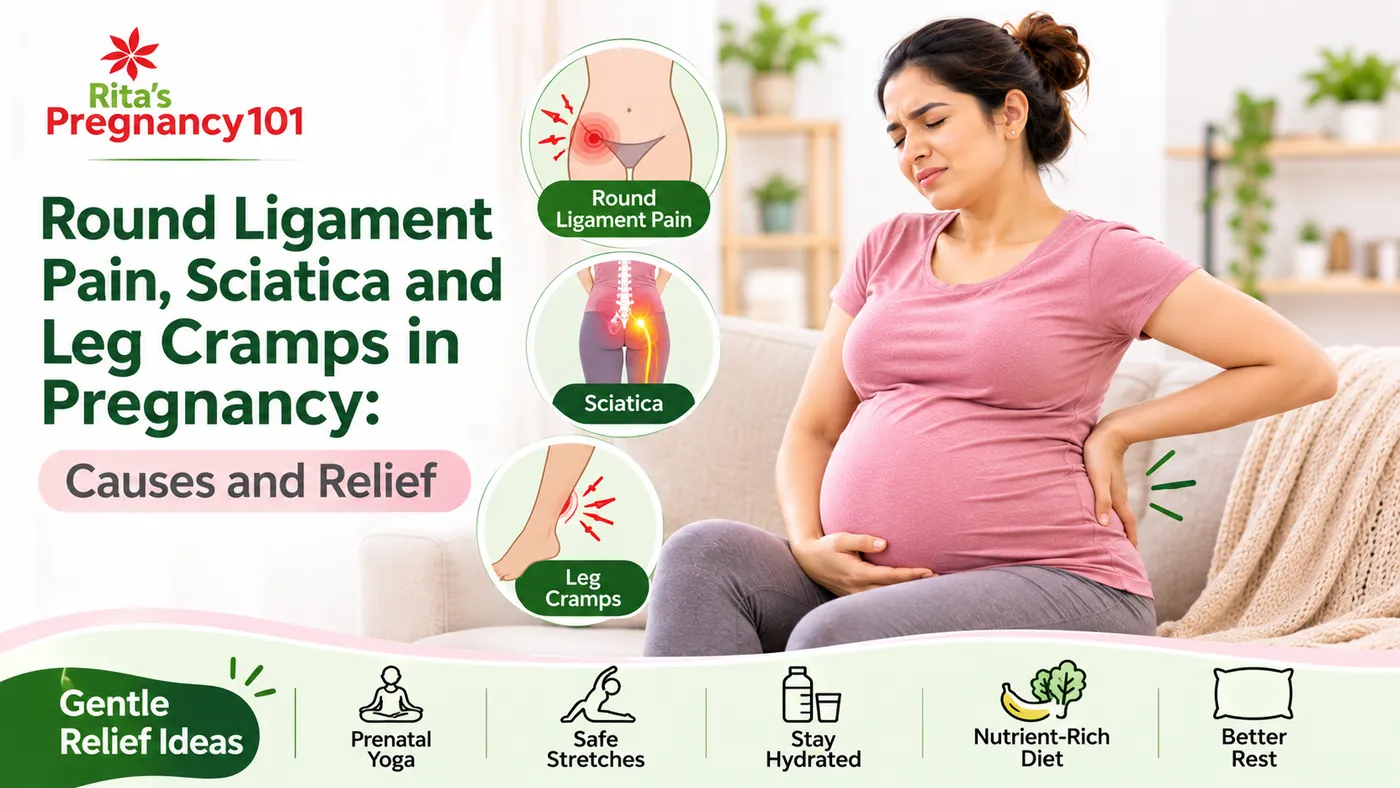
Round ligament pain, sciatica and leg cramps in pregnancy are common discomforts that can affect an expecting mother's abdomen, lower back, hips and legs. They may become more noticeable as pregnancy progresses and the body adapts to a growing baby. Understanding the differences between these conditions can help you choose suitable comfort measures, gentle stretches and activities while recognising symptoms that need medical attention.
Pregnancy brings changes to your muscles, ligaments, joints, posture and circulation. While some discomfort is a normal part of these changes, persistent or severe pain should never be ignored. Not every abdominal or leg pain is caused by pregnancy-related stretching, and a healthcare professional can help identify the reason.
In this guide, we explore what causes these three types of discomfort, how to manage them safely and which gentle movements may help you feel more comfortable during pregnancy by finding the perfect prenatal yoga class.
Understanding Round Ligament Pain, Sciatica and Leg Cramps in Pregnancy
Although these three conditions can cause discomfort around the lower body, they affect different structures and usually feel different.
| Condition | Where you may feel it | Common sensation |
|---|---|---|
| Round ligament pain | Lower abdomen, hips or groin | Sharp, pulling or stabbing pain, often triggered by sudden movement |
| Sciatica | Lower back or buttock, travelling down one leg | Shooting, burning or electric-like pain, sometimes with tingling or numbness |
| Leg cramps | Usually calf or foot muscles | Sudden, painful muscle tightening, often at night |
Recognising the location and nature of the discomfort can help you describe your symptoms to your doctor. However, these descriptions are not enough to diagnose the cause of pain at home.
Round Ligament Pain During Pregnancy: Causes, Symptoms and Relief
Round ligament pain during pregnancy is a common discomfort caused by the stretching of the ligaments that support the growing uterus. It is often experienced as a sharp or pulling sensation on one or both sides of the lower abdomen, hips or groin. It is particularly common during the second trimester, although it can occur earlier or later.
What Causes Round Ligament Pain in Pregnancy?
The round ligaments are two bands of connective tissue located on either side of the uterus. They help support the uterus and connect it towards the groin area.
As the uterus grows during pregnancy, these ligaments stretch and become longer. Pregnancy-related hormonal changes also make connective tissues more flexible. When the ligaments are stretched or suddenly pulled, they may cause temporary discomfort or spasms.
Common triggers include:
- Standing up quickly after sitting or lying down.
- Turning suddenly or rolling over in bed.
- Coughing, sneezing or laughing.
- Walking quickly or changing direction suddenly.
- Standing for extended periods.
- Sudden changes in movement or posture.
These are the main causes of round ligament pain in pregnancy. The discomfort may feel stronger on one side, particularly the right, but it can occur on either side or both sides.
What Does Round Ligament Pain Feel Like?
By doing yoga postures for normal birth, you may experience:
- A sudden sharp or stabbing sensation in the lower abdomen.
- Pulling or stretching discomfort near the groin.
- Brief pain when getting out of bed or changing positions.
- Discomfort that settles after resting or moving more slowly.
Round ligament pain usually lasts a few seconds or minutes. It should not automatically be assumed to be harmless, particularly if it is severe, persistent or accompanied by other symptoms.
How to Relieve Round Ligament Pain During Pregnancy
You can try a few gentle adjustments to reduce discomfort:
- Change positions slowly: Take your time when getting up from a chair or turning in bed.
- Support your bump: When coughing or sneezing, lean forward slightly and support your lower abdomen with your hands.
- Rest comfortably: Lie on your side with a pillow between your knees and, if helpful, another pillow supporting your bump.
- Try gentle warmth: A comfortably warm compress or warm bath may help ease discomfort. Avoid excessive heat.
- Avoid sudden movements: Notice which activities trigger the pain and modify them.
- Consider a pregnancy support belt: Ask your doctor or physiotherapist whether one may be appropriate.
Gentle prenatal movement may also help you maintain comfortable mobility. However, do not force a stretch through pain. If the discomfort continues or becomes worse, seek medical advice or directly consult Rita’s Pregnancy by exploring our prenatal information package.
Sciatica During Pregnancy: Why Does Nerve Pain Occur?
Sciatica during pregnancy refers to pain associated with irritation or compression of the sciatic nerve or its nerve roots. It may begin around the lower back or buttock and travel down the back of one leg, sometimes reaching the foot. The discomfort can feel sharp, burning or electric-like and may be accompanied by tingling, numbness or weakness.
It is important to understand that not every type of back, hip or leg pain during pregnancy is true sciatica. Pregnancy-related pelvic girdle pain and muscular discomfort can sometimes feel similar.
What Causes Sciatica During Pregnancy?
The sciatic nerve is a large nerve that runs from the lower back through the buttocks and down the legs. When it becomes irritated or compressed, pain can travel along its pathway.
During pregnancy, several changes may contribute to back, pelvic and nerve-related discomfort:
- Postural changes: As the abdomen grows, your centre of gravity shifts, changing how your back and pelvis support your body.
- Changes in connective tissues: Pregnancy hormones affect the flexibility of ligaments and joints.
- Increased physical demands: The growing uterus and changing body weight place additional demands on the back and pelvic region.
- Existing back conditions: A pre-existing disc problem or other spinal condition may contribute to sciatic symptoms.
True sciatica is less common than general pregnancy-related back or pelvic pain. A clinical assessment can help distinguish between these conditions.
Common Symptoms of Sciatica During Pregnancy
Symptoms may include:
- Pain beginning in the lower back or buttock.
- Shooting discomfort travelling down one leg.
- Burning or electric-like sensations.
- Pins and needles in the leg or foot.
- Numbness or weakness in the affected leg.
- Discomfort that worsens with certain positions or movements.
If you experience new or progressive weakness, significant numbness or difficulty walking, contact your healthcare provider promptly.
Pregnancy Sciatica Pain Relief: What May Help?
Finding comfortable positions and avoiding movements that aggravate symptoms may help manage pregnancy-related sciatic discomfort.
Here are some measures to discuss with your healthcare provider:
1. Change positions regularly
Avoid sitting or standing in one position for too long. Take comfortable movement breaks throughout the day.
2. Use supportive seating
Choose a chair that supports your lower back. Keep both feet comfortably supported, and avoid twisting your body while sitting.
3. Sleep with pillows
Try placing a pillow between your knees and another under your bump if needed. Choose a side-lying position that feels comfortable.
4. Apply gentle warmth
A warm compress over the lower back or buttock may help ease muscular discomfort. Keep the temperature comfortable and avoid applying excessive heat.
5. Consider pregnancy physiotherapy
A physiotherapist experienced in pregnancy can assess your posture, movement and symptoms and suggest appropriate exercises.
6. Avoid movements that worsen the pain
Do not force stretches or continue an exercise that increases shooting pain, tingling or numbness.
These measures may support pregnancy sciatica pain relief, but persistent or severe symptoms need professional assessment. Do not start pain medication, supplements or other treatments without checking with your healthcare provider.
Leg Cramps During Pregnancy: Causes and Ways to Find Relief
Leg cramps during pregnancy are sudden, involuntary muscle contractions that commonly affect the calf muscles or feet. They may occur at any stage but are often reported during the second and third trimesters, particularly at night or while resting. The discomfort can be intense for a short time, and the affected muscle may remain sore afterwards.
Why Do Leg Cramps Happen During Pregnancy?
The exact reason for leg cramps during pregnancy is not always clear. Several factors may contribute:
- Changes in muscle activity as pregnancy progresses.
- Additional physical demands on the legs.
- Muscle fatigue after prolonged standing or activity.
- Dehydration, which may contribute to muscle cramping.
- Changes in circulation and body mechanics.
Although mineral deficiencies are sometimes suggested as a cause, leg cramps should not automatically be attributed to low magnesium, calcium or potassium. Do not start supplements to treat cramps without discussing them with your doctor.
What Do Pregnancy Leg Cramps Feel Like?
You may notice:
- Sudden tightening in the calf or foot.
- Sharp muscle pain, particularly at night.
- Difficulty moving the affected foot during a cramp.
- Temporary soreness after the muscle relaxes.
Most ordinary muscle cramps settle within a short time. However, persistent pain or swelling needs assessment because not all leg pain during pregnancy is a muscle cramp.
How to Relieve Leg Cramps During Pregnancy
If you experience a typical muscle cramp, the following measures may help:
- Gently stretch the calf: Straighten your leg and bring your toes towards your shin if comfortable.
- Massage the affected muscle: Use gentle pressure to help the muscle relax.
- Move carefully: Once the pain eases, try standing and walking slowly if you feel steady.
- Stay hydrated: Drink water regularly throughout the day.
- Stretch before bedtime: Gentle calf stretches may help reduce the frequency of cramps for some women.
- Avoid prolonged inactivity: Change positions and take comfortable movement breaks.
If cramps frequently disturb your sleep or continue despite these measures, discuss them with your healthcare provider or read our guide on swollen feet during pregnancy.
Safe Stretches for Pregnancy Leg Pain
Safe stretches for pregnancy leg pain should be gentle, controlled and appropriate for your stage of pregnancy. Movements such as calf stretches, supported pelvic tilts and gentle cat-cow movements may help maintain comfortable mobility. However, the right stretch depends on whether your discomfort comes from ligament stretching, nerve irritation or muscle cramping.
The following examples may be suitable for some women with uncomplicated pregnancies. Ask your doctor or pregnancy physiotherapist before trying them, particularly if you have persistent pain or join our Postnatal classes.
1. Gentle Calf Stretch
Purpose: Stretches the calf muscles and may help with ordinary muscle tightness or cramps.
How to practise:
- Stand facing a wall and place both hands against it.
- Step one foot backwards while keeping both feet facing forward.
- Keep the back heel comfortably on the floor.
- Gently bend the front knee until you feel a mild stretch in the back calf.
- Hold briefly while breathing normally.
- Repeat on the other side.
Do not bounce or force the stretch. Use a stable support and stop if you feel pain.
2. Cat-Cow Movement
Purpose: Encourages gentle spinal movement and may help ease back stiffness.
How to practise:
- Come onto your hands and knees, with your wrists below your shoulders and knees below your hips.
- Inhale and gently lift your chest, allowing your back to move into a comfortable arch.
- Exhale and slowly round your back without forcing your head down.
- Continue with a few slow, comfortable repetitions.
Keep the movement gentle and avoid holding your breath.
3. Supported Butterfly Pose
Purpose: Encourages comfortable hip movement without forcing the inner thighs to stretch.
How to practise:
- Sit on a cushion or folded blanket.
- Bring the soles of your feet together.
- Allow your knees to relax outwards naturally.
- Keep your back comfortably upright.
- Breathe slowly and remain in the position only while it feels comfortable.
Avoid pushing your knees towards the floor. Stop if the position increases groin or pelvic pain.
4. Gentle Pelvic Tilts
Purpose: Encourages controlled pelvic movement and may help with some forms of pregnancy-related back discomfort.
How to practise:
- Begin on your hands and knees with your back in a comfortable neutral position.
- Gently draw your lower abdomen inward as you tilt your pelvis.
- Slowly return to the starting position.
- Repeat a few times without forcing the movement.
Keep your breathing relaxed. If the movement causes shooting leg pain or pelvic discomfort, stop.
5. Gentle Seated Ankle Movements
Purpose: Maintains comfortable ankle movement and helps reduce stiffness from prolonged sitting.
How to practise:
- Sit in a comfortable chair with your feet supported.
- Slowly point your toes away from your body.
- Bring your toes back towards your shin.
- Repeat several times at a comfortable pace.
These movements are not a treatment for blood clots or unexplained leg swelling.
Important: These are examples of gentle movements, not a treatment plan for all types of pregnancy pain. Avoid deep stretches, forceful twisting, bouncing and any position that causes pain. If a stretch worsens your symptoms, stop rather than trying to push through it.
Conclusion: Managing Pregnancy Pain With Gentle Movement and the Right Guidance
Round ligament pain, sciatica and leg cramps can make everyday activities uncomfortable, but understanding their causes can help you respond more confidently. While round ligament discomfort is often related to the stretching of supporting tissues, sciatica involves nerve-related pain and leg cramps involve involuntary muscle contractions. Each condition requires a slightly different approach.
Gentle movement, comfortable posture, appropriate stretching and adequate rest may help you manage some pregnancy-related discomforts. However, do not ignore persistent pain, unusual swelling, numbness or other warning signs.
At Rita’s Pregnancy101, guided prenatal yoga can help expecting mothers explore safe movement, breathing and relaxation throughout pregnancy.
Remember, the goal is not to push through discomfort but to understand your body's needs, choose appropriate support and enjoy a more comfortable pregnancy journey.
Frequently Asked Questions
1. What causes round ligament pain during pregnancy?
Round ligament pain during pregnancy happens when the ligaments supporting the uterus stretch as the uterus grows. Hormonal changes make these ligaments more flexible, and sudden movements such as coughing, sneezing or standing quickly can trigger a sharp or pulling sensation near the lower abdomen or groin.
2. What are the common causes of round ligament pain in pregnancy?
The main causes of round ligament pain in pregnancy include the stretching of supporting ligaments as the uterus expands, changes in connective tissue flexibility and sudden movements. The discomfort is commonly felt during the second trimester and may be triggered by changing positions quickly.
3. How can I manage sciatica during pregnancy?
Sciatica during pregnancy may cause shooting pain from the lower back or buttock down one leg. Changing positions regularly, using supportive pillows, avoiding movements that aggravate the pain and consulting a pregnancy physiotherapist may help. Persistent pain or weakness needs medical assessment.
4. What is the best pregnancy sciatica pain relief?
Pregnancy sciatica pain relief may involve comfortable positioning, gentle movement, appropriate physiotherapy and warm compresses. The right approach depends on the underlying cause of the pain. Do not force stretches or take pain medication without checking with your healthcare provider.
5. Why do I experience leg cramps during pregnancy at night?
Leg cramps during pregnancy commonly affect the calves and feet, especially during the second and third trimesters. Their exact cause is not always known, but muscle fatigue and other pregnancy-related changes may contribute. Gentle calf stretching, massage and regular hydration may help.
6. Which safe stretches for pregnancy leg pain can I try?
Some safe stretches for pregnancy leg pain include gentle calf stretches, modified cat-cow movements and comfortable pelvic tilts, provided they suit your pregnancy and do not worsen your symptoms. Ask your doctor or physiotherapist which movements are appropriate for your condition.
7. Can prenatal yoga help with round ligament pain, sciatica and leg cramps?
Modified prenatal yoga may support comfortable mobility, posture, relaxation and gentle stretching during pregnancy. It may help some women manage muscular tension, but it does not treat every cause of round ligament pain, sciatica and leg cramps in pregnancy. Persistent or severe pain should be assessed by a healthcare professional.
Reading is good. Practicing is better.
Join 5,000+ moms in the P101 Onwards Care programs, yoga, meditation, information classes and a Saturday Q&A, from ₹1,000/month.
Explore Courses